Mastering Emotional Intelligence
Introduction to Emotional Intelligence
What Is Emotional Intelligence?
You’ve probably heard of IQ, or intelligence quotient. It’s a measure of our reasoning ability. But what about our ability to understand and manage emotions? That’s where emotional intelligence, or EI, comes in. It’s a different kind of smart, one that has a huge impact on how we navigate our lives and connect with others.
Emotional Intelligence
noun
The ability to recognize, understand, and manage our own emotions, as well as to recognize, understand, and influence the emotions of others.
Unlike IQ, which tends to be stable throughout life, emotional intelligence is a flexible set of skills that can be learned and improved with practice. It's not just about being "nice." It's about being emotionally aware and using that awareness to guide your thinking and behavior. This ability helps you make better decisions, handle stress, and communicate more effectively.
Emotional intelligence (EQ) is the ability to understand your own emotions and those of others.
The Four Core Components
Emotional intelligence is often broken down into four key skills. Think of them as building blocks that work together. Mastering one helps you develop the others.
1. Self-Awareness: This is the foundation of EI. It's your ability to see yourself clearly and objectively. You recognize your own emotions as they happen and understand why you feel that way. You also know your strengths and weaknesses and have a good sense of your own worth.
2. Self-Regulation: Once you're aware of your emotions, you can start to manage them. Self-regulation is about controlling impulsive feelings and behaviors, thinking before you act, and adapting to changing circumstances. It's not about suppressing your emotions, but responding to them in a healthy way.
3. Social Awareness: This skill involves looking outward. It’s your ability to understand the emotions, needs, and concerns of other people. A key part of social awareness is empathy: being able to pick up on emotional cues, feel what others might be feeling, and see things from their perspective.
4. Relationship Management: This component is about using your awareness of your own emotions and those of others to manage interactions successfully. It includes skills like communicating clearly, inspiring and influencing others, working well in a team, and managing conflict.
Why EI Matters
Developing emotional intelligence has real benefits in all areas of life. At work, people with high EI are often better leaders and team players. They can navigate workplace politics, handle constructive feedback, and motivate their colleagues. Their ability to understand others helps them build stronger professional networks and resolve conflicts more effectively.
In our personal lives, EI helps us build deeper, more meaningful relationships. By understanding and managing our own emotions, we can communicate our feelings to partners, family, and friends more clearly and constructively. This leads to less conflict and stronger connections.
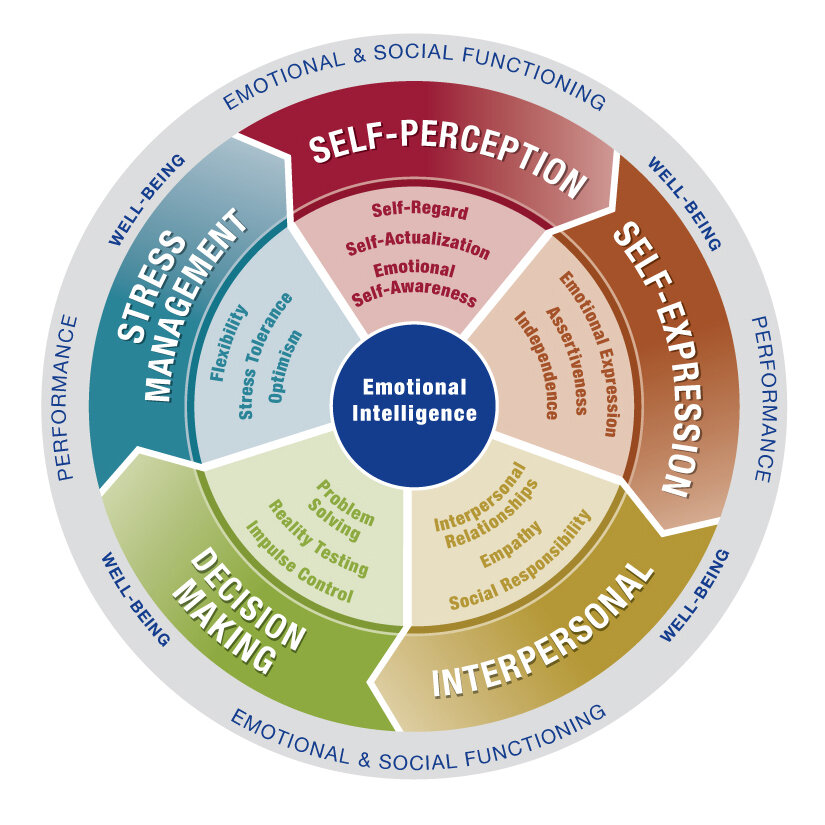
A higher EI is also linked to better stress management and overall well-being. When you can recognize a stressful emotion as it arises, you have a better chance of managing it before it overwhelms you. This emotional resilience helps you bounce back from adversity and maintain a more positive outlook.
A Brief History
While the term "emotional intelligence" feels modern, its roots go back to the early 20th century, when psychologists talked about concepts like "social intelligence." The idea was that being smart with people was a distinct kind of ability.
The term itself was formally defined in a 1990 paper by psychologists Peter Salovey and John Mayer. However, it was science journalist Daniel Goleman who brought emotional intelligence into the mainstream with his 1995 book, Emotional Intelligence. Goleman argued that EI was a better predictor of success in life than traditional measures of intelligence like IQ.
Since then, research has continued to show that these skills are critical for success at school, at work, and in our relationships.
Now that you understand what emotional intelligence is and why it's so important, you can begin to see how it shows up in your own life. Recognizing these moments is the first step toward strengthening your own EI.
Which of the following best describes the fundamental difference between Emotional Intelligence (EI) and Intelligence Quotient (IQ)?
The ability to recognize your own emotions as they happen and understand your personal strengths and weaknesses is known as...