Mastering Emotional Intelligence
Introduction to Emotional Intelligence
What is Emotional Intelligence?
Have you ever met someone who is a great listener, seems to stay calm under pressure, and just gets along with everyone? Chances are, they have high emotional intelligence. It’s not about being “book smart,” but rather “people smart.”
Emotional intelligence, often called EI or EQ, is the ability to perceive, understand, and manage your own emotions. It's also about recognizing and influencing the emotions of those around you. While intelligence quotient (IQ) measures cognitive ability like problem-solving and learning, EQ measures our ability to navigate the social world.
Emotional Intelligence, or EQ, is about understanding and managing our own emotions and the emotions of others.
Think of it as a different kind of intelligence. It affects how we manage behavior, handle social complexities, and make personal decisions that lead to positive results. Someone with high EI can recognize their own emotional state, like frustration or excitement, and understand how it impacts their actions. They can also read a room, understand what others are feeling, and adjust their communication accordingly. This skill is crucial in nearly every aspect of life, from our personal relationships to our professional success.
The Four Pillars of EI
Emotional intelligence isn't just one single skill. It's a combination of four distinct but related abilities. Most experts agree on a model that breaks EI down into two main competencies: personal and social. Each of these is further divided into two core skills.
1. Self-Awareness This is the foundation of EI. It's the ability to recognize and understand your own emotions, moods, and motivations, as well as their effect on others. Self-awareness means you know your strengths and weaknesses, and you have a good sense of your own capabilities.
Someone with strong self-awareness might notice they feel irritable and realize it's because they skipped lunch, preventing them from snapping at a coworker.
Self-awareness is your internal compass. Without it, it's easy to get lost.
2. Self-Regulation Building on self-awareness, self-regulation is about controlling or redirecting disruptive impulses and moods. It's the ability to think before you act. This doesn't mean hiding your true feelings. It means expressing them at the right time and in the right way.
A leader who receives critical feedback might feel defensive, but with self-regulation, they can pause, listen openly, and respond thoughtfully instead of reacting emotionally.
3. Social Awareness This is where the focus shifts from yourself to others. Social awareness is primarily about empathy—the ability to understand the emotional makeup of other people. It involves sensing what others are feeling, being able to see things from their perspective, and cultivating rapport with a wide range of people.
Noticing a teammate is unusually quiet in a meeting and checking in with them afterward is a great example of social awareness in action.
4. Relationship Management This final pillar is about managing relationships to move people in the desired direction. It's the culmination of the other three skills. If you can understand and control your own emotions and sense the feelings of others, you are better equipped to influence and lead effectively.
This skill helps you communicate clearly, resolve conflicts, and work collaboratively. It's what allows a manager to inspire their team, a salesperson to build trust with a client, or a friend to offer meaningful support.
Measuring Emotional Intelligence
How do we know how emotionally intelligent someone is? Unlike IQ, which has standardized tests, measuring EI is more complex. Researchers have developed several models and assessments to help quantify it.
These tools generally fall into two categories: ability tests and trait-based tests. Ability tests present you with emotion-based problem-solving tasks, like identifying the emotion on someone's face. Trait-based tests are more like personality quizzes, where you self-report your own behaviors and tendencies.
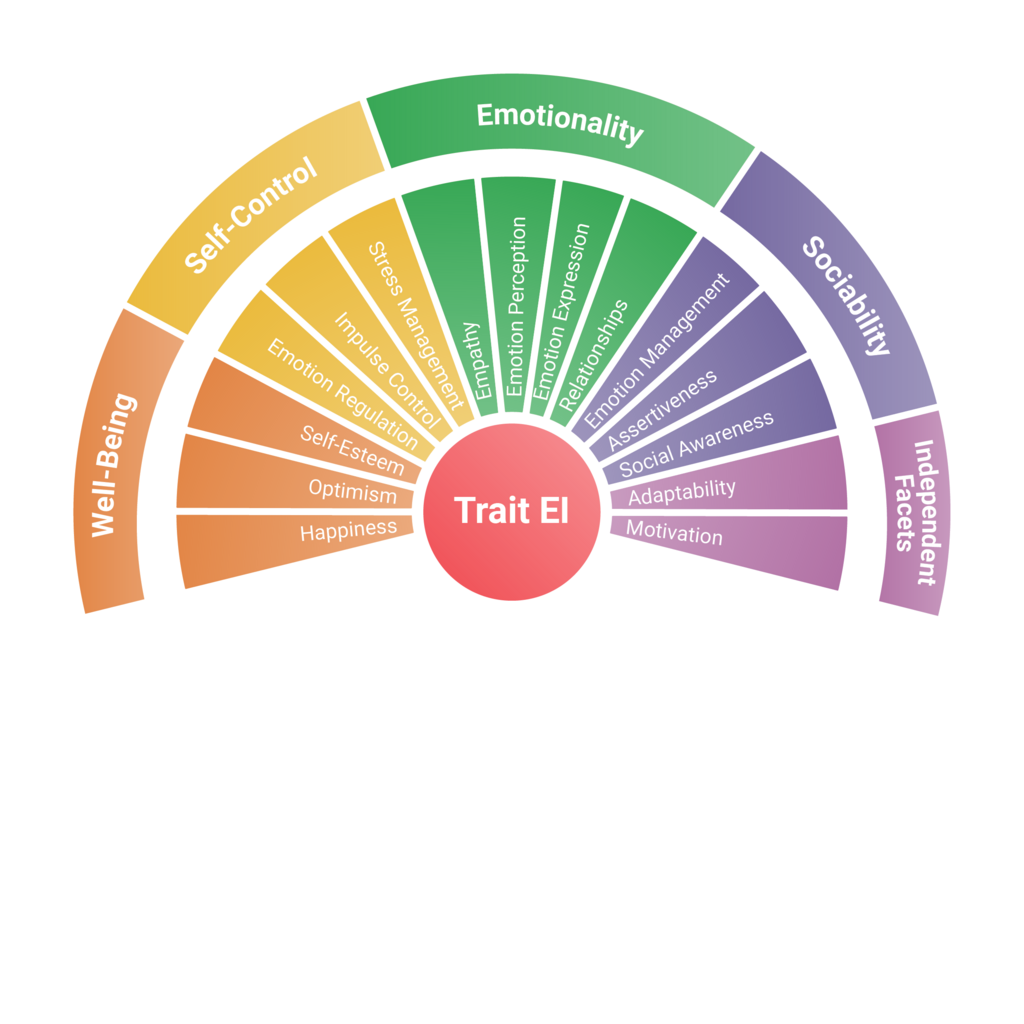
Some well-known models include the Mayer-Salovey-Caruso Emotional Intelligence Test (MSCEIT), which is an ability-based model, and the Emotional Quotient Inventory (EQ-i 2.0), which is a self-report tool. These assessments are often used in professional settings for leadership development and team building.
While a formal assessment can provide deep insights, you don't need a test to start developing your EI. Simply understanding these four pillars gives you a framework for observing your own behavior and your interactions with others.
Ready to check your understanding? This quiz will help you review the core ideas of emotional intelligence.
Which of the following best defines Emotional Intelligence (EQ)?
A manager receives some harsh but fair criticism from their boss. Instead of getting defensive, they take a moment to process the feedback before responding calmly and constructively. This is a clear example of which EI pillar?
Understanding what emotional intelligence is and its core components is the first step. It's a skill set that can be learned and strengthened over time, leading to more effective communication, stronger relationships, and greater personal well-being.