Mastering Effective Delegation Skills
Outcomes and Expectations
From Doer to Director
Your role has shifted. As a contributor, your focus was on executing tasks. As a leader, your job is to orchestrate outcomes. This requires a fundamental change in how you delegate work. It's no longer about assigning a to-do list; it's about clearly defining what 'done' looks like and why it matters.
Effective delegation begins before you even speak to your team member. It starts with you visualizing the finished product in detail. What does success look like, feel like, and measure up to? If you can't articulate the destination, you can't provide a useful map. Your primary task is to transfer that vision from your head to theirs, preventing the costly misalignment that happens when expectations are vague.
When you delegate outcomes instead of just tasks, you create leaders, not followers.
Making Delegation SMART
You're likely familiar with the SMART framework for goal setting. When applied to delegation, it becomes a powerful tool for ensuring clarity and accountability. It transforms a loose request into a concrete contract. Instead of saying, "Can you look into improving our onboarding emails?" you frame the task with precision.
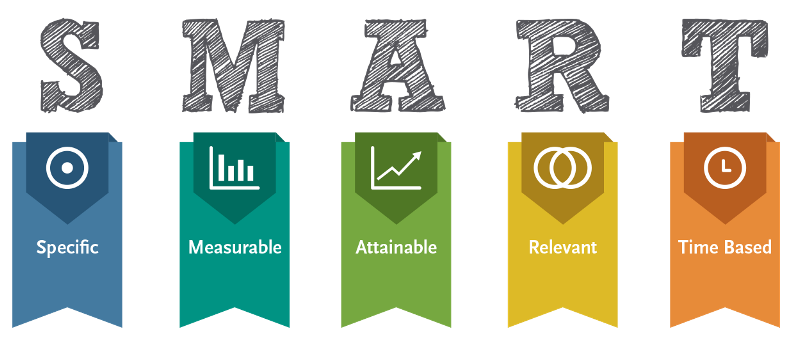
Let's break it down in a delegation context:
- Specific: Name the exact deliverable. Instead of "improve emails," it's "Rewrite the three-part welcome email sequence for new trial users."
- Measurable: Define the success metric. "Increase the click-through rate on the 'demo request' link by 15%."
- Attainable: Ensure the team member has the skills, resources, and authority. Is a 15% increase realistic given past performance? Does the person have access to the email platform and analytics?
- Relevant: Connect the task to a larger goal. "This is critical for hitting our quarterly goal of increasing qualified leads by 10%."
- Time-bound: Set a clear deadline. "Have the final copy ready for review by Friday at 5 PM."
Success You Can Measure
The 'M' in SMART is often the hardest part. Moving from subjective feelings of progress to objective indicators is the core of successful oversight. Success indicators are the specific, observable metrics that tell you if the outcome was achieved. They answer the question, "How will we know we've won?"
For a technical task, this might be a reduction in server response time. For a creative task, it could be a target audience survey score. The key is to define these metrics upfront, not after the work is done. This also involves setting clear that go beyond a simple pass/fail. These benchmarks define what 'good' looks like, ensuring the final product meets the required standard of excellence.
A crucial part of this process is shifting from activity-based instructions to outcome-based instructions. One tells people what to do; the other tells them what to achieve.
| Activity-Based Instruction | Outcome-Based Instruction |
|---|---|
| "Call ten of our lapsed clients." | "Re-engage at least two lapsed clients, with a goal of booking a follow-up meeting by the end of the week." |
| "Write a blog post about our new feature." | "Create a blog post that generates at least 50 sign-ups for the new feature's webinar." |
| "Research our top three competitors." | "Produce a one-page summary of our top three competitors' pricing and positioning, highlighting where we have an advantage." |
Activity-based delegation can feel like micromanagement. It focuses on process. Outcome-based delegation fosters autonomy and creativity. It focuses on results. By defining the 'what' (the outcome) and the 'why' (the relevance), you empower your team member to figure out the 'how'. This not only frees you up to focus on higher-level strategy but also invests in your team's problem-solving skills and contributes to their sense of ownership and with the company's mission.
Now that you know how to frame a delegated task for clarity and success, let's test your understanding.
What is the fundamental shift in focus when transitioning from a contributor to a leadership role?
Which of the following is the best example of a 'Specific' and 'Measurable' delegated task, according to the SMART framework?
By defining clear outcomes and measurable standards, you set your team up for success and transform delegation from a simple hand-off into a strategic leadership tool.