Mastering Educational Quiz Design
Cognitive Level Alignment
Beyond Rote Recall
A well-designed quiz does more than check if someone was paying attention. It probes their understanding. The goal is to move beyond simple recall and assess whether a learner can apply, analyse, and evaluate information. This requires intentionally designing questions that target higher levels of thinking.
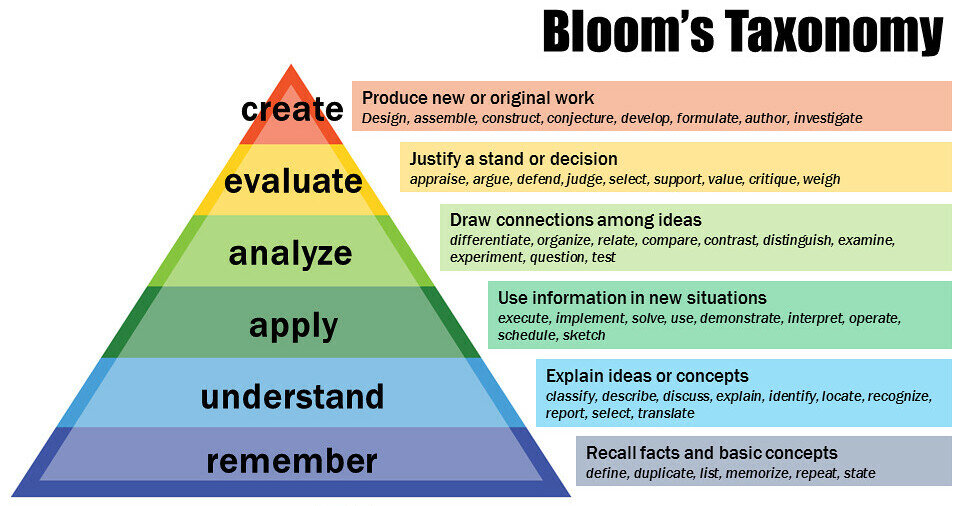
To do this effectively, we can map our assessment items to a proven framework. provides a hierarchy of cognitive skills, from foundational knowledge to the creation of new work. By aligning questions to these levels, you ensure a quiz accurately measures the depth of a student's comprehension, not just their memory.
Crafting Higher-Order Stems
The stem is the part of a multiple-choice question that poses the problem. To target higher-order thinking, the stem must ask the learner to do more than just remember a fact. It needs to prompt an action like comparison, classification, or prediction.
The key is using the right verbs. A question starting with "Define..." tests recall. A question asking the learner to "Critique..." or "Justify..." pushes them into the realm of evaluation. Choosing your verbs carefully is the first step in elevating your questions.
| Cognitive Level | Associated Verbs |
|---|---|
| Apply | Implement, solve, use, demonstrate, interpret |
| Analyse | Differentiate, organise, compare, deconstruct |
| Evaluate | Justify, appraise, critique, defend, support |
| Create | Design, formulate, build, invent, develop |
Notice how the verbs shift from task execution (Apply) to judgment (Evaluate) and finally to generation (Create). A good quiz will often feature a mix of these question types, guiding the learner through increasing levels of cognitive complexity.
The Power of Scenarios
Scenario-based questions are one of the most effective tools for assessing higher-order thinking. They present a brief, realistic situation and ask the learner to apply their knowledge to solve a problem within that context. This moves assessment from the abstract to the practical.
Instead of asking what a tool is, ask how to use the tool to fix a specific problem.
When designing a scenario, provide just enough context to make the situation clear, but not so much that you introduce irrelevant details. The goal is to test the application of a principle, not reading comprehension. The question stem should then ask the learner to make a decision, predict an outcome, or choose the best course of action based on the scenario.
**Poor (Recall-level):**

Which of the following is a symptom of dehydration?
A) Increased energy
B) Dark urine
C) Clear skin

**Good (Application-level):**

A marathon runner in a hot climate has completed 20 miles. They report feeling dizzy and have a headache. Which of the following actions should they take first?

A) Start sprinting to finish the race faster.
B) Stop at the next aid station for water and electrolytes.
C) Wait until the race is over to rehydrate.
The second example forces the learner to apply their knowledge of dehydration symptoms to a real-world context and make a decision. The incorrect answers, or s, should be plausible but clearly inferior choices based on the principles taught.
Aligning learning objectives with assessments using Bloom’s Taxonomy is a fundamental best practice in instructional design.
Ultimately, every question you write should serve a purpose. By aligning your quiz objectives with your curriculum goals and mapping each item to a specific cognitive level, you create assessments that are fair, effective, and truly measure understanding.
Now, let's test your understanding of these concepts.
What is the primary purpose of using a framework like Bloom's Taxonomy when creating quiz questions?
Which question stem is best designed to assess a learner's ability to evaluate information?
By mastering these techniques, you can design quizzes that are not just evaluations, but powerful learning tools in their own right.