Mastering Early Mornings
Understanding Sleep Cycles
The Architecture of Sleep
Sleep isn't just an on/off switch. When you fall asleep, your brain follows a predictable pattern of cycles, moving through different stages that each play a unique role in resting and repairing your body and mind. Think of it less like a long, quiet pause and more like a well-structured nightly maintenance program.
A full night of rest consists of four to six of these cycles. Each one lasts about 90 minutes and is made up of two distinct types of sleep: Non-Rapid Eye Movement (NREM) and Rapid Eye Movement (REM).
NREM Sleep
Most of your sleep time is spent in NREM sleep, which is divided into three stages. As you progress through them, you move from light sleep into a much deeper, more restorative state.
Stage N1: This is the brief, transitional phase between wakefulness and sleep. Your muscles relax, and your brain waves start to slow down. You might experience sudden muscle twitches or the sensation of falling. It's easy to be woken up during this stage.
Stage N2: You spend about half your total sleep time here. Your body temperature drops, and your heart rate slows. Your brain produces short bursts of activity called sleep spindles and K-complexes, which are thought to help protect your sleep and play a role in memory consolidation.
Stage N3: This is deep sleep, also known as slow-wave sleep. It’s the most restorative stage, where your body gets to work on physical repairs. During N3, your body releases growth hormone, repairs tissues, and strengthens your immune system. Waking up from this stage is difficult, and if you do, you'll likely feel groggy and disoriented for a while.
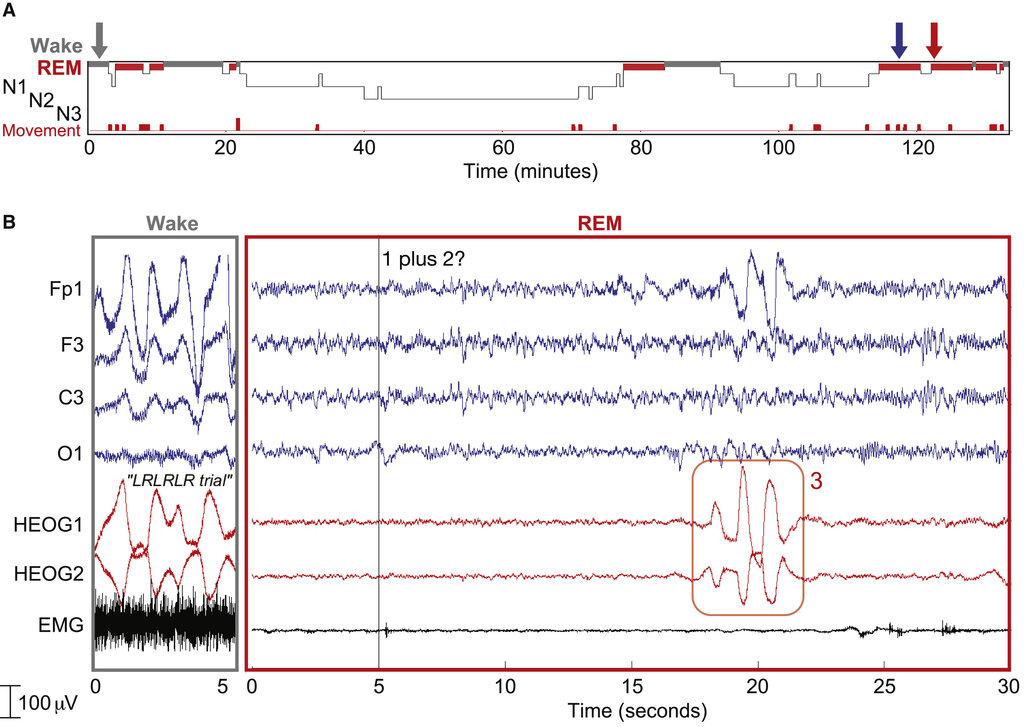
REM Sleep
After cycling through the NREM stages, you enter REM sleep. This stage is dramatically different. Your brain activity ramps up to levels similar to when you're awake. Your eyes dart back and forth behind your closed eyelids, which is how this stage gets its name. Most of your vivid dreaming happens during REM sleep.
To keep you from acting out your dreams, your brain temporarily paralyzes your limb muscles. REM sleep is crucial for cognitive functions like memory consolidation, learning, and creativity. It's when your brain processes the day's experiences, strengthens important neural connections, and clears out irrelevant information.
The 90-Minute Cycle
A complete sleep cycle follows a specific pattern: you progress from N1 to N2, then into N3 deep sleep. After that, you cycle back up to N2 before entering your first REM stage. The whole sequence takes about 90 minutes.
As the night goes on, the composition of these cycles changes. The first few cycles of the night are dominated by deep N3 sleep, focusing on physical restoration. In the second half of the night, your REM stages get longer and more frequent, while deep sleep decreases. This shift allows your brain to focus more on mental and emotional processing before you wake up.
When Sleep Is Disrupted
Missing out on sleep, or having your cycles consistently interrupted, takes a toll. Sleep deprivation doesn't just make you tired; it impairs nearly every aspect of your well-being. Physically, it weakens your immune system and increases your risk for conditions like heart disease and diabetes. Mentally, it hampers your ability to focus, solve problems, and regulate your emotions. Your memory suffers because your brain doesn't get enough time to consolidate new information.
During these sleep epochs that brains stabilize important, and erase unnecessary, information gleamed from waking experience in an attempt to ensure adaptive future behavior and efficient management of neural resources.
Understanding your sleep cycles is the first step toward appreciating just how active and important this period of rest truly is for both your body and brain.
Time to check your understanding of sleep architecture.
What is the primary role of Stage N3, also known as slow-wave sleep?
How does the structure of your sleep cycles typically change as the night progresses?