Mastering Dynamic Dance Performance
Dynamic Core Engagement
Beyond the Brace
You've already mastered holding a plank and maintaining a neutral spine. The next step is to make that stability dynamic. Professional-level dance isn't about locking your core into a rigid brace; it's about maintaining a responsive, powerful center while your limbs fly through space with explosive energy. This is where the deeper core muscles, particularly the transverse abdominis, come into play.
Think of this muscle not as a stiff corset, but as an intelligent, adaptive girdle. Its job is to anticipate movement. Before you even lift an arm or kick a leg, your transverse abdominis (TVA) should fire, creating a stable base. When you execute a sudden drop or a sharp turn, the TVA contracts to manage the momentum, preventing your center of gravity from getting away from you. This allows your arms and legs to be expressive and powerful, because they aren't responsible for holding you together. The power radiates from a solid core.
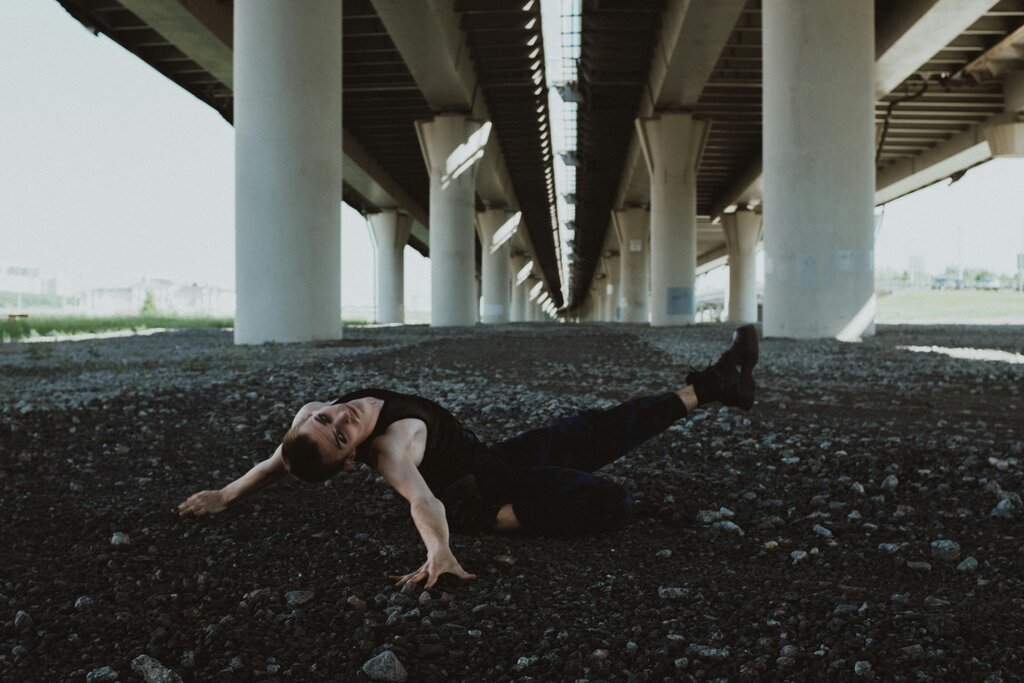
Your core isn't a shield you hold up; it's the engine that powers and controls every dynamic movement.
The Pelvic Floor as Your Anchor
Directly connected to this system is the pelvic floor. It's the foundation of your core, and engaging it is crucial for managing balance during rapid shifts in weight. When you prepare for a leap or a sudden change in direction, a subtle lift of the pelvic floor works in tandem with the TVA to create a solid anchor point. This prevents your hips from wobbling and ensures your power is directed efficiently into the movement.
This isn't about squeezing forcefully. It's a light, upward engagement, like you're gently lifting a hammock from its center. This foundational support is the secret to making core-led momentum possible. When your base is secure, you can initiate sweeping, powerful movements from your center, letting the energy flow outward to your limbs, rather than trying to muscle through with your arms and legs alone. This creates a more fluid, grounded, and powerful quality of movement.
A strong core plays a central role in stability, movement efficiency and injury prevention.
Breathe Into Power
Endurance in dance isn't just about cardiovascular fitness; it's about efficient energy management. The key is your breath. Shallow, panicked chest breathing creates tension in the neck and shoulders and disconnects you from your core. Diaphragmatic breathing, on the other hand, is the fuel for dynamic stability.
When you inhale deeply, your diaphragm lowers, creating pressure within your abdominal cavity. This pressure pushes outward against the TVA and downward onto the pelvic floor, creating a stable, pressurized cylinder. This is the strongest natural state for your core. As you exhale with control, you can intensify the engagement of the TVA and pelvic floor. Coordinating this breath with your movements—exhaling on the effort of a jump or a contraction—ensures your core is maximally supported when you need it most. This technique not only strengthens your center but also keeps you calm and focused during demanding choreography.
The Articulating Spine
Finally, let's discard the idea of a perfectly straight, rigid back. A strong core doesn't lock your spine in place; it liberates it. With your center dynamically engaged, you can safely explore spinal articulation—waves, undulations, and sharp isolations. The core acts as the support system, allowing each vertebra to move with fluidity and control.
Imagine a body roll. Without a supportive core, the movement is floppy and uncontrolled, putting stress on the lower back. With deep core engagement, however, you can articulate through each segment of your spine with precision. Your TVA and obliques stabilize the pelvis and lumbar spine, while the upper vertebrae move freely. This blend of stability and mobility is the hallmark of an advanced dancer. Your spine becomes an expressive tool, not just a structural post.
True core control gives you the freedom to be both powerful and fluid, stable and expressive. It's the engine that drives every complex, dynamic movement. Now, let's test your understanding of these mechanics.
What is the primary role of the transverse abdominis (TVA) in dynamic dance movement?
How does diaphragmatic breathing support a dancer's core?
By integrating these concepts of deep muscle activation, foundational support, and mindful breathing, you transform your core from a static shield into a dynamic powerhouse.