Mastering DSSAT for Crop Simulation
Introduction to DSSAT
A Flight Simulator for Farming
Imagine a flight simulator. A pilot can use it to test how a plane responds to different weather conditions, flight paths, and mechanical adjustments, all without ever leaving the ground. This saves time, money, and reduces risk. Now, imagine a similar tool for agriculture.
That's the basic idea behind DSSAT, the Decision Support System for Agrotechnology Transfer. It's a comprehensive software suite that acts as a virtual farm, allowing researchers, farmers, and policymakers to simulate crop growth under a vast range of conditions. Instead of plugging in flight data, users input information about soil type, weather patterns, fertilizer application, and crop genetics. DSSAT then predicts how a crop will grow, develop, and ultimately yield.
DSSAT lets you ask complex “what if” questions. What if I plant two weeks earlier? What if I use less nitrogen fertilizer? What if average temperatures rise by 2°C over the next decade?
A Look Inside the Toolbox
DSSAT isn't a single, monolithic program. It’s a modular system, like a well-organized toolbox. This structure makes it incredibly versatile. At its core are the crop simulation models. These are sophisticated mathematical models that represent the growth of specific crops, such as maize, wheat, rice, and soybeans. DSSAT includes models for over 40 different crops.
Alongside these models are powerful tools for managing data. DSSAT needs detailed information to run its simulations, so it includes programs for organizing data on:
- Weather: Daily temperature, rainfall, and solar radiation.
- Soil: The properties of different soil layers, like texture and nutrient content.
- Crop Management: Details on planting dates, irrigation, fertilizer use, and tillage.
Finally, a set of analysis programs helps users interpret the simulation results, run scenarios for different years, and evaluate the economic and environmental outcomes of various strategies.
This modular design allows scientists to easily update a specific component, like a soil database or a crop model, without altering the entire system.
From What-If to What's Best
The true power of DSSAT lies in its applications. By running simulations, users can test management strategies before implementing them in the real world. A farmer can compare ten different fertilization plans to find the one that maximizes profit while minimizing nutrient runoff, all in a matter of hours.
This capability is crucial for tackling bigger challenges. Researchers use DSSAT to assess the potential impacts of climate change. By adjusting the weather data to reflect future climate scenarios, they can predict how crop yields might change in a particular region, helping governments and communities prepare for the future.
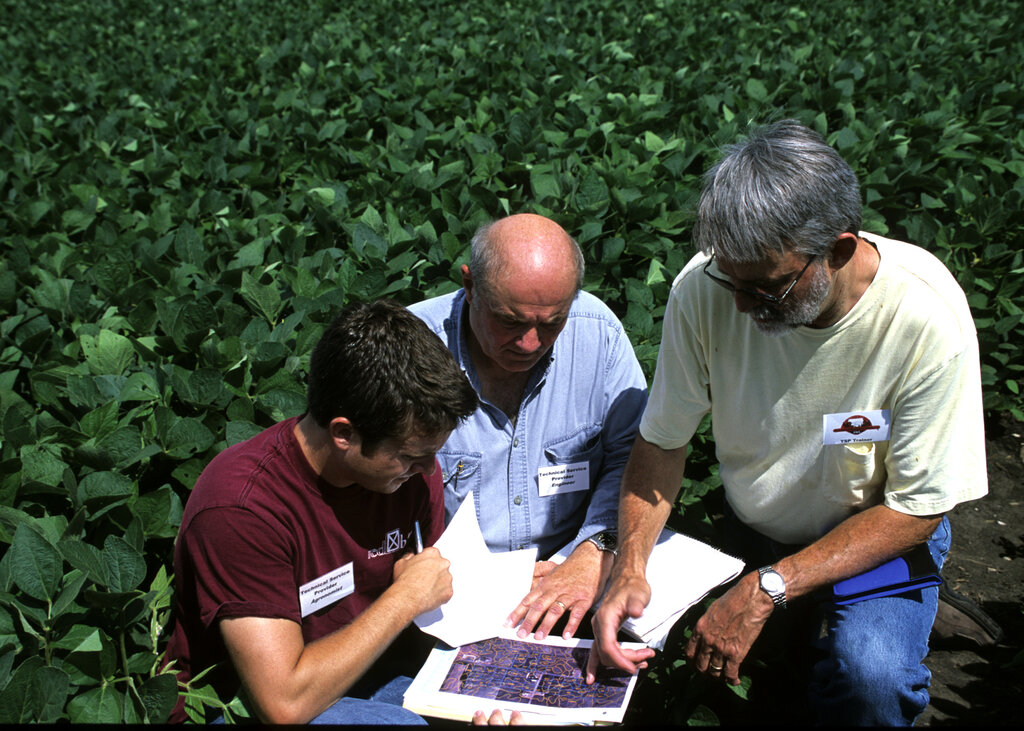
The system also plays a key role in developing new technologies and farming practices. For example, plant breeders can use DSSAT to simulate how a new crop variety with specific genetic traits, like drought tolerance, would perform in different environments around the world.
A Global Tool
The development of DSSAT began in the 1980s through a collaborative project called the International Benchmark Sites Network for Agrotechnology Transfer (IBSNAT). The goal was to create standardized tools that would allow agricultural knowledge gained in one part of the world to be transferred and applied elsewhere.
Since then, DSSAT has evolved continuously. It is maintained and distributed by the DSSAT Foundation, a science-based, non-profit organization. Today, it is one of the most widely used crop modeling systems in the world. Thousands of researchers, educators, and extension agents in more than 150 countries rely on DSSAT for their work.
This global adoption is its greatest strength. It creates a common language and framework for agricultural research, making it easier for scientists to collaborate across borders to address the shared challenge of ensuring a stable and sustainable food supply.
What is the primary function of the Decision Support System for Agrotechnology Transfer (DSSAT)?
A researcher wants to predict how a new, drought-tolerant wheat variety might perform in different regions of Africa under future climate scenarios. Which components of DSSAT would be essential for this simulation?