Mastering Distributed Systems
Introduction to Distributed Systems
What Is a Distributed System?
Think of an orchestra. You have dozens of musicians, each playing their own instrument. On their own, they're just making noise. But when they follow the same sheet music and conductor, they create a single, unified piece of music. A distributed system is like that orchestra, but with computers.
Distributed systems refer to a network of independent computers that work together to achieve a common goal.
These aren't just any computers networked together. They are designed to operate as a single, coherent system. To the person using it, it should feel like they're interacting with one powerful machine, not a collection of many. The complexity of all the computers coordinating behind the scenes is completely hidden.
Why Go Distributed?
Building a single, massive computer is incredibly difficult and expensive. It's often easier and more effective to connect many smaller, standard computers. This approach offers three major advantages: scalability, fault tolerance, and resource sharing.
Scalability: Handling More Growth Imagine a popular website. As more users visit, the server has to work harder. To handle the load, you can either upgrade to a more powerful server (vertical scaling) or add more servers to share the work (horizontal scaling). Distributed systems excel at horizontal scaling. You just add more computers to the network. This makes it possible to build systems that serve millions of users.
Fault Tolerance: Distributed systems are designed to handle failures gracefully.
What happens if one computer in the system crashes? In a well-designed distributed system, not much. The system is built with redundancy, so if one component fails, others can take over its work. This makes the system far more reliable than one that relies on a single machine. Think of it like a plane with multiple engines; if one fails, the others can keep it flying.
Resource Sharing: Working Together A key benefit is the ability to share resources like files, data, and processing power across the network. A great example is Google Docs. Multiple people on different computers can view and edit the same document simultaneously. The document itself is a shared resource managed by Google's distributed system.
Centralized vs. Distributed
The opposite of a distributed system is a centralized one. In a centralized system, one main computer holds all the data and does all the processing. Think of a traditional company server where all employees save their files. This approach is simple, but it has major drawbacks.
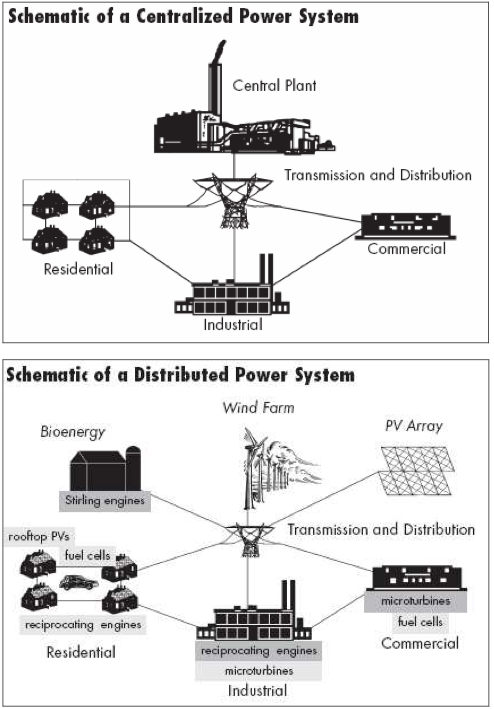
The biggest problem is the single point of failure. If that central server goes down, the entire system stops working for everyone. It also becomes a bottleneck; as more people try to access it, performance can slow to a crawl.
| Feature | Centralized System | Distributed System |
|---|---|---|
| Architecture | Single main computer | Multiple autonomous computers |
| Fault Tolerance | Low (single point of failure) | High (redundancy) |
| Scalability | Limited (vertical scaling) | High (horizontal scaling) |
| Complexity | Simple to manage | Complex to design and manage |
The Role of Middleware
How do all these separate computers talk to each other and act as one? The magic ingredient is middleware.
To simplify their development and maintenance a new layer of software, called Middleware, is being developed, following agreed standards and protocols, to provide standard services such as naming (association of entities and identifiers, directory services (maintaining the association of attributes to entities), persistence, concurrency control, event distribution, authorization, security.
Middleware is a software layer that sits between the applications and the operating systems on each computer. It acts as a universal translator and traffic cop, handling the complex communication so that application developers don't have to. It makes the network of computers look like a single machine, hiding the messy details of network communication, different hardware, and component failures.
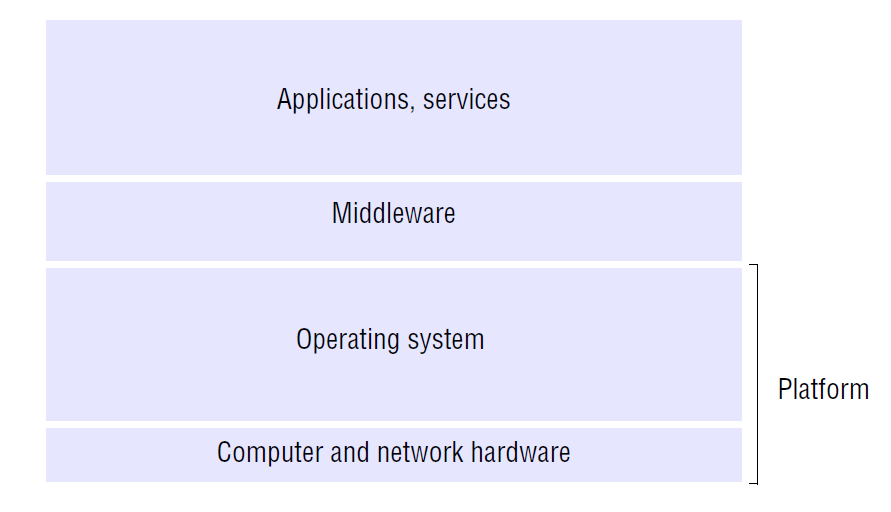
Without middleware, building distributed applications would be incredibly difficult. Each application would have to handle its own networking, data consistency, and error-checking, a huge and repetitive task.
Distributed systems are the backbone of the modern internet. From the search engine you use every day to the streaming service you watch at night, these complex systems work silently in the background, providing the scalable and reliable services we depend on.