Mastering Direct Sales Objection Handling
Buyer Psychology Fundamentals
The Psychology Behind 'No'
When a prospect says 'no' or raises an objection, it's rarely a flat rejection of your product. More often, it's a reflection of deep-seated psychological principles that govern human decision-making. Our brains are wired to favour safety and the familiar. Understanding these underlying drivers is the key to moving a conversation forward.
Two of the most powerful forces at play are the status quo bias and loss aversion. These aren't just sales jargon; they're fundamental aspects of human nature that influence everything from our daily choices to major purchasing decisions.
The Comfort of the Status Quo
People have a strong tendency to stick with what they know. This is the status quo bias in action. Even if a new solution is demonstrably better, the current situation has one massive advantage: it's a known quantity. The effort, risks, and potential for regret associated with making a change often loom larger than the promised benefits.
Think about your own mobile phone provider. You might complain about the signal or the cost, but the thought of researching new plans, transferring your number, and learning a new system is often enough to make you stay put. Your prospect's current, imperfect system is their comfort zone. Your new, potentially revolutionary solution is the unknown. The perceived pain of switching often outweighs the potential gain of the new system, even if it's logically superior.
Your real competition isn't another vendor; it's the customer's inertia.
The Pain of Losing
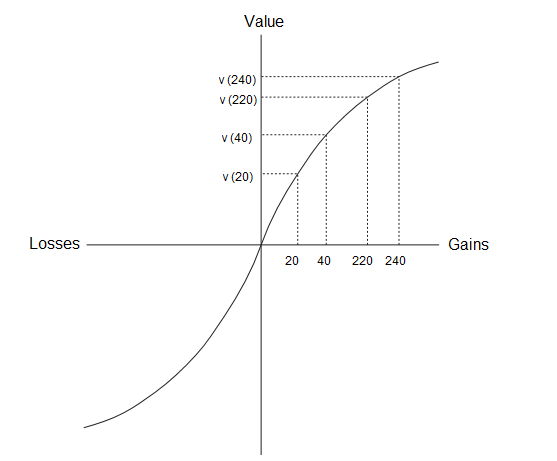
Hand in hand with the status quo bias is the principle of loss aversion, which suggests that for most people, the pain of losing something is psychologically about twice as powerful as the pleasure of gaining something of equal value. When a customer considers your proposal, they aren't just weighing the potential benefits. They're also weighing the potential losses: the money spent, the time invested in implementation, the risk to their reputation if the project fails.
This is why framing your solution in terms of what the customer stands to lose by not acting can be so powerful. You must show them that the cost of inaction—of sticking with their current, inefficient process—is greater than the cost of implementing your solution. It's about shifting their perspective from 'What do I gain?' to 'What am I losing by standing still?'
Unpacking the Hesitation
Beyond these biases, objections are often rooted in emotion. A decision-maker might fear looking foolish if your product doesn't deliver, jeopardising their career capital. This fear can lead to analysis paralysis—a state where the fear of making the wrong choice becomes so overwhelming that they choose to make no choice at all.
It's crucial to distinguish this from a genuine constraint. A genuine constraint is a hard 'no' for now (e.g., 'We have no budget until Q4,' 'We're locked into a contract for another year'). Analysis paralysis is a soft 'no' rooted in uncertainty.
How can you tell the difference? Ask clarifying questions that probe the underlying issue. Instead of asking 'What's stopping you?', try 'What would need to be true for this to be an easy decision for you?'. This shifts the focus from the problem to the solution, helping you understand whether you're dealing with a logistical barrier or a psychological one. Building psychological safety, where the client feels safe enough to be honest about their fears, is paramount.
Mastering this isn't about manipulation; it's about empathy. It's about understanding the human behind the job title and addressing their fundamental concerns, not just the surface-level objections they voice.
According to the principle of loss aversion, the pain of losing something is psychologically about _______ as powerful as the pleasure of gaining something of equal value.
A prospect's tendency to stick with their current, familiar system, even when presented with a demonstrably better solution, is known as: