Mastering Digital Photography
Camera Basics
Types of Digital Cameras
Before you can master photography, it helps to know your tool. Digital cameras come in a few main varieties, each with its own strengths. The three most common types are DSLR, mirrorless, and compact cameras.
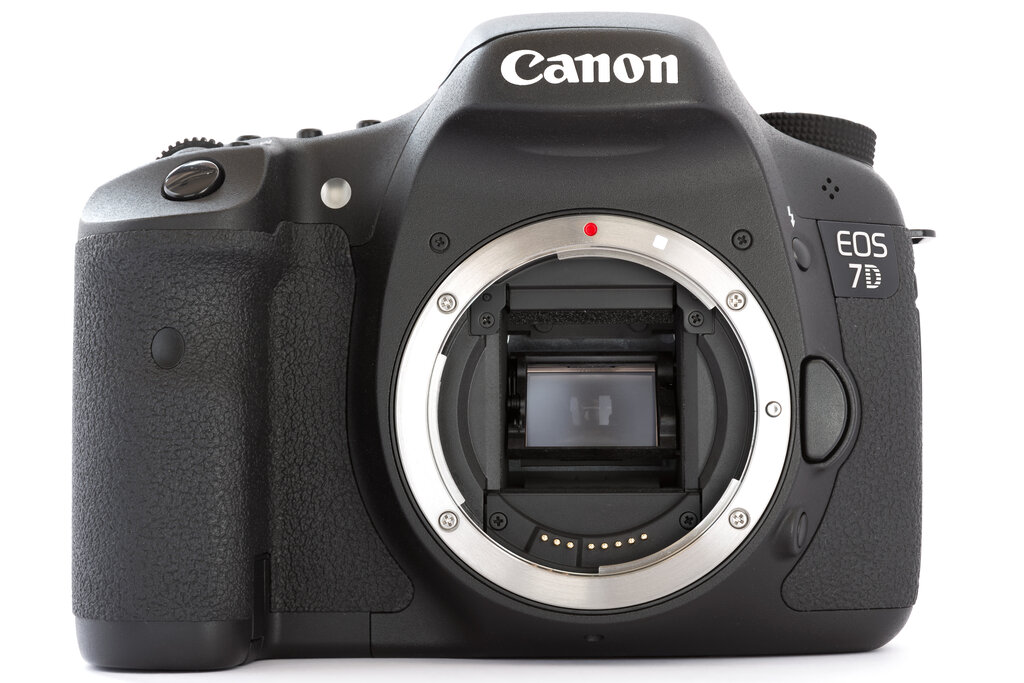
DSLR (Digital Single-Lens Reflex) cameras use a mirror inside the body to reflect light up into an optical viewfinder. When you press the shutter button, the mirror flips up, allowing light to hit the sensor and capture the image. For decades, DSLRs were the standard for serious photographers because of their vast lens selection and the clear, lag-free view through the eyepiece.
Mirrorless cameras are the newer kids on the block. As the name suggests, they don't have a mirror. Light passes directly through the lens to the sensor, which then displays a preview of the image on an electronic viewfinder or the back screen. Getting rid of the mirror makes these cameras smaller, lighter, and quieter than DSLRs. Their electronic viewfinders also let you see exactly how your exposure settings will affect the final image before you take the shot.
Compact cameras, often called point-and-shoots, are the simplest of the bunch. They have a fixed lens that you can't change. Their main advantages are portability and ease of use. While they offer less manual control than DSLRs or mirrorless cameras, modern high-end compacts can still produce excellent images.
| Feature | DSLR | Mirrorless | Compact |
|---|---|---|---|
| Size & Weight | Large & Heavy | Smaller & Lighter | Smallest & Lightest |
| Viewfinder | Optical (through the lens) | Electronic (digital screen) | Usually just a back screen |
| Lenses | Interchangeable | Interchangeable | Fixed (not changeable) |
| Battery Life | Generally longer | Generally shorter | Varies widely |
| Best For | Versatility, traditional feel | Portability, video, seeing exposure live | Simplicity, travel |
The Exposure Triangle
Every photograph is a recording of light. Exposure is simply how much light reaches your camera's sensor. Too much light results in a washed-out, overexposed photo. Too little light gives you a dark, underexposed one.
Three core settings work together to control exposure: aperture, shutter speed, and ISO. Photographers call their relationship the "exposure triangle" because changing one requires adjusting another to maintain the same exposure.
Aperture
noun
The adjustable opening in a lens through which light passes.
Aperture is like the pupil of your eye. It can open wide to let in more light or shrink to a pinpoint to let in less. It's measured in f-stops, written as , , or . Here’s the tricky part: a small f-number () means a large opening, while a large f-number () means a small opening.
Besides controlling light, aperture has a major creative effect: depth of field. This refers to how much of your image is in sharp focus. A large aperture (small f-number) creates a shallow depth of field, where your subject is sharp but the background is blurry. This is great for portraits. A small aperture (large f-number) creates a deep depth of field, keeping everything from the foreground to the background sharp, which is ideal for landscapes.
Shutter Speed
noun
The length of time the camera's shutter is open, exposing the sensor to light.
Shutter speed is the amount of time your camera's sensor is exposed to light. It’s measured in seconds or fractions of a second (like 1/1000s or 2"). A fast shutter speed (e.g., 1/1000s) lets in very little light and is used to freeze fast-moving subjects, like a bird in flight. A slow shutter speed (e.g., 1s) lets in a lot of light and will blur any moving objects, creating smooth, artistic effects with things like waterfalls or light trails from cars.
Any shutter speed slower than about 1/60s is difficult to hand-hold without introducing blur from your own movement. For slow shutter speeds, a tripod is your best friend.
ISO
noun
A camera setting that brightens a photo in-camera. It stands for International Organization for Standardization.
ISO is a digital setting that brightens your photo. Think of it as an artificial way to increase the sensor's sensitivity to light. A low ISO (like 100 or 200) is used in bright conditions and produces the cleanest, highest-quality images. As you increase the ISO (to 1600, 3200, or higher), the sensor becomes more "sensitive," allowing you to shoot in darker environments without a flash.
The trade-off? High ISO values introduce digital noise, which looks like fine grain or speckles in your image, reducing its overall quality.
Balancing Color and Focus
Beyond exposure, there are two other fundamental concepts to grasp: white balance and lenses.
White balance (WB) ensures that colors are rendered accurately in your photo. Different light sources have different color "temperatures." Sunlight is cool and blueish, while tungsten light bulbs are warm and orange. Your brain automatically adjusts for these shifts, but your camera needs to be told what "true white" looks like in a scene.
Most of the time, your camera's Auto White Balance (AWB) does a great job. But if you've ever taken a photo indoors that looked too yellow, or a shot in the shade that looked too blue, it was because of an incorrect white balance. You can manually set the white balance using presets like "Daylight," "Cloudy," or "Tungsten" to get more accurate colors.
Finally, the lens is the eye of your camera, and it dramatically impacts the look of your photos. Lenses are defined by their focal length, measured in millimeters (mm).
- Wide-angle lenses (e.g., 16-35mm) capture a very broad field of view, making them perfect for landscapes, architecture, and fitting a lot into one frame.
- Standard lenses (around 50mm) provide a field of view similar to the human eye, offering a natural perspective for all-purpose shooting.
- Telephoto lenses (e.g., 70-200mm and beyond) magnify distant subjects, allowing you to get close-up shots of wildlife or sports from far away. They also compress the background, which can be a flattering effect for portraits.
Understanding these basics—your camera type, the exposure triangle, white balance, and lenses—is the first major step. It gives you the power to move beyond automatic settings and start making creative decisions.
What is the key mechanical feature that distinguishes a DSLR camera from a mirrorless camera?
You want to take a portrait with a sharp subject and a very blurry background. Which aperture setting is best suited for this effect?