Mastering Digital File Organization
Understanding Digital File Organization
Taming Digital Chaos
We all have a digital attic. It's that folder on your desktop labeled “Stuff,” the thousands of photos on your phone, or the sea of documents in your cloud storage. At first, the mess is manageable. But over time, it grows into a digital jungle that slows you down and causes unnecessary stress. Finding a single file can feel like searching for a needle in a haystack.
Organizing your digital files is more than just tidying up. It's about creating a clear, logical system that works for you. Think of it like organizing a library. If books were just thrown into piles, finding what you need would be nearly impossible. But with a system like the Dewey Decimal System, anyone can locate a specific book quickly and efficiently. Your digital life deserves the same level of order.
The goal isn't just a clean-looking desktop. The real prize is a smoother workflow, less frustration, and more time for the work that actually matters.
The Payoff of an Organized System
Putting in the effort to organize your files pays off in several powerful ways. The most immediate benefit is a boost in productivity. Instead of wasting minutes, or even hours, searching for a misplaced document, you can retrieve it in seconds. This saved time adds up, freeing you to focus on more important tasks.
When you work with a team, a shared, organized file system is essential for smooth collaboration. It eliminates the constant back-and-forth of “Where can I find the latest version?” A clear structure ensures everyone knows where to find what they need and where to save new work. This keeps projects moving forward and reduces miscommunication.
Finally, good organization is crucial for security and compliance. Knowing exactly where sensitive information is stored makes it easier to protect. For businesses, this is vital for meeting data management policies and regulations. It simplifies the process of finding and managing records, whether for an audit or for routine data cleanup.
Organizing your digital files isn't just about being tidy — it's about creating a system that helps you find what you need quickly, collaborate effectively, and work with maximum efficiency.
Common Hurdles
If organizing is so beneficial, why do so many of us struggle with digital clutter? A few common challenges get in the way.
First, there's the sheer volume of files. We create and receive dozens, if not hundreds, of digital files every day. Without a plan, this constant influx quickly becomes overwhelming. The task of sorting through an existing mess can feel so monumental that it's tempting to put it off indefinitely.
Another hurdle is inconsistency. You might start with a great folder structure for one project but use a completely different system for the next. Or maybe you have one method at work and another for your personal files. This lack of a single, consistent approach creates confusion and makes it harder to maintain order over time.
The key is to start simple. A few basic strategies can cut through the chaos and establish a foundation for lasting order.
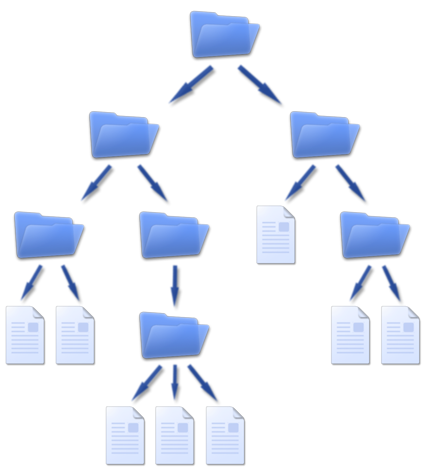
A basic but powerful strategy involves creating a logical folder hierarchy. Think of your files like items in a filing cabinet. You start with broad categories, like “Work,” “Personal,” and “Finances.” Inside each of these, you create more specific subfolders. For example, under “Work,” you might have folders for each project you're working on.
Another foundational practice is adopting a consistent file naming convention. Instead of saving a document as “report.docx,” a more descriptive name like “2024-03-15_Q1-Sales-Report_v2.docx” tells you exactly what the file is at a glance. We’ll dive deeper into creating these systems in the next steps.
Time to check your understanding of these core ideas.
What is the primary goal of organizing digital files, according to the text?
Based on the principles of consistent file naming, which of the following is the most effective file name?
By understanding the benefits and recognizing the common challenges, you're ready to start building a system that brings clarity and efficiency to your digital world.