Mastering Digital Customer Experience Strategy
Auditing Digital Maturity
Starting with a Clear Picture
Before you can map out a new digital customer experience (CX) strategy, you need to know exactly where you're starting. This isn't about guesswork or gut feelings. It's about conducting a rigorous audit of your organization's digital maturity. This foundational step provides a clear, objective baseline that informs every decision that follows, turning your strategic plan from a wishlist into a realistic roadmap.
A maturity audit is like a pre-flight check for your digital transformation. It identifies potential issues on the ground before you commit to a direction.
Instead of inventing a method from scratch, we can rely on established, industry-tested frameworks. These models provide a structured approach to evaluating your organization's current state. Two of the most respected are McKinsey's Digital Quotient and Forrester's CX Maturity Framework. Both offer a comprehensive way to measure your digital capabilities against defined benchmarks, helping you understand not just where you are, but how you compare to industry peers.
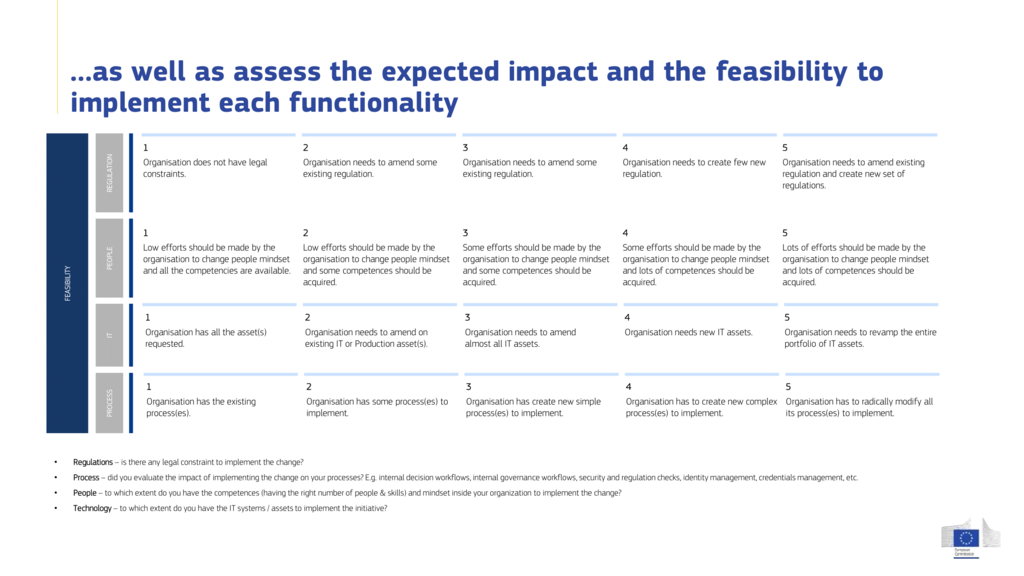
These frameworks guide you to look beyond surface-level metrics. They push you to examine the underlying structures that support or hinder your digital efforts. Most of these models analyze the organization through a few core lenses, which we'll call the four pillars of maturity.
The Four Pillars of Maturity
A thorough audit evaluates your organization across four interconnected areas. A weakness in one pillar will inevitably undermine the others.
1. Strategy: This pillar assesses the alignment between your digital vision and your core business objectives. Is digital CX a side project, or is it woven into the company's strategic goals? A mature organization has a clear, well-communicated vision for how digital enhances customer value and drives business growth. An immature one has digital initiatives that are disconnected from the bigger picture.
2. Culture: Digital transformation is a human challenge as much as a technical one. This pillar examines your organization's digital readiness. Are teams encouraged to experiment and learn? Is there a fear of failure? Do employees have a customer-centric mindset? A digitally mature culture is agile, collaborative, and empowers teams to make data-informed decisions without getting bogged down by bureaucracy.
3. Capabilities: This is where technology and skills come into play. An audit of capabilities looks at your data infrastructure, analytics tools, and the talent you have to use them. Can you collect and analyze customer data effectively? Do your teams have the skills needed to build and manage modern digital experiences? Strong capabilities mean having the right tools and the right people to turn data into actionable insights and improved CX.
4. Organization: Finally, this pillar evaluates your governance and operational structures. Who owns the customer experience? Are your teams set up to collaborate effectively, or do they operate in silos? A mature organization has clear governance, cross-functional teams dedicated to CX, and processes that allow for swift, coordinated action. Without this structure, even the best strategy and talent will be hampered by internal friction.
From Silos to Synergy
The audit doesn't just give you a score; it places you on a maturity spectrum. Most models use stages that progress from chaotic to optimized.
-
Ad Hoc / Siloed: In the early stages, digital efforts are inconsistent and disconnected. The social media team operates independently from the web team, and neither coordinates with customer service. Each channel is a separate fiefdom with its own goals and metrics, creating a fragmented experience for the customer.
-
Integrated: As organizations mature, they begin to break down these walls. Teams start to coordinate, technology becomes more integrated, and a single view of the customer begins to emerge. The focus shifts from optimizing individual channels to optimizing the overall customer journey.
-
Optimized: At the highest level of maturity, digital CX is a well-oiled machine. The organization uses data and analytics to continuously test, learn, and improve the customer experience. Decisions are proactive, not reactive, and the entire organization is aligned around delivering customer value.
The goal of the audit is to pinpoint your current stage and identify the specific gaps—whether in technology, skills, or process—that are holding you back. This clarity allows you to define a 'Target State': a realistic and achievable vision for your organization's digital future. With this baseline and target in place, you can finally build a meaningful roadmap that bridges the gap between today's reality and tomorrow's ambition.
What is the primary purpose of conducting a digital maturity audit before developing a new customer experience (CX) strategy?
A company's web team, mobile app team, and customer service team each operate with their own separate goals and metrics, leading to a disconnected experience for customers. Which stage of digital maturity does this describe?