Mastering Digital Analytics
Introduction to Digital Analytics
What Is Digital Analytics?
Digital analytics is the process of collecting and analyzing data from digital platforms like websites and mobile apps. The goal is to understand how people interact with your online presence so you can make it better.
Think of it as a conversation with your audience where they don't use words. Instead, their clicks, scrolls, and time spent on a page tell you what they like, what confuses them, and what they ignore. Analytics tools translate these actions into understandable reports.
At its core, digital analytics turns raw data into actionable business insights. It replaces guesswork with evidence.
This isn't just about counting visitors. It's about understanding the full story: who your visitors are, how they found you, what they did on your site, and whether they accomplished a goal, like signing up for a newsletter or buying a product.
Why It Matters for Business
Without analytics, you're flying blind. You might have a beautifully designed website, but you won't know if it's actually effective. Are people finding the information they need? Are your marketing efforts bringing in the right audience? Is your online store easy to navigate?
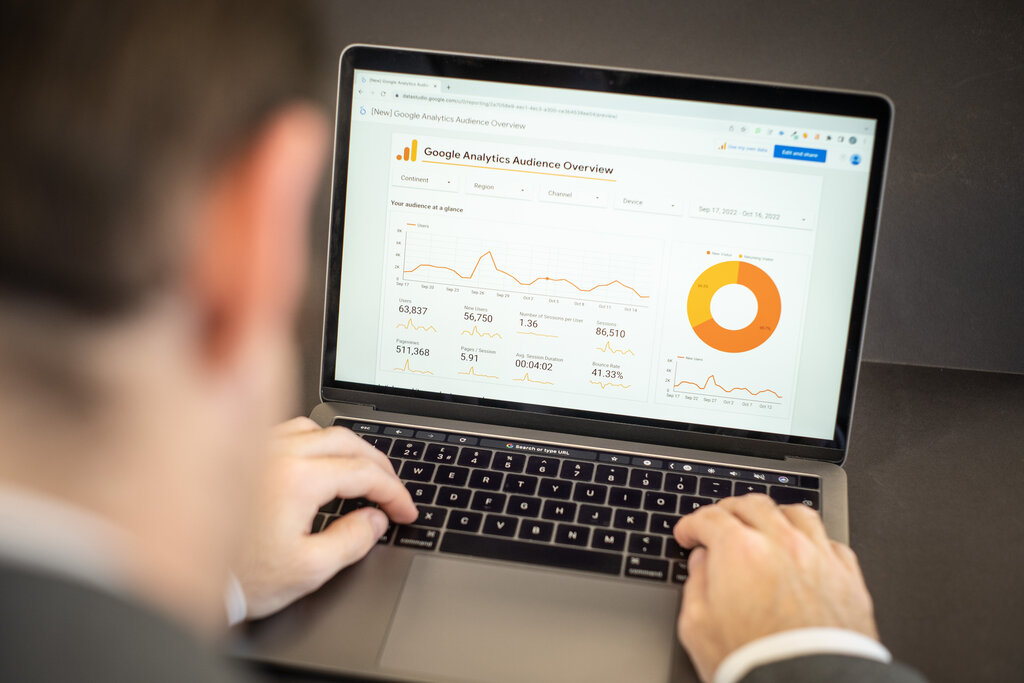
Digital analytics provides the answers. By tracking user behavior, businesses can identify what's working and what isn't. For example, if data shows that many users abandon their shopping carts on the payment page, it might signal a technical issue or a confusing layout. Fixing that single problem could significantly boost sales.
Data-driven decision-making is crucial in digital marketing.
It also helps optimize marketing spending. Analytics can show that your ads on one social media platform are bringing in lots of valuable customers, while ads on another are not. This insight allows you to focus your budget where it will have the greatest impact.
The Language of Analytics
To get started with analytics, you need to know a few key terms. This is the basic vocabulary for understanding analytics reports.
Metric
noun
A quantifiable measure used to track and assess the status of a specific process. In digital analytics, examples include 'Pageviews' and 'Bounce Rate'.
Metrics are the numbers you track. They give you the raw data about what's happening. Another important concept is a 'dimension,' which provides context for your metrics. For example, 'Pageviews' is a metric, while 'Country' is a dimension. Together, they can tell you the number of pageviews from a specific country.
| Term | Description |
|---|---|
| Session | A group of user interactions with your website that take place within a given time frame. |
| User | An individual who interacts with your site or app. |
| Pageview | An instance of a page being loaded (or reloaded) in a browser. |
| Bounce Rate | The percentage of single-page sessions in which there was no interaction with the page. |
| Conversion | A completed activity, online or offline, that is important to the success of your business. |
The Analytics Process
Digital analytics isn't a one-time task; it's a continuous cycle of improvement. The process can be broken down into a few key stages.
-
Measure: The first step is to implement tracking code on your website or app to collect raw data about user activity. This is the foundation of the entire process.
-
Analyze: Once data is collected, you analyze it to find meaningful patterns. Why did sales dip last Tuesday? Which blog posts are most popular? This is where data turns into information.
-
Report: The insights from your analysis need to be shared. Reporting involves creating dashboards or presentations that communicate the key findings to your team or clients in a clear and concise way.
-
Optimize: This is the most important step. Based on the insights, you make changes to your website, marketing campaigns, or app. This could be as simple as changing the color of a button or as complex as redesigning your entire homepage. After optimizing, you go back to the 'Measure' step to see how your changes affected user behavior, and the cycle begins again.
By following this process, you can make continuous, data-informed improvements that help you achieve your business goals.
What is the primary goal of digital analytics?
In digital analytics, 'Country' is an example of a __________, while 'Pageviews' is an example of a __________.