Mastering Development Best Practices Beyond Vibe Coding
Introduction to Software Development Best Practices
Writing Quality Code
Making software that works is just the first step. The real challenge is creating software that is easy to understand, fix, and improve over time. This is where best practices come in. They are like the rules of the road for developers, helping everyone write code that is clean, efficient, and easy to collaborate on. Following these guidelines saves time, reduces errors, and makes the entire development process smoother for everyone involved.
Best practices in software engineering are established guidelines and principles that help teams create high-quality, maintainable, and effective software products with fewer errors and rework.
The DRY Principle
One of the most fundamental principles is "Don't Repeat Yourself," or DRY. The idea is simple: every piece of knowledge or logic in a system should have a single, unambiguous representation. If you find yourself writing the same lines of code in multiple places, that's a sign you should stop and rethink your approach.
Imagine you're writing a report and need to state a specific statistic, like "the average user is 34 years old." If you type this out in ten different paragraphs and the average age later changes to 35, you'll have to find and update all ten instances. If you had defined it once at the top and referenced it, you'd only need to make one change.
In programming, we achieve this by creating functions or methods. Let's say you're calculating a 10% discount for an item's price in several parts of your e-commerce application. Repeating the calculation price * 0.90 everywhere is risky. Instead, you can create a single function.
// Before DRY: Repetitive logic
let item1Price = 50;
let item2Price = 100;

let item1Discounted = item1Price * 0.90;
let item2Discounted = item2Price * 0.90;

// After DRY: A reusable function
function calculateDiscount(price) {
  return price * 0.90;
}

let item1Discounted = calculateDiscount(item1Price);
let item2Discounted = calculateDiscount(item2Price);
Now, if the discount changes to 15%, you only need to update the calculateDiscount function in one place. Your code is now more maintainable and less prone to errors.
Building with Blocks
The DRY principle naturally leads to another best practice: modular design. Think of building a complex application like building with LEGO bricks. Instead of working with one giant, custom-molded piece of plastic, you have small, standard blocks. Each block has a specific shape and purpose, and you can combine them to create almost anything.
Modular design applies the same thinking to software. You break down a large program into smaller, independent, and interchangeable parts called modules. Each module is responsible for one specific part of the application's functionality.
This approach makes the system easier to develop, as different developers can work on different modules simultaneously. It also makes it easier to update or replace parts of the application without affecting the entire system. A significant benefit of this is that it makes your code much easier to test.
Testing Your Work
Writing code without testing it is like building a car and never turning the key to see if the engine starts. You need to verify that your code does what you expect it to do. Writing testable code means structuring your functions and modules so they can be easily checked for correctness.
Good, testable code is often made of small functions that perform a single, clear task. These functions take inputs and produce outputs without causing side effects, like modifying a global variable. This makes it simple to write a test: provide a specific input and check if the function returns the expected output.
Let's revisit our discount function. It's perfectly testable.
// The function to test
function calculateDiscount(price) {
  return price * 0.90;
}

// A simple test
let inputPrice = 200;
let expectedOutput = 180;
let actualOutput = calculateDiscount(inputPrice);

if (actualOutput === expectedOutput) {
  console.log("Test passed!");
} else {
  console.log("Test failed!");
}
When you have a system built from many small, well-tested modules, you can be much more confident that the entire application will work correctly. This practice catches bugs early, when they are easier and cheaper to fix.
Tracking Changes with Git
When you're working on a project, especially with a team, how do you manage all the changes? What happens if a new feature breaks something that used to work? This is where version control systems come in.
Git
noun
A distributed version control system for tracking changes in source code during software development. It allows multiple developers to work on a project simultaneously without overwriting each other's changes.
Git is the most popular version control system today. It works by taking "snapshots" of your code at different points in time. Each snapshot, called a commit, saves the state of your entire project. You can look back at any commit, see what changes were made, and even revert the project back to that state if needed.
This is incredibly powerful. It's like having an unlimited undo button for your entire project. It also makes collaboration seamless. Developers can work on their own copies of the project and then merge their changes together. Git helps manage any conflicts that arise when two people have changed the same part of a file.
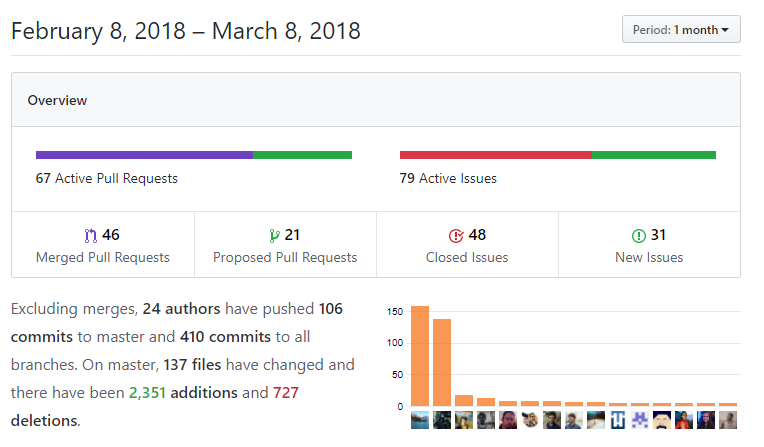
Learning to use a tool like Git is a non-negotiable skill for modern software developers. It provides a safety net and a clear history of your project's life.
What is the primary goal of the "Don't Repeat Yourself" (DRY) principle?
A software team breaks a large application into separate modules for user authentication, product catalog, and payment processing. Which of the following is NOT a direct benefit of this modular design approach?
These practices, from writing DRY, modular code to using version control, form the foundation of professional software development. They help create software that is not just functional, but also robust, maintainable, and collaborative.