Mastering Defensive Driving and Highway Survival
Space Cushioning Mastery
The Proactive Bubble
Most drivers think about the gap in front of them. Proactive drivers manage a 360-degree bubble of space. This isn't just about avoiding the car ahead; it's about giving yourself time to think and room to move, no matter what happens around you. On a high-speed highway, this space cushion is your primary defense system. It turns driving from a reactive task into a strategic one.
The Four-Second Rule
The old two-second rule is outdated for highway speeds. At 70 mph, you need a minimum of four seconds between your vehicle and the one in front. This provides a safe buffer for reaction time and braking distance under ideal conditions.
To measure it, watch the vehicle ahead pass a fixed object, like a sign or an overpass. Then, start counting: "one-thousand-one, one-thousand-two, one-thousand-three, one-thousand-four." If you reach the object before you finish counting, you're too close.
This is a baseline. In rain, fog, or snow, or when visibility is poor, extend that count to six or even eight seconds. The slicker the road, the more time you need.
More space gives you more options. More options mean more control.
Escape Routes and Eye Lead
Your space cushion isn't just about the front and back. You need an "out"—an open lane or a stable shoulder you can move into if a hazard appears suddenly. This requires constant awareness of the entire traffic picture.
Check your mirrors every 5-8 seconds. Know who is next to you, who is behind you, and how fast they're approaching. This practice of keeps you from getting boxed in. Your goal is to always have at least one escape path available.
To spot hazards early enough, you need to look far down the road, not just at the car in front of you. Practice a —scan the road for where you'll be in 15 seconds. At highway speeds, that's about a quarter of a mile ahead. This gives your brain ample time to process potential problems, like brake lights flashing three cars ahead or debris in the roadway.
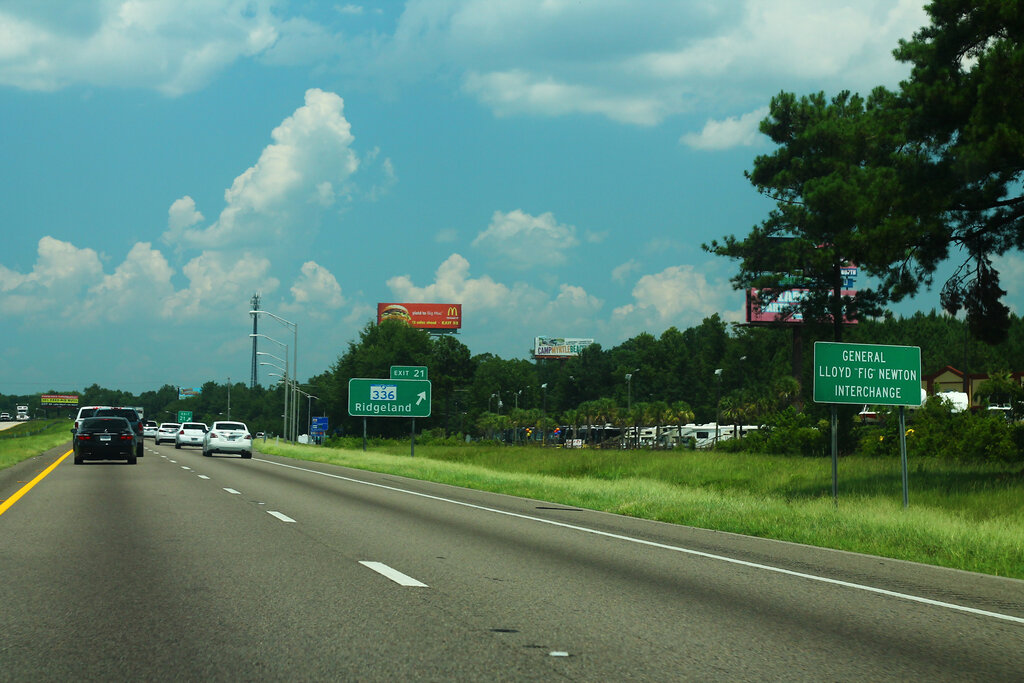
Maintaining escape routes is critical, especially when dealing with drivers who don't respect your space cushion.
Managing Tailgaters
When a driver is tailgating you, your first instinct might be to speed up or tap your brakes. Both actions are dangerous and escalate the situation. The correct, counterintuitive response is to create more space in front of you.
Slow down gently and increase your following distance from the car ahead to six, seven, or even eight seconds. This might seem odd, but it compensates for the lack of space behind you. By creating a larger forward buffer, you give both yourself and the tailgater much more time to react if traffic suddenly stops. You've effectively created a shared safety zone that protects both vehicles.
This de-escalates the situation without confrontation. Often, the tailgater will become impatient with your slower speed and simply pass you. If they don't, you've still made the situation far safer.
Maintain a 'safety cushion' of space around your vehicle, providing you with room to manoeuvre in case of emergencies.
Thinking through these scenarios helps build the right habits for the road.
When driving at highway speeds in ideal weather, what is the minimum recommended following distance you should maintain from the vehicle in front of you?
If a driver is following you too closely (tailgating), the safest and most effective response is to gently slow down and increase your following distance from the car ahead of you.
By actively managing the space around your vehicle, you shift from being a passenger behind the wheel to being a commander of your immediate environment. It's the most powerful defensive driving skill you can master.