Mastering Deep Focus and Cognitive Control
Neurobiology of Attention
The Brain's Gatekeeper
Every second, your brain is bombarded with millions of pieces of sensory data. The hum of your computer, the feeling of the chair beneath you, the flicker of a light in your periphery. Most of it is irrelevant. So, how do you focus on what matters?
Enter the (RAS). Located in the brainstem, the RAS acts as a vigilant filter, sorting through the flood of incoming information and deciding what’s important enough to reach your conscious awareness. It’s the bouncer at the nightclub of your mind, turning away trivial sensory data so the VIPs—the stimuli relevant to your current goals or survival—can get in.
When you're engrossed in a project and you don't hear someone call your name, that's the RAS at work. It has prioritised the signals related to your task and down-weighted the auditory input of your colleague's voice. Conversely, if you're walking down a quiet street at night, your RAS will be on high alert for any unusual sounds, instantly flagging them for conscious processing. It's not about blocking information, but about prioritising it based on context and goals.
The CEO of Focus
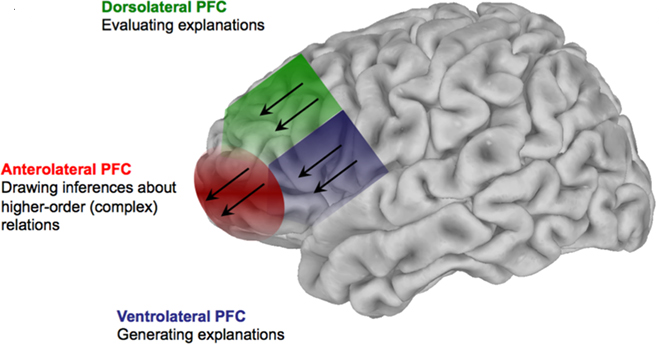
Once the RAS has allowed a signal through, another part of the brain takes over to direct our attention. The prefrontal cortex (PFC), located at the very front of the brain, acts as the executive control centre. This is where top-down attention happens—the conscious, deliberate act of focusing on a specific task while filtering out distractions.
Think of the PFC as the CEO of your brain. It manages working memory, sets goals, and makes decisions. When you decide to ignore your phone and concentrate on a report, your PFC is sending signals to other brain regions to inhibit responses to distracting stimuli (the phone) and enhance responses to relevant ones (the words on the screen). This deliberate allocation of cognitive resources is what we experience as focus.
This process is incredibly energy-intensive. Maintaining directed attention requires the PFC to constantly work to suppress distractions and keep your goals in mind, which is why long periods of concentration can feel mentally exhausting.
The Tug-of-War for Your Mind
Your brain has two dominant networks that are almost always at odds with each other. When you are focused on a task—reading this article, for example—your Task-Positive Network (TPN) is active. This network includes the prefrontal cortex and other areas involved in problem-solving, decision-making, and directed attention.
But the moment your focus wavers, another network takes over: the (DMN). The DMN is associated with mind-wandering, daydreaming, thinking about the past, or planning for the future. It’s your brain's “idle” state, but it’s far from inactive. It's constantly looking for something to process when not given a specific task.
These two networks have an antagonistic relationship; when one is active, the other is typically suppressed. The constant switching between them is metabolically costly. Each time you get distracted and have to pull your focus back to the task at hand, your brain burns a surprising amount of glucose. This cognitive cost is what leads to “directed attention fatigue,” the feeling of being mentally drained after a long day of trying to concentrate.
The Chemistry of Curiosity
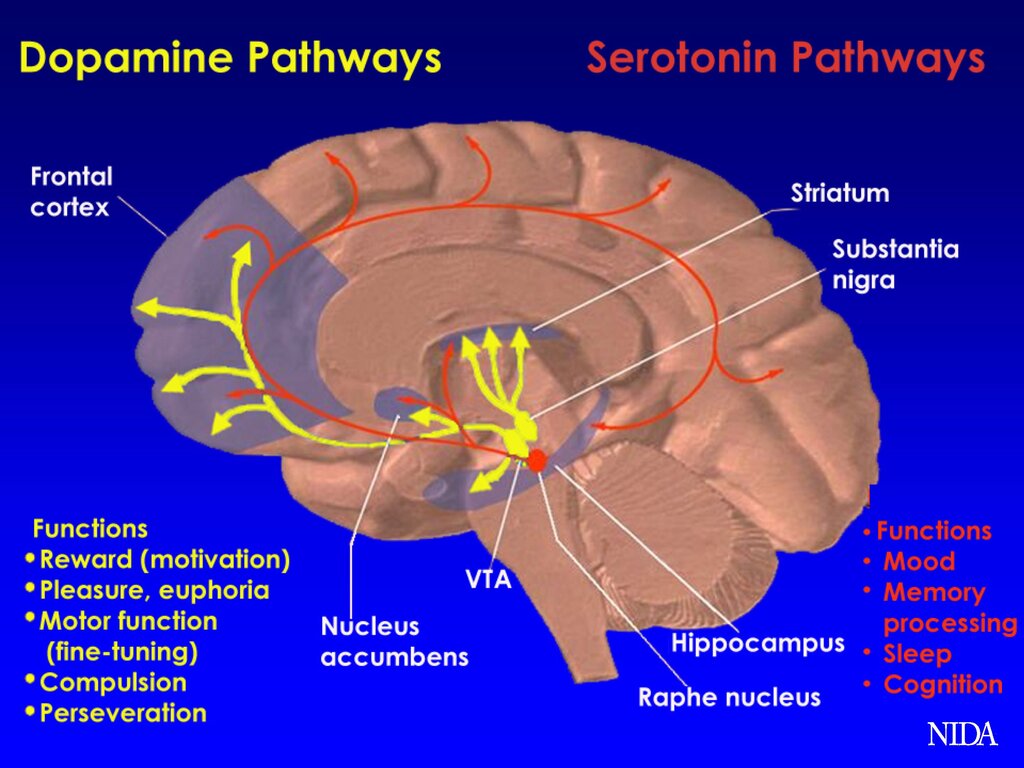
Why is it so hard to ignore a notification, even when you know it's probably unimportant? The answer lies with a neurotransmitter called and the brain's reward system.
Dopamine is often misunderstood as the “pleasure chemical,” but its role is more about motivation and reinforcement. It’s released in anticipation of a reward, not just upon receiving one. Your brain releases dopamine when it encounters something new or unexpected because that novel stimulus might be important. This creates a powerful drive to investigate.
This mechanism, known as a dopamine loop, was essential for survival. Our ancestors needed to pay attention to a rustle in the bushes (it could be a predator) or a new type of fruit (it could be food). Today, this same system is exploited by technology. Each notification, email, or social media update is a potential reward. The uncertainty of what it contains triggers a dopamine hit, compelling you to check. This novelty-seeking behaviour constantly pulls your attention away from your primary task, creating a state of continuous partial attention.
Understanding these neural mechanisms isn't about blaming your brain for being easily distracted. It's about recognising the biological systems at play. Your brain's filtering, focusing, and reward systems evolved for a very different world. By knowing how they work, you can better design your environment and habits to support deep, sustained focus.
What is the primary role of the Reticular Activating System (RAS)?
When your mind starts to wander while you are trying to work, which brain network has likely become more active?