Mastering Decision Models
Introduction to Decision Models
Blueprints for Choices
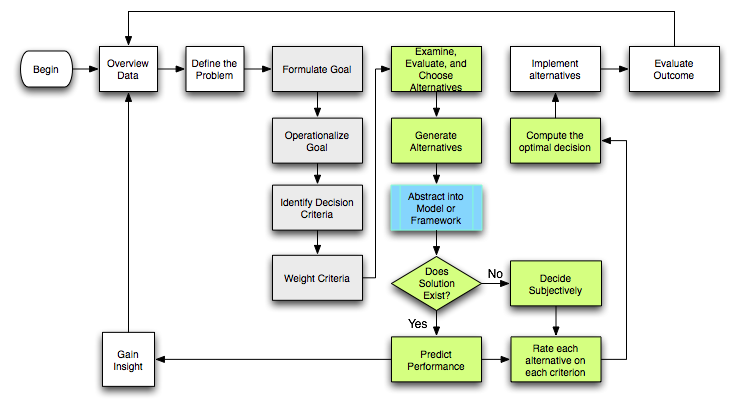
A decision model is a systematic way to make a choice. Think of it as a blueprint. You wouldn't build a house by just guessing where the walls go. You'd follow a plan that lays out all the components and how they fit together. Decision models do the same for our choices, whether in business, engineering, or daily life.
They provide a structured framework to help us think through complex problems. By turning a messy situation into a clear set of steps or variables, these models help us see the potential outcomes of different actions. This process reduces the influence of emotion and personal bias, leading to more consistent and justifiable decisions.
The goal isn't to find a magic formula, but to clarify your thinking and evaluate your options logically.
How We Make Decisions
Before we dive into specific models, it helps to understand a few key ideas about how people make decisions.
Rational Decision-Making This is the ideal, textbook approach. In a perfectly rational world, you would identify your problem, gather all possible information, list every single alternative, and evaluate each one perfectly to find the absolute best choice. It’s a thorough and logical process, but it assumes we have unlimited time and information.
Bounded Rationality Here's the reality check. We rarely have all the information, and our brains can't process it all anyway. Economist Herbert Simon called this "bounded rationality." We're limited by the information we have, our own cognitive limits, and the time we have to decide.
Instead of searching for the perfect solution (optimizing), we tend to look for one that is good enough (satisficing). We simplify the problem to make it manageable.
The Role of Intuition Finally, there's the gut feeling. Intuition isn't just random guessing. It’s your brain rapidly recognizing patterns based on past experiences. An expert firefighter might intuitively know a building is about to collapse, not because of a detailed analysis, but from years of seeing similar situations. Intuition can be powerful and fast, but it can also be shaped by unconscious biases.
Types of Decision Models
Different problems call for different kinds of blueprints. Here’s a quick look at a few common types of decision models.
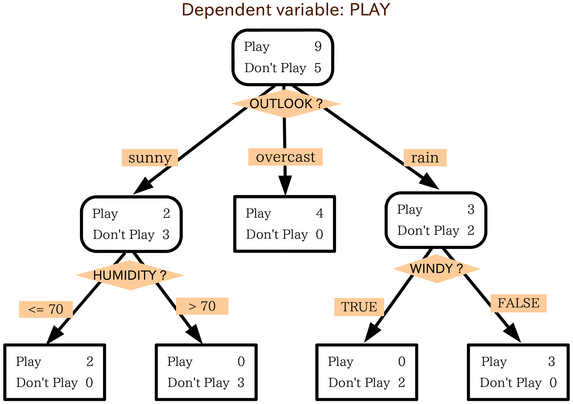
Decision Tree
noun
A model that maps out choices and their possible consequences in a tree-like structure.
Decision trees are great for visualizing a series of choices. Each branch of the tree represents a possible decision or outcome, helping you see the path from choice to result.
Linear Programming Models These are mathematical models used for optimization problems, like figuring out the best way to allocate resources. Imagine a factory that makes two types of products. A linear programming model could help determine how many of each to produce to maximize profit, given constraints like labor hours and raw materials.
Simulation Models Sometimes, the best way to understand a complex system is to build a replica of it and see how it behaves. Simulation models are computer-based models that imitate real-world systems. You can use them to test different scenarios and see potential outcomes without real-world consequences. For example, city planners might use a simulation to predict traffic flow if they add a new lane to a highway.
These models are just a starting point. Each provides a unique lens through which to view a problem, turning complexity into clarity.