Mastering Decision Making
Introduction to Decision-Making
What is a Decision?
At its core, decision-making is the mental process of selecting a course of action from a set of alternatives. It's something we do constantly, from choosing what to wear in the morning to making major life choices. While some decisions are quick and automatic, others require careful thought. Most thoughtful decisions follow a general pattern.
This process isn't always perfectly linear. Sometimes you might gather information that sends you back to redefine the problem, or you might weigh the evidence and realize you need to find more alternatives. But generally, these stages provide a map for how we move from a question to an action.
The Brain's Toolkit
To navigate these stages, your brain uses a set of powerful cognitive tools. Three of the most important are perception, memory, and reasoning.
Perception is how you interpret the world around you. When you gather information, you're using perception to make sense of what you see, hear, and read. It's the lens through which you view the facts of the situation.
Memory is your personal database of past experiences and learned knowledge. It helps you recognize patterns, recall what worked (or didn't) in the past, and generate potential alternatives based on what you already know.
Reasoning is the workhorse of decision-making. It's the active process of thinking through the information you've gathered and the alternatives you've identified. It allows you to compare options, predict potential outcomes, and logically justify your final choice.
These three functions—perception, memory, and reasoning—work together to guide you from identifying a problem to reviewing its outcome.
Mental Shortcuts and Traps
Our brains are incredibly efficient. To save time and energy, they often rely on mental shortcuts, or heuristics. While these shortcuts are useful, they can sometimes lead to predictable errors in judgment known as cognitive biases. These biases can quietly influence your decisions without you even realizing it.
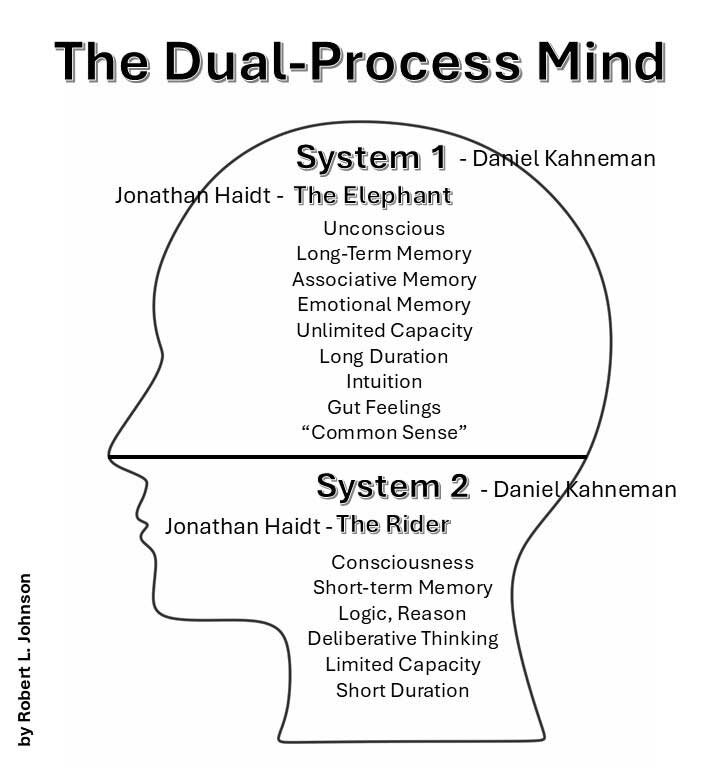
Let's look at a few common biases that can trip us up.
Confirmation Bias
noun
The tendency to search for, favor, and recall information that confirms your existing beliefs, while ignoring evidence to the contrary.
Imagine you think a particular brand of phone is the best. Confirmation bias makes you more likely to notice and remember its good reviews while dismissing any negative ones. This reinforces your initial belief, making it harder to evaluate the options objectively.
Overconfidence
noun
The tendency to be more certain about your judgments and abilities than you should be.
Overconfidence can lead us to take unnecessary risks or fail to prepare properly. A student who is overconfident about an exam might not study enough, just as an investor might put too much money into a single stock they feel certain about.
Affect Heuristic
noun
Making decisions based on your current emotional state, rather than objective information. "Affect" is another word for emotion.
If you're in a good mood, you might underestimate risks and make overly optimistic choices. If you're feeling anxious, you might be too cautious and miss out on good opportunities. Your emotions become a substitute for a thorough evaluation of the facts.
A heightened level of understanding of the cognitive biases that we and others have can help us make better decisions while lessening the chances of making poor ones
Ready to check your understanding of these core concepts?
Which of the following best defines the role of 'reasoning' in the decision-making process?
An entrepreneur is convinced their new business idea is a guaranteed success. They seek out articles that highlight the potential of their industry while ignoring reports about market challenges. This is a classic example of:
Recognizing the stages of decision-making, the cognitive tools we use, and the common biases that can affect us is the first step toward making better, more deliberate choices.