Mastering Day Trading Strategies
Introduction to Day Trading
What Is Day Trading?
Day trading is a style of trading where you buy and sell financial instruments within the same trading day. A day trader's goal is to profit from small price movements in the market. Unlike investors who might hold onto an asset for years, a day trader closes out all of their positions before the market closes each evening. This means no holding onto stocks, currencies, or commodities overnight.
Day trading is the act of buying and selling a financial instrument within the same day or even multiple times over the course of a day.
The core objective is to accumulate small gains from numerous trades, which can add up to a significant amount. This high-frequency approach means day traders are constantly analyzing the market, looking for opportunities that might only last for a few hours or even minutes.
A Trader's Toolkit
Day traders aren't limited to just one type of asset. They operate across various financial markets, choosing instruments that offer sufficient liquidity and volatility to make short-term trading viable. Liquidity is crucial because it ensures they can enter and exit trades quickly without significantly affecting the asset's price.
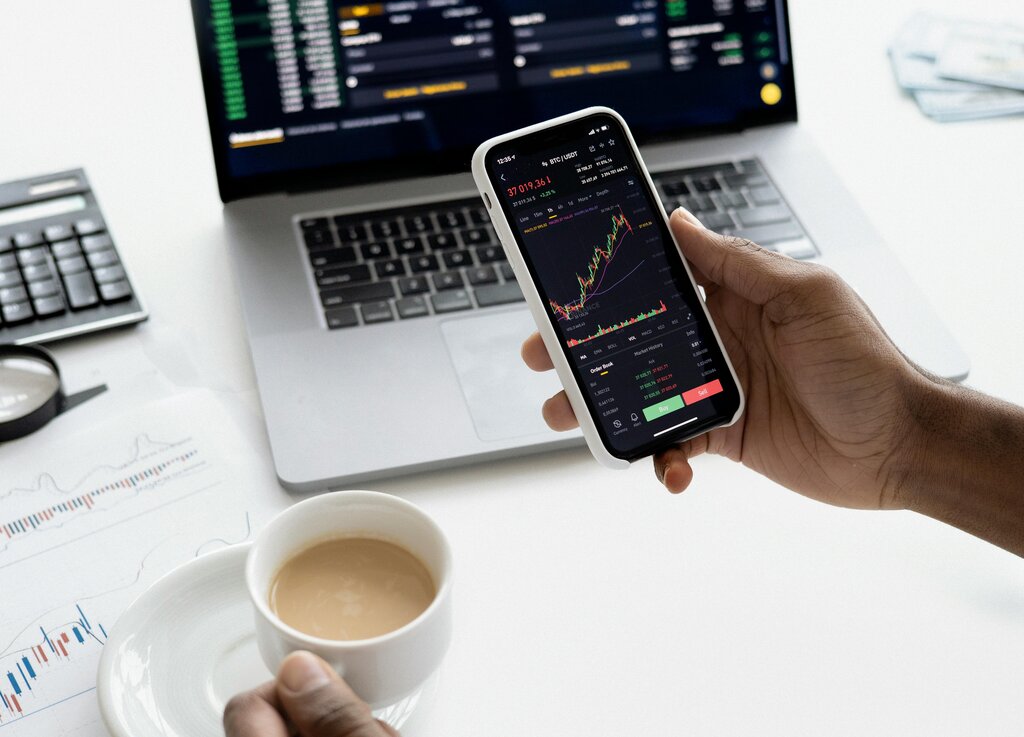
Here are some of the most common instruments used in day trading:
| Instrument | Description |
|---|---|
| Stocks | Shares of ownership in a public company. Traders profit from price changes throughout the day. |
| Forex | The foreign exchange market, where traders speculate on the changing values of currency pairs (e.g., EUR/USD). |
| Futures | Contracts to buy or sell an asset at a predetermined future date and price. Common for commodities and stock indexes. |
| Options | Contracts that give the holder the right, but not the obligation, to buy or sell an asset at a set price before a certain date. |
| Cryptocurrencies | Digital assets like Bitcoin and Ethereum, known for their high volatility, which can create many trading opportunities. |
Trading Styles Compared
To truly understand day trading, it helps to see how it compares to other approaches. The main difference comes down to the time horizon of the trades.
Swing Trading: Swing traders hold positions for more than a day but usually not more than a few weeks. They aim to capture larger price "swings" than day traders. This style requires less constant monitoring than day trading but still involves active management.
If day trading is a sprint, swing trading is more like a marathon - slower-paced, more deliberate, and focused on capturing multi-day moves with patience and precision.
Investing: Investors have the longest time horizon, often holding assets for months, years, or even decades. Their goal is to build wealth gradually through the long-term appreciation of assets like stocks and bonds. They are less concerned with short-term market fluctuations and focus more on the fundamental value of their investments.
Pros and Cons
Day trading can be exciting and potentially lucrative, but it's not without its challenges. It's important to have realistic expectations and understand both sides of the coin.
One major advantage is the lack of overnight risk. Since all positions are closed by the end of the day, traders are not exposed to potential losses from negative news or market shifts that can happen while the market is closed.
On the other hand, day trading is highly demanding. It requires a significant amount of time, focus, and emotional discipline. The fast pace can be stressful, and the potential for rapid losses is very real. It also requires substantial capital, as traders need enough money to make meaningful profits and absorb potential losses.
Good risk management for day trading generally dictates that you risk 1% or less of your total account on each trade, so if you followed this rule, you would want to fund the account with $50,000.
Before diving in, it's crucial to weigh these factors carefully.
Ready to check your understanding? Let's see what you've learned about the fundamentals of day trading.
What is the defining characteristic of day trading?
What is the primary goal of a day trader?
Understanding these core concepts is the first step. Day trading is a complex field, but a solid foundation makes it much easier to navigate.