Mastering Day Trading
Introduction to Day Trading
What is Day Trading?
Day trading is a strategy that involves buying and selling financial assets within the same trading day. Unlike investors who might hold onto stocks for years, a day trader's goal is to close out all their positions before the market closes. This means if you buy a stock in the morning, you sell it by the afternoon.
The core idea is to profit from small price movements. By not holding positions overnight, day traders avoid the risks that can come from news or events that happen when the market is closed, which could cause a stock's price to change dramatically at the next day's opening.
Day trading is about speed and precision, capitalizing on minor price fluctuations throughout a single day.
Commonly Traded Instruments
Day traders focus on assets that can be bought and sold quickly and that tend to have enough price movement to create profit opportunities. Three of the most common markets for day trading are stocks, foreign exchange (forex), and futures.
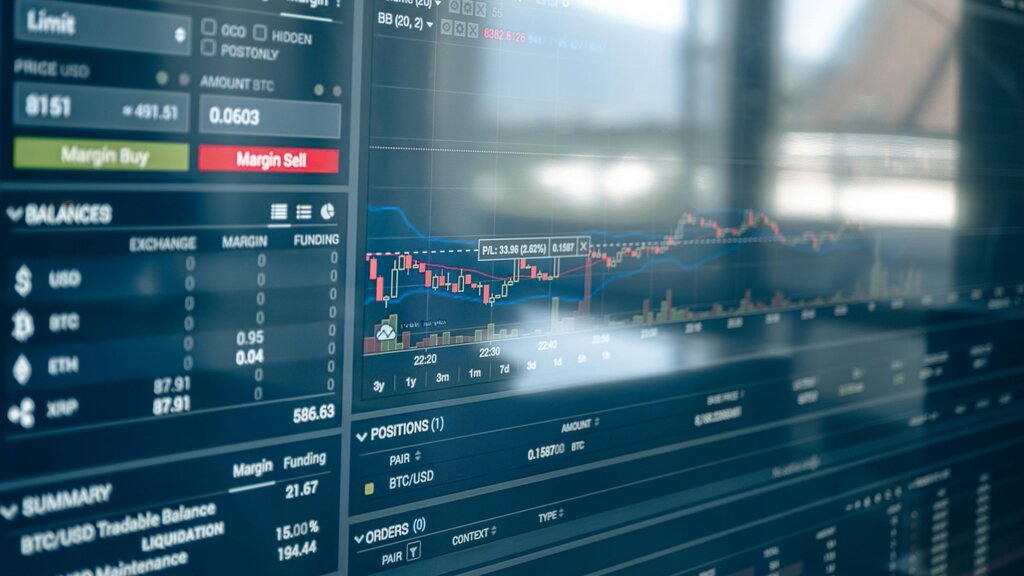
- Stocks: This involves trading shares of publicly traded companies. Traders often focus on well-known, high-volume stocks that have plenty of buyers and sellers.
- Forex: The foreign exchange market is where currencies are traded. It's the largest financial market in the world, and traders speculate on the changing values of currency pairs, like the Euro versus the U.S. Dollar (EUR/USD).
- Futures: These are contracts that obligate the buyer to purchase an asset, or the seller to sell an asset, at a predetermined future date and price. Day traders use futures to bet on the direction of commodities, stock indexes, and currencies.
The Importance of Liquidity and Volatility
Two concepts are critical for day traders: liquidity and volatility. Think of them as the essential ingredients for a successful trade.
Liquidity
noun
The ability to quickly buy or sell an asset without causing a significant change in its price.
For a day trader, high liquidity is non-negotiable. It means there are many active buyers and sellers for an asset. This ensures you can get in and out of a trade at a predictable price. Low liquidity can trap you in a position, forcing you to sell for less or buy for more than you intended.
Volatility
noun
The degree of variation of a trading price series over time, as measured by the standard deviation of logarithmic returns.
Volatility is what creates opportunities. If an asset's price never moved, there would be no way to make money. Day traders need prices to fluctuate. However, too much volatility can be a double-edged sword, as it also increases risk. The ideal asset for a day trader is one that is liquid enough to trade easily but volatile enough to offer profit potential.
Rules of the Road
Day trading is a regulated activity, particularly in the United States. Regulators have put rules in place to protect traders and the market. One of the most important is the "pattern day trader" (PDT) designation.
According to the U.S. Securities and Exchange Commission (SEC), you are considered a pattern day trader if you make four or more "day trades" (buying and then selling the same security on the same day) within five business days, provided the number of day trades represents more than six percent of your total trades in your margin account for that same five-day period.
Once your account is flagged as a pattern day trader, you must maintain a minimum account balance of 💲25,000. If your account balance drops below this level, you will be prohibited from day trading until you bring the balance back up.
This rule is designed to ensure that only traders with sufficient capital engage in this high-risk activity. It's a key regulation to be aware of before you start.
What is the primary goal of a day trader?
A day trader looking for an ideal asset would prioritize one with ____ liquidity and ____ volatility.
Understanding these foundational concepts is the first step. Day trading involves quick decisions, a clear understanding of the market's pulse, and strict adherence to rules.