Mastering Data Structures
Review of Core Data Structures
Core Data Structures
Data structures are the fundamental building blocks of computer science. They provide a way to organize, manage, and store data so it can be accessed and modified efficiently. Think of them as different types of containers, each designed for a specific purpose. Just as you wouldn't store soup in a colander, choosing the right data structure for a task is crucial for writing effective code. We'll briefly review the essential structures that form the basis for more complex algorithms and systems.
Data structures are a core component that every programming student must master, and chances are you may have already learned or worked with some basic data structures such as arrays or lists.
Linear Structures
Linear data structures arrange items in a sequential order. Each element is attached to its previous and next adjacent elements. This straightforward, one-after-the-other arrangement makes them easy to implement and understand.
Array
noun
A collection of items stored at contiguous memory locations. Each item can be identified by at least one index or key.
Arrays are the simplest data structure. Imagine a row of numbered mailboxes. If you know the box number (the index), you can go directly to it without checking the others. This makes accessing an element by its index very fast. However, adding or removing a mailbox from the middle of the row is a hassle—you'd have to shift all the subsequent boxes to make room or close the gap.
# Creating an array (in Python, this is a list)
numbers = [10, 20, 30, 40, 50]

# Accessing an element by index (O(1) time)
first_element = numbers[0]  # Returns 10

# Adding an element to the end
numbers.append(60)

# Inserting an element in the middle (less efficient)
numbers.insert(2, 25) # numbers is now [10, 20, 25, 30, 40, 50, 60]
Next are linked lists. A linked list is a series of connected nodes, where each node contains data and a pointer to the next node in the sequence. It's like a scavenger hunt where each clue tells you where to find the next one. Unlike arrays, linked list elements don't need to be in contiguous memory locations. This makes insertions and deletions in the middle much easier—you just change the pointers of the adjacent nodes.
Stacks and queues are abstract data types that are often implemented using arrays or linked lists. They aren't defined by their structure but by the rules for adding and removing elements.
A stack follows a Last-In, First-Out (LIFO) principle. Think of a stack of plates: you add a new plate to the top, and you take a plate from the top. The last plate you put on is the first one you take off. The main operations are push (add to top) and pop (remove from top).
Use cases for stacks include the 'undo' functionality in a text editor, or managing function calls in program execution.
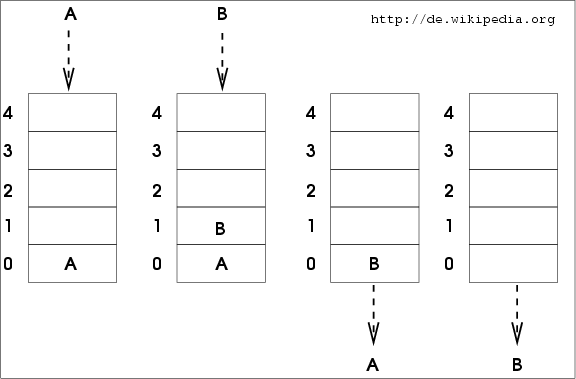
A queue, on the other hand, follows a First-In, First-Out (FIFO) principle. This is like a checkout line at a grocery store. The first person to get in line is the first person to be served. The main operations are enqueue (add to the back) and dequeue (remove from the front).
Non-Linear Structures
Unlike linear structures, non-linear structures don't have a simple sequential arrangement. Elements can be connected to multiple other elements, creating hierarchical or networked relationships.
Tree
noun
A hierarchical data structure that consists of nodes connected by edges. It has a root node, and each node has zero or more child nodes.
Trees are perfect for representing hierarchies. A family tree, an organization chart, or the folders on your computer are all examples. The topmost node is called the root. Nodes that have no children are called leaves. A common type is the binary tree, where each node has at most two children.
Finally, we have graphs. A graph is a collection of nodes (or vertices) and the edges that connect them. It's the most general data structure. Think of a social network: each person is a node, and a 'friend' connection is an edge. Unlike trees, graphs don't have a root node and can have cycles (you can follow a path of edges and end up back where you started).
Graphs are incredibly versatile and are used to model everything from road networks and flight paths to the linked pages of the internet.
| Structure | Key Characteristic | Common Use Case |
|---|---|---|
| Array | Constant-time access by index | Storing lists of similar items |
| Linked List | Efficient insertions/deletions | Implementing stacks, queues |
| Stack | Last-In, First-Out (LIFO) | Undo functionality, call stack |
| Queue | First-In, First-Out (FIFO) | Print jobs, handling requests |
| Tree | Hierarchical relationships | File systems, organization charts |
| Graph | Networked relationships | Social networks, mapping |
Let's test your understanding of these fundamental concepts.
Which data structure would be most suitable for implementing the 'undo' functionality in a text editor?
What is the primary advantage of a linked list over an array?
This review provides the vocabulary and mental models needed to explore how these structures are implemented and analyzed for performance.