Mastering Data Structures and Algorithms for Interviews
Introduction to Data Structures and Algorithms
Organizing Information
Think about a library. It's filled with thousands of books, each a piece of data. If all those books were piled randomly in the center of the room, finding the one you want would be a nightmare. Instead, libraries organize them. They use shelves, sections for fiction and non-fiction, and an alphabetized system. This organization is a data structure.
Data Structure
noun
A specific way of organizing and storing data in a computer so that it can be accessed and modified efficiently.
Now, imagine you have a specific book title you need to find. Your process might be: 1) look up the title in the library's computer, 2) note the aisle and shelf number, 3) walk to that location, and 4) scan the shelf for the book. That step-by-step process is an algorithm.
Algorithm
noun
A finite sequence of well-defined instructions, typically used to solve a class of specific problems or to perform a computation.
In computing, a data structure is how you store your information, and an algorithm is the recipe you follow to do something with that information. The two go hand in hand. A great organizational system is useless without a good method for using it, and a great method won't work on a pile of chaos.
Why It Matters
Writing code is about solving problems. Data structures and algorithms are the fundamental tools for doing this efficiently. Choosing the right tool for the job can be the difference between a program that runs in a fraction of a second and one that takes minutes or even crashes.
Imagine your phone's contact list. If it were just a random jumble of names, finding one person would mean checking every single entry. But because it's stored alphabetically (a simple data structure), you can use a much faster searching method (an algorithm) to jump directly to the right section. Now, scale that up. What if you needed to find one user among a billion on a social media platform? The efficiency of your data structure and algorithm becomes critical.
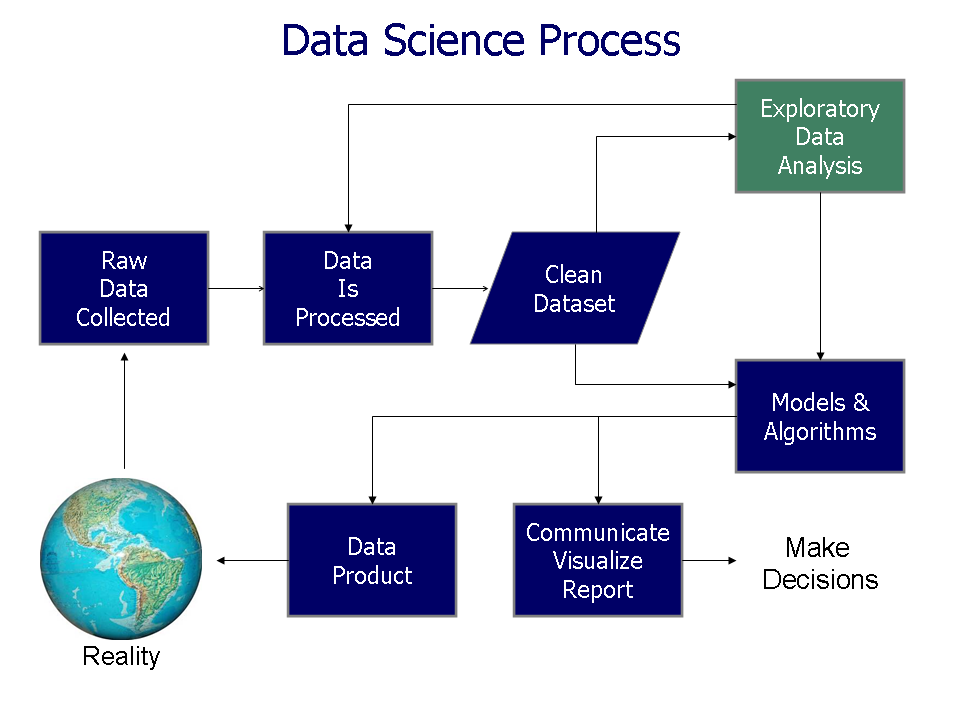
Good software developers don't just write code that works. They write code that works well, especially as the amount of data grows. Understanding data structures and algorithms allows them to write software that is fast, responsive, and scalable.
Everyday Examples
You interact with data structures and algorithms constantly, even if you don't realize it. They are the invisible engines powering the digital world.
| Application | How It Works |
|---|---|
| GPS Navigation | Your mapping app models the road network as a graph (a data structure) and uses an algorithm like Dijkstra's or A* to find the shortest path from your location to your destination. |
| Social Media Feed | New posts are added to a list or queue (data structures). The platform then uses sorting and filtering algorithms to decide which posts to show you based on relevance, recency, or your interests. |
| Music Playlist | A playlist is often a linked list, a data structure where each song points to the next. The "shuffle" feature is an algorithm that randomizes the order of the items in that list. |
| Undo/Redo Feature | In a text editor, your actions are often stored in a stack (a data structure). Clicking "Undo" is an algorithm that pops the last action off the stack and reverses it. Clicking "Redo" pushes it back on. |
In each case, the choice of how to store the data (the structure) directly impacts the efficiency of the actions performed on it (the algorithms). This fundamental relationship is at the core of computer science and software engineering.
In the analogy of a library, what does the step-by-step process of looking up a book's location in the computer and walking to the correct aisle represent?
Which of the following best defines a data structure?
Understanding these core concepts is the first step toward thinking like a programmer and solving problems efficiently.