Mastering Data Lakes
Introduction to Data Lakes
What is a Data Lake?
Think of a natural lake. It collects water from all sorts of sources: rivers, streams, rainfall, and groundwater. The lake doesn't filter or treat the water as it comes in; it just holds it all together in one massive reservoir. A data lake works on a similar principle, but for information.
A data lake is a centralized repository that stores vast amounts of raw, unprocessed data in its native format.
The key words here are "raw" and "native format." Unlike more traditional databases that require data to be cleaned up and organized into neat tables before it's stored, a data lake takes data exactly as it is. It's a vast storage pool for information in its original, untouched state.
All Data is Welcome
Data lakes are designed to hold just about any kind of data you can imagine. This is a huge advantage in a world where information comes in countless different forms.
Data types typically fall into three broad categories:
| Type | Description | Examples |
|---|---|---|
| Structured | Data organized in a fixed format, like a spreadsheet. | Customer databases, sales records, financial reports. |
| Semi-structured | Data that isn't in a rigid format but has some organizational properties. | JSON from web apps, XML files, system log files. |
| Unstructured | Data with no predefined structure at all. | Emails, videos, audio files, images, social media posts, PDF documents. |
A data lake can store all of these together, side by side. It doesn't force a video file to fit into the same kind of structure as a sales spreadsheet.
Built for Flexibility and Growth
Because data is stored in its raw form, data lakes are incredibly flexible. You don't need to define how you're going to use the data before you store it. This approach is often called "schema-on-read." You apply a structure or schema only when you're ready to analyze the data, not when you store it.
This flexibility is crucial for discovery and exploration. Data scientists can sift through the raw data, looking for patterns and insights that might have been missed if the data was forced into a predefined structure from the start.
Store everything first, ask questions later. That's the core philosophy.
Data lakes are also built for massive scale. They use distributed file systems, which means they can grow by simply adding more commodity hardware. This makes it cost-effective to store petabytes—or even exabytes—of data, an amount that would be unthinkable in many traditional systems.
A Foundational Layer
In modern data architectures, the data lake serves as the foundational layer. It's the single source of truth where all of an organization's raw data assets are collected and held.
From this central repository, data can be drawn out and fed into other systems for specific purposes. It might be used to train machine learning models, power real-time analytics dashboards, or populate a more structured data warehouse for business reporting. By decoupling data storage from data processing, the data lake provides a versatile and robust starting point for any data-driven initiative.
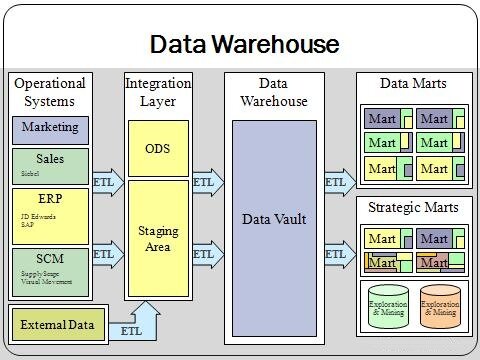
This setup allows different teams and applications to access the same underlying data without interfering with one another, creating a more agile and collaborative environment.
Time to check your understanding of these core concepts.
What is the defining characteristic of how a data lake stores information?
A data lake applies a structure or schema to data when the data is read for analysis, not when it is first stored. This approach is called schema-on-read.
In essence, a data lake provides a cheap, scalable, and flexible way to handle the massive volumes and variety of data that organizations face today, setting the stage for advanced analytics and insights.