Mastering Data Governance
Introduction to Data Governance
What is Data Governance?
Think of a library. For it to be useful, you need a system. Books must be cataloged, shelved in the right sections, and checked out properly. There are rules about who can borrow which books and for how long. Without this system, the library would be a chaotic pile of paper, not a source of knowledge.
Data governance is the library system for an organization's data. It's not about the data itself, but about how you manage it. It’s a collection of processes, roles, policies, and standards used to ensure data is managed as a strategic asset.
Data Governance: The overall management of the availability, usability, integrity, and security of the data used in an enterprise.
Essentially, data governance answers some critical questions:
- Who can access what data?
- What data is available and where is it located?
- How can we ensure the data is accurate and trustworthy?
- How do we keep data secure and comply with regulations?
By answering these, an organization can transform its data from a messy basement into a well-organized, valuable library.
The Core Objectives
Data governance isn't just about creating rules for the sake of it. It has clear goals that directly support a business. The primary objectives are to create a single source of truth, improve decision-making, and ensure compliance.
Let's break these down:
- Improve Data Quality: When everyone follows the same standards for entering and maintaining data, its quality naturally improves. This means fewer errors, less duplication, and more reliable information across the board.
- Ensure Compliance and Security: Many industries have strict regulations about how customer data must be handled (like GDPR or HIPAA). Governance provides a framework to meet these legal requirements and protect sensitive information from misuse.
- Enhance Decision-Making: Trustworthy data leads to better decisions. When leaders are confident in the numbers they see, they can make smarter, faster strategic choices.
- Increase Efficiency: With clear ownership and standardized processes, employees spend less time hunting for data or questioning its accuracy. They can find what they need quickly and get back to their actual jobs.
Benefits in the Real World
The impact of good data governance is tangible. It's not just an abstract concept for IT departments; it creates real business value.
| Benefit | How It Helps a Business | Example |
|---|---|---|
| Better Decisions | Leaders can confidently use data to guide strategy, knowing it's accurate and complete. | A retail company analyzes reliable sales data to accurately predict which products to stock for the holiday season. |
| Increased Revenue | High-quality customer data allows for more effective marketing and sales campaigns. | A bank uses a clean, unified customer list to offer personalized loan products, increasing uptake. |
| Lower Costs | Streamlined data processes reduce waste and eliminate redundant work. | An insurance company de-duplicates its customer records, saving money on mailing the same person multiple times. |
| Reduced Risk | Strong security and compliance practices help avoid costly fines and reputational damage. | A healthcare provider implements strict data access rules, preventing data breaches and HIPAA violations. |
A great example is a global financial institution. Before implementing a data governance program, its different regional offices each had their own way of recording customer information. This led to confusion and inconsistency. One customer might appear as "John Smith," "J. Smith," and "Smith, John" across three different systems.
After establishing a governance framework, they created a single, standardized view of each customer. This simple change allowed them to better understand their clients, manage risk more effectively, and comply with international banking regulations. It wasn't easy, but the payoff in efficiency and compliance was enormous.
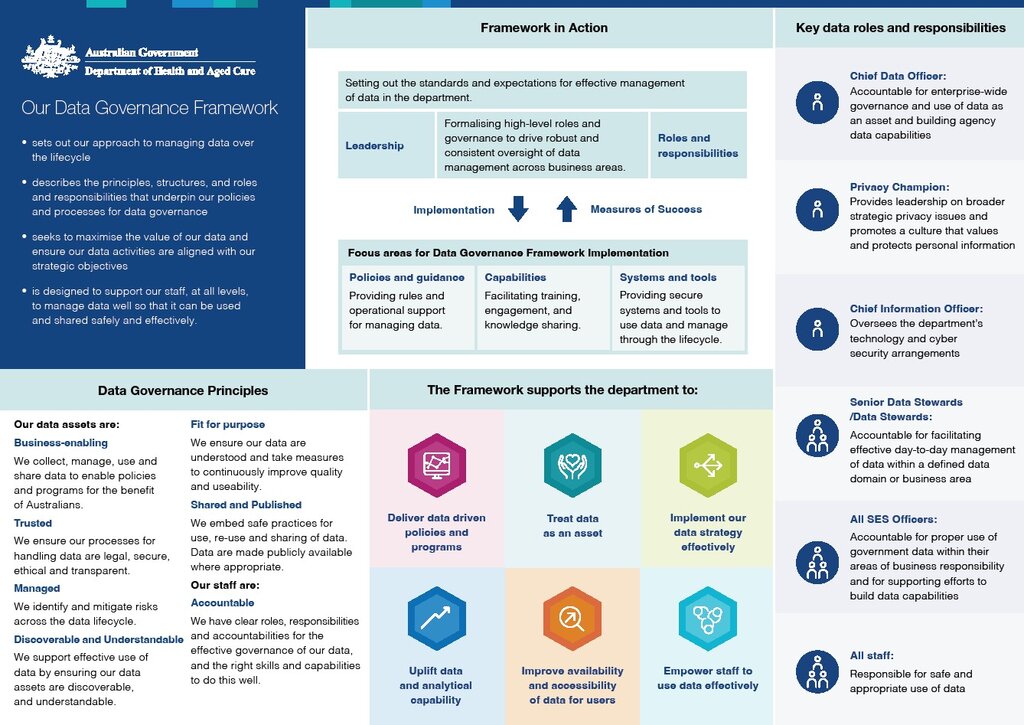
Ultimately, data governance turns data into a reliable, secure, and understandable asset that everyone in the organization can use to do their jobs better.
Ready to review what we've covered?
Let's test your knowledge.
What is the primary focus of data governance?
Which of the following is NOT a primary objective of data governance?
By treating data with the same discipline as other major assets like capital and people, organizations can unlock its true potential.