Mastering Data Frames for AI Development
DataFrames for AI Agents
The Agent's Memory
An AI agent, much like a person, needs a way to remember things. It collects observations, learns facts, and keeps track of its goals. But how does it store all this information in an organized way? It needs a mental workspace, a structured memory that it can access and modify quickly.
For many AI agents, this workspace is a DataFrame, a concept made popular by the Python library Pandas. Think of a DataFrame not just as a table of data, but as the foundational brain structure for an agent. It's where the agent organizes its 'thoughts' and 'memories' in a clean, logical format.
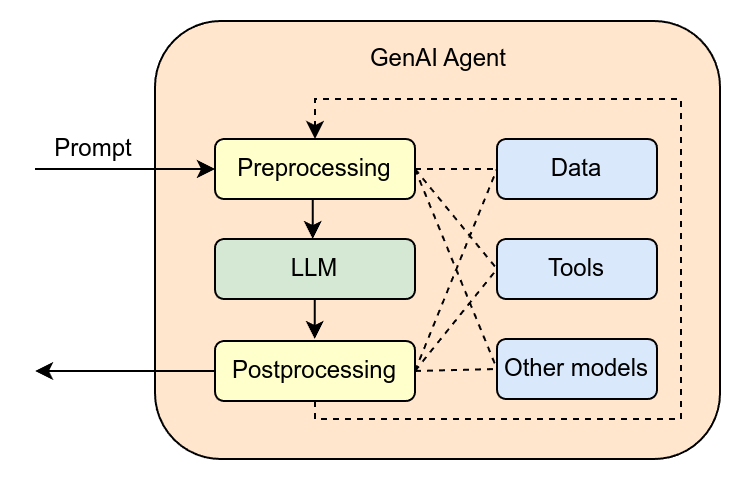
This structure is powerful because it's both flexible and rigid. It's flexible enough to hold different kinds of information together, but rigid enough to enforce organization. This balance is key for an agent that needs to reason about the world in a coherent way.
Anatomy of a Memory
A DataFrame has a simple anatomy: rows and columns. In the context of an AI agent, it's helpful to think of them this way:
- Rows are individual observations or memories. Each row is a unique event, entity, or piece of information the agent has encountered.
- Columns are features or attributes of those memories. Each column describes a specific detail about the observations.
Imagine an agent designed to recommend restaurants. Its memory might contain observations about different places. Each restaurant would get its own row. The columns would store the details: name, cuisine type, rating, and price.
import pandas as pd

# The agent's memory of restaurants
restaurant_memory = pd.DataFrame({
    'name': ['The Noodle House', 'Pizza Palace', 'Taco Town'],
    'cuisine': ['Asian', 'Italian', 'Mexican'],
    'rating': [4.5, 4.0, 4.7],
    'is_open': [True, False, True]
})

print(restaurant_memory)
Notice how each column holds a different type of data. The 'name' and 'cuisine' are text (strings), the 'rating' is a decimal number (a float), and 'is_open' is a true/false value (a boolean). This ability to handle heterogeneous data types in a single structure is crucial. An agent's understanding of the world is rarely limited to just one kind of information.
Better Than a Simple List
You might wonder why we can't just use standard Python structures, like a list of dictionaries. For a simple task, you could. But as an agent's world becomes more complex, these native structures become inefficient.
A list of dictionaries is like a messy pile of notes. Finding a specific piece of information requires sifting through the whole pile. A DataFrame, on the other hand, is like a perfectly organized filing cabinet. It uses labels for both rows (the index) and columns, allowing the agent to pull out specific information instantly.
If our agent wanted to find all restaurants with a rating above 4.2, a DataFrame can do this with a single, highly optimized command. Doing the same with a list of dictionaries would require writing a loop to check each dictionary one by one, which is much slower and more cumbersome.
| Feature | List of Dictionaries | Pandas DataFrame |
|---|---|---|
| Structure | Unstructured collection | Labeled rows and columns |
| Data Types | Flexible, but not enforced per 'column' | Enforced data type per column |
| Performance | Slower for large datasets | Highly optimized for speed |
| Analysis | Requires manual loops | Rich set of built-in functions |
For an AI agent that needs to constantly access, filter, and update its memory to make decisions, the speed and convenience of a DataFrame are essential. It's the difference between a sluggish, confused agent and one that can think on its feet.
According to the text, what is the primary role of a DataFrame for an AI agent?
In the context of an AI agent's DataFrame-based memory, what do the rows typically represent?