Mastering Data Engineering
Data Engineering Fundamentals
Designing Modular Pipelines
A data pipeline is a series of steps that move raw data from various sources to a destination, like a data warehouse, transforming it into a useful format along the way. But a well-designed pipeline is more than just a sequence of commands; it's a thoughtfully constructed system. The key to a robust and maintainable pipeline is modular design.
Think of a modular pipeline as a set of interconnected building blocks. Each block, or module, is responsible for a single, well-defined task. For example, you might have separate modules for extracting data, cleaning it, applying business logic, validating its quality, and loading it into a database. This is a sharp contrast to a monolithic approach, where all these operations are tangled together in one large script.
By breaking a complex process into smaller, independent modules, you make the entire system easier to build, test, and debug. If a single part fails, you only need to examine that specific module, not the entire pipeline.
This modular approach also promotes reusability. A well-built extraction module for a specific API can be reused in multiple pipelines. This saves development time and ensures consistency. Furthermore, it allows different teams to own different parts of the pipeline, improving collaboration and accountability.
Building for Scale
A pipeline that works for a few thousand records might crumble under the weight of millions or billions. Scalability is the ability of a system to handle a growing amount of work by adding resources. In data engineering, this means designing pipelines that perform efficiently as data volume, velocity, and variety increase.
There are two primary ways to scale a system: vertically and horizontally.
| Aspect | Vertical Scaling (Scaling Up) | Horizontal Scaling (Scaling Out) |
|---|---|---|
| Method | Add more power (CPU, RAM) to an existing machine. | Add more machines to the system. |
| Cost | Can become exponentially expensive for high-end hardware. | Generally more cost-effective, using commodity hardware. |
| Limit | Limited by the maximum capacity of a single machine. | Can scale almost indefinitely by adding more machines. |
| Complexity | Relatively simple to implement. | More complex; requires load balancing and coordination. |
For most large-scale data processing tasks, horizontal scaling is the standard. Technologies like Apache Spark and data warehouses like Snowflake are designed to distribute work across a cluster of multiple machines. This parallel processing capability is what allows them to handle petabytes of data efficiently. When designing pipelines, it's crucial to choose tools and write code that can take advantage of distributed computing.
Automation and Orchestration
Manually running each step of a data pipeline is impractical and error-prone. Automation is essential for creating reliable data workflows. This is where orchestration tools come in. Orchestrators manage the scheduling, execution, and monitoring of data pipelines.
Think of an orchestrator as the conductor of an orchestra. Each musician (a task or module in your pipeline) knows how to play their part, but the conductor tells them when to play, ensuring everything happens in the correct sequence and harmony. Tools like Apache Airflow, Prefect, and Dagster allow you to define your pipelines as code, specifying dependencies between tasks.
For example, you can specify that the 'load' task should only run after the 'transform' and 'validate' tasks have both completed successfully. The orchestrator handles this logic, automatically retrying failed tasks, sending alerts on failure, and providing a clear visual interface to monitor the health of your pipelines.
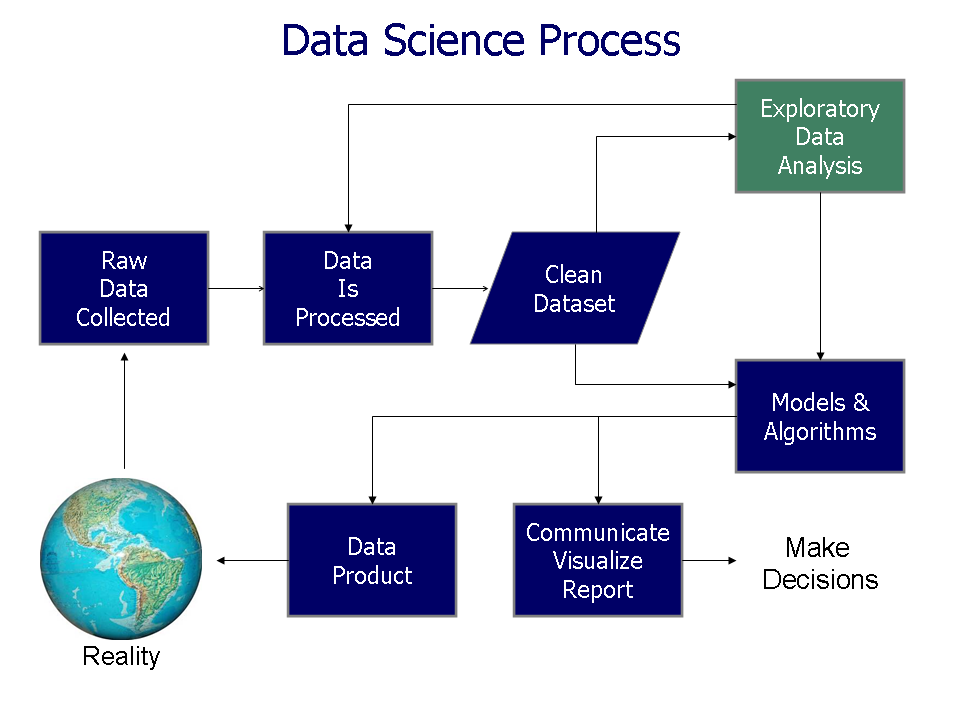
Data engineers are tasked with creating and overseeing data pipelines that automate the extraction, transformation, and loading (ETL) of data from various sources into centralized repositories.
Data Quality, Lineage, and Governance
A fast, scalable, and automated pipeline is useless if the data it produces is incorrect. Ensuring data quality is a continuous process, not a one-time check. It involves building validation steps directly into your pipeline. These checks can be simple, like ensuring a column is never null, or complex, like verifying that data conforms to a specific statistical distribution.
Common data quality checks include verifying data types, checking for uniqueness, validating ranges (e.g., age must be between 0 and 120), and ensuring referential integrity between tables.
Closely related to quality are the concepts of data lineage and governance.
Data lineage tracks the journey of your data. It answers questions like: Where did this data come from? What transformations were applied to it? Who has accessed it? Clear lineage is crucial for debugging problems and building trust in your data. If a manager questions a number in a report, you can trace it back to its source and show every step it took to get there.
Data governance is the set of policies and procedures for managing data. It defines who can do what with which data. This includes security, privacy, and compliance with regulations like GDPR. Good governance ensures that data is handled responsibly and ethically across the organization.
Implementing robust quality checks, lineage tracking, and governance isn't an afterthought. These principles should be designed into your data systems from the very beginning to create a trustworthy and reliable data foundation.
What is the primary advantage of a modular design in a data pipeline compared to a monolithic one?
A data pipeline's workload is expected to increase tenfold over the next year. Which scaling approach is most suitable for handling this large-scale growth in modern data systems like Apache Spark?