Mastering Data Center Construction Risk
Specialized Procurement Management
The Long-Lead Equipment Challenge
Building a data center isn't like assembling a standard office building. The most critical components—the ones that keep the facility online—aren't available off the shelf. We're talking about massive Uninterruptible Power Supply (UPS) systems, industrial-scale generators, and specialized Computer Room Air Handling (CRAH units). Each is a complex piece of engineering, often custom-configured for the project's specific power and cooling demands.
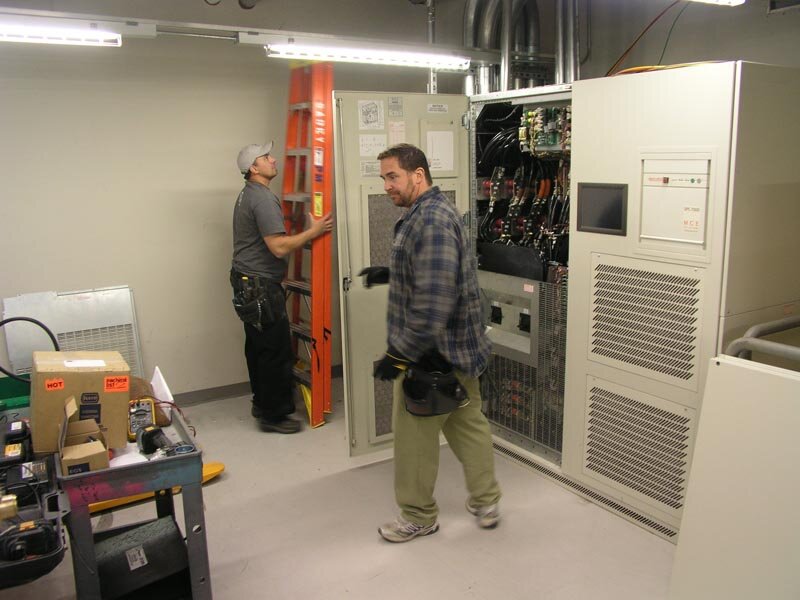
This customization means long lead times, often stretching from 30 to over 50 weeks. These items don't just dictate the construction schedule; they are the schedule. A delay in a generator's arrival doesn't just push back one task; it can completely halt the project's critical path, triggering a cascade of delays for every subsequent trade. In a mission-critical facility where a single day of downtime post-launch can cost millions, a procurement delay of a few weeks is a financial catastrophe.
Procurement Models and Trade-Offs
Given the high stakes, deciding who buys this equipment is a major strategic choice. There are two primary models: direct-owner purchasing and GC-led procurement.
In a direct-purchase model, the data center owner contracts directly with the equipment manufacturer. This gives the owner maximum control over specifications and can sometimes yield better pricing by cutting out the General Contractor's markup. However, the owner also assumes all the risk for coordination, delivery, and storage. If the equipment arrives before the site is ready, the owner is responsible for finding a secure, climate-controlled warehouse.
When the General Contractor (GC) handles procurement, they manage the entire process. The GC's fee is included, but they take on the logistical burden. They coordinate delivery windows with the construction schedule, manage storage, and handle the complexities of getting a 40-ton generator from the truck to its concrete pad. This simplifies things for the owner but requires placing immense trust in the GC's expertise with specialized MEP (Mechanical, Electrical, and Plumbing) systems.
The choice often boils down to risk tolerance. Owners with deep in-house construction management teams may prefer direct purchasing, while those wanting a single point of responsibility lean on the GC.
Regardless of the model, one tactic is non-negotiable: early reservation of manufacturing slots. Long before the building designs are finalized, the project team must commit to production windows with key manufacturers. This is often done with a letter of intent and a deposit, securing a place in a queue that can be months or even years long. It’s a calculated risk, committing funds early, but it's the only way to align the arrival of critical equipment with the construction timeline.
Managing Supply Chain Volatility
Even with early planning, global supply chains are unpredictable. A component shortage or a shipping lane disruption can derail a perfectly planned procurement schedule. To counter this, project teams use specific contractual and logistical tools.
Advance purchase agreements are contracts that lock in prices and delivery timelines far ahead of time, insulating the project from market volatility. For extremely sensitive equipment, teams might also use protocols. This involves the manufacturer or a third-party logistics (3PL) company holding the finished equipment in a secure facility until the construction site is fully prepared to receive it.
Vetting specialized MEP vendors is the final piece of the puzzle. It's not enough for a vendor to offer the right equipment; they must also demonstrate a deep understanding of data center logistics. This includes proving their financial stability, showing a history of successful mission-critical installations, and having transparent tracking systems that give the project team real-time visibility into the manufacturing and shipping status of their orders.
Time to check your understanding of these specialized procurement strategies.
What is the primary reason that procuring critical data center equipment like generators and UPS systems dictates the entire construction schedule?
A data center owner decides to purchase their CRAH units directly from the manufacturer. The units are delivered two months before the building is ready to house them. According to the direct-purchase model, who is responsible for the cost and logistics of storing the equipment?
By treating procurement as a central strategic function rather than a simple purchasing task, teams can navigate the complexities of building these highly specialized facilities.