Mastering Data Analytics Project Design
Understanding Data Analytics
What Is Data Analytics?
Data analytics is the process of examining raw data to find trends and answer questions. The main goal is to draw conclusions from the information. These conclusions are then used to help organizations make better decisions.
Think about your favorite streaming service. It doesn't randomly suggest new shows. It analyzes what you've watched, how long you watched it, and what other people with similar tastes enjoy. That's data analytics in action. It turns raw viewing data into smart recommendations.
This process helps companies understand their customers, streamline their operations, and improve their products. From deciding where to open a new store to figuring out the most effective medical treatments, data analytics provides the insights needed to move forward confidently.
The Data Analytics Lifecycle
Analytics isn't a single action but a series of steps. This is often called the data analytics lifecycle. While the specifics can vary, it generally follows a path from raw information to actionable insight.
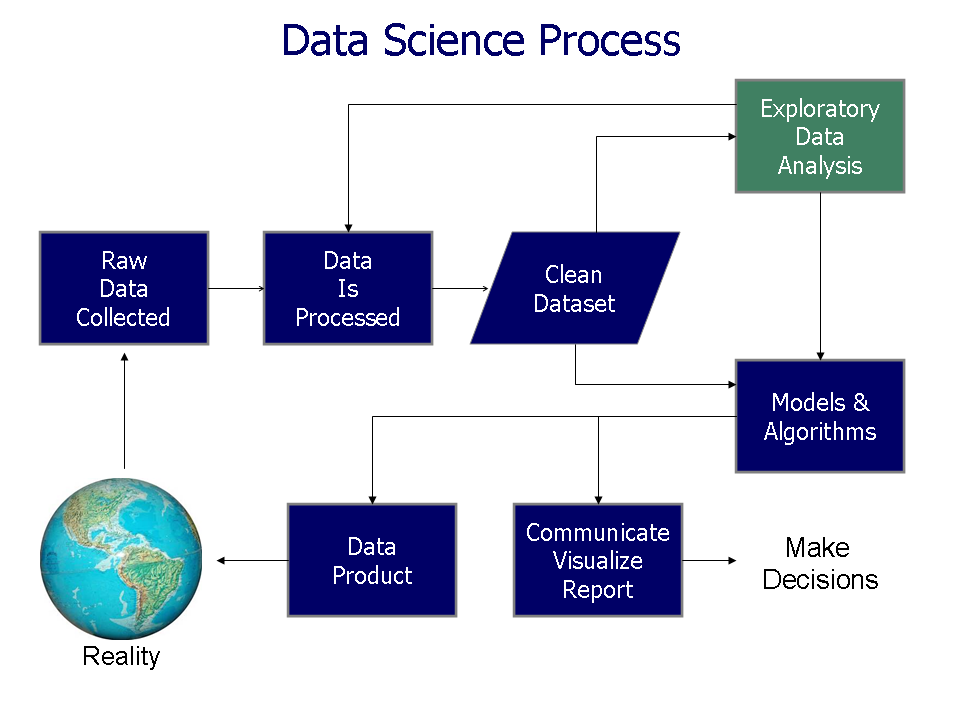
The journey starts with collecting raw data. This information is often messy and needs to be processed into a clean, usable format. Once the data is clean, analysts explore it to spot initial patterns or outliers.
After this exploration, more formal models or algorithms might be applied to dig deeper. The final step is the most important: using the findings to make decisions or create a new data-driven product, like a recommendation engine.
Key Ideas in Analytics
As you learn more about data analytics, you'll encounter a few important related terms. Let's break them down.
Data Mining
noun
The process of discovering patterns, correlations, and anomalies within large datasets to predict outcomes. Think of it as sifting through a mountain of information to find nuggets of gold.
Data mining is a key part of the analytics process, often used during the exploratory phase to identify interesting relationships worth investigating further.
Machine Learning
noun
A branch of artificial intelligence (AI) where computer systems learn from data and improve their performance on a task over time without being explicitly programmed for it.
Machine learning powers many modern data analytics applications, from predictive models that forecast sales to algorithms that personalize online content.
Big Data
noun
Extremely large and complex datasets that cannot be easily managed, processed, or analyzed with traditional data processing tools. It's often characterized by high volume, velocity, and variety.
The rise of big data has driven the need for more powerful data analytics techniques and technologies to handle the sheer scale and complexity of information.
Analytics in the Real World
Data analytics isn't just a concept; it has practical applications across nearly every industry.
| Industry | Application of Data Analytics |
|---|---|
| Healthcare | Predicting disease outbreaks and optimizing patient treatment plans. |
| Finance | Detecting fraudulent transactions and assessing credit risk. |
| Retail | Optimizing inventory and personalizing marketing campaigns. |
| Entertainment | Recommending movies or music based on user preferences. |
| Transportation | Planning efficient delivery routes and managing traffic flow. |
These examples show how central data analytics has become. By turning data into insights, organizations can operate more effectively and create better experiences for everyone.
Ready to check your understanding?
What is the primary goal of data analytics?
A streaming service analyzing your viewing history to suggest new shows is an example of data analytics.
Understanding these core concepts is the first step in appreciating how data shapes our world.