Mastering Daily Meditation for Stress Reduction
Understanding Stress
What Is Stress?
Stress is your body's natural response to any demand or threat. When you sense danger, whether it's real or imagined, your body's defenses kick into high gear in a rapid, automatic process known as the "fight-or-flight" response. This reaction is a survival mechanism, preparing you to either confront the threat or flee to safety.
stress
noun
A state of mental or emotional strain or tension resulting from adverse or demanding circumstances.
While everyone experiences stress, it doesn't always look the same. It generally falls into three main types:
-
Acute Stress: This is the most common form. It’s your body's immediate reaction to a new and challenging situation, like swerving to avoid a car accident or preparing for a big presentation. The effects are short-lived and usually don't cause lasting harm.
-
Episodic Acute Stress: This happens when you have frequent episodes of acute stress. People who take on too many responsibilities or are constantly dealing with crises often experience this. It can feel like living in a state of perpetual chaos.
-
Chronic Stress: This is long-term, grinding stress that goes on for weeks, months, or even years. It can stem from persistent problems like a difficult job, financial struggles, or an unhappy relationship. Your body is in a constant state of high alert, which can have serious health consequences.
The Body Under Pressure
When you're under chronic stress, your body's alarm system stays on. The hypothalamus, a tiny region at the base of your brain, sets off a cascade of hormones, including cortisol. While helpful in short bursts, a continuous flood of cortisol can wreak havoc on your body.
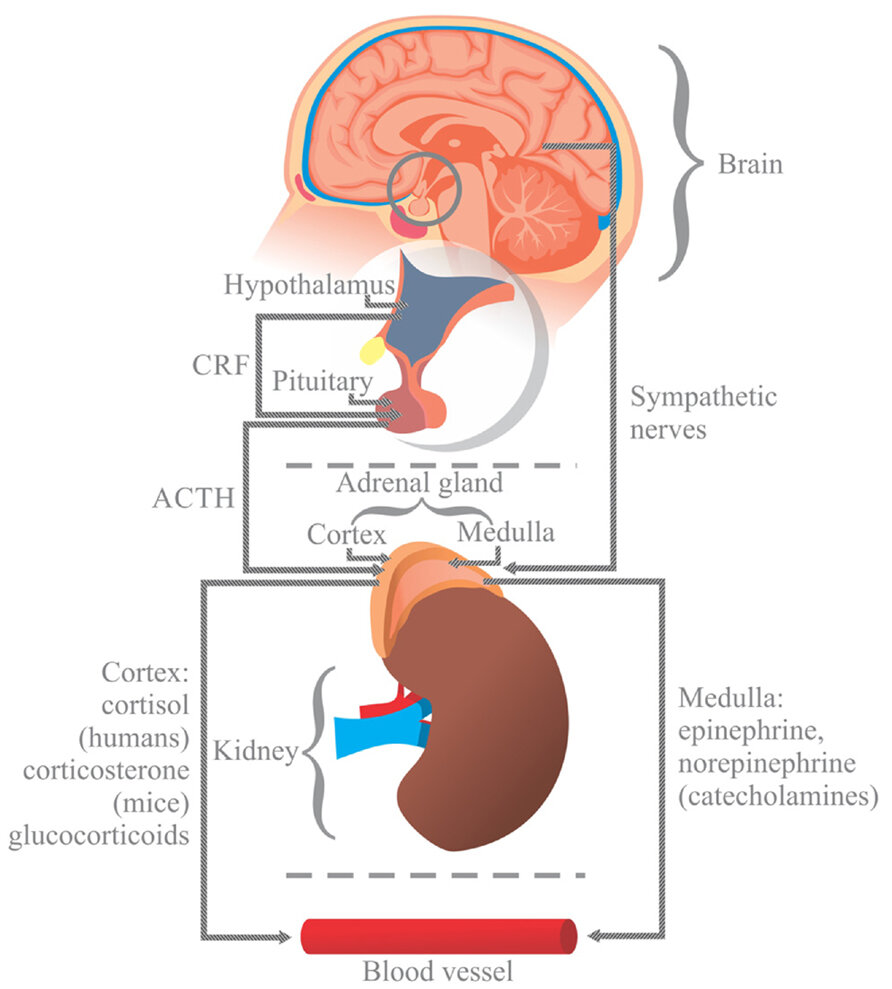
This constant hormonal activation can disrupt almost all of your body's processes. Over time, it can lead to serious health problems, including:
-
Cardiovascular Issues: Elevated heart rate and blood pressure can increase the risk of hypertension, heart attack, or stroke.
-
Weakened Immune System: Chronic stress can suppress your immune system, making you more vulnerable to infections and illnesses.
-
Digestive Problems: Stress can interfere with digestion, leading to issues like stomachaches, heartburn, and irritable bowel syndrome.
-
Muscle Tension: Constant stress often causes muscles to be tense, leading to chronic pain, tension headaches, and migraines.
The Mind's Burden
The impact of chronic stress isn't just physical. It puts a heavy strain on your mental and emotional well-being, too. When your mind is constantly battling perceived threats, it can be difficult to think clearly and function effectively.

Psychologically, chronic stress can manifest in several ways:
-
Cognitive Difficulties: You might find it hard to concentrate, make decisions, or remember things. It can feel like your brain is in a constant fog.
-
Emotional Turmoil: Stress can lead to irritability, anxiety, mood swings, and a general sense of being overwhelmed. Over a long period, it can be a major contributor to depression and anxiety disorders.
-
Behavioral Changes: People under chronic stress often experience changes in their daily habits. This can include trouble sleeping, changes in appetite, withdrawing from social activities, or relying on unhealthy coping mechanisms.
Why Managing Stress Matters
Because stress affects both your body and mind so profoundly, learning to manage it is essential for your overall health. The goal isn't to eliminate stress entirely, as that's an impossible task. Life will always present challenges.
The key is to manage your reaction to those challenges. By developing healthy coping strategies, you can prevent stress from becoming chronic and overwhelming.
Taking steps to control stress can protect your long-term health, improve your mood, and boost your ability to handle life's ups and downs. It is a crucial skill for maintaining balance and well-being in a demanding world.
The rapid, automatic process where the body's defenses kick into high gear in response to a perceived threat is known as the __________ response.
Which hormone is mentioned as playing a key role in the long-term stress response, which can cause negative health effects when levels are continuously high?