Mastering Daily Meditation for Stress Reduction
Understanding Stress
What is Stress?
Everyone talks about stress, but what exactly is it? At its core, stress is your body's natural response to any demand or threat. When you sense danger, whether it’s real or imagined, your body's defenses kick into high gear in a rapid, automatic process known as the "fight-or-flight" reaction.
stress
noun
A state of mental or emotional strain or tension resulting from adverse or demanding circumstances.
This response is your body's way of protecting you. When working properly, it helps you stay focused, energetic, and alert. In emergency situations, stress can save your life, giving you extra strength to defend yourself or slam on the brakes to avoid an accident. Not all stress is bad, either. The excitement before a first date or the push to finish a project on time are forms of positive stress, or 'eustress,' that can be motivating.
The key isn't to eliminate stress, but to manage it. Problems arise when the stress response is triggered too often or for too long, without the body having a chance to rest and recover.
The Body's Alarm System
When you perceive a threat, a tiny region at the base of your brain, the hypothalamus, sets off an alarm system. This system prompts your adrenal glands to release a surge of hormones, including adrenaline and cortisol.
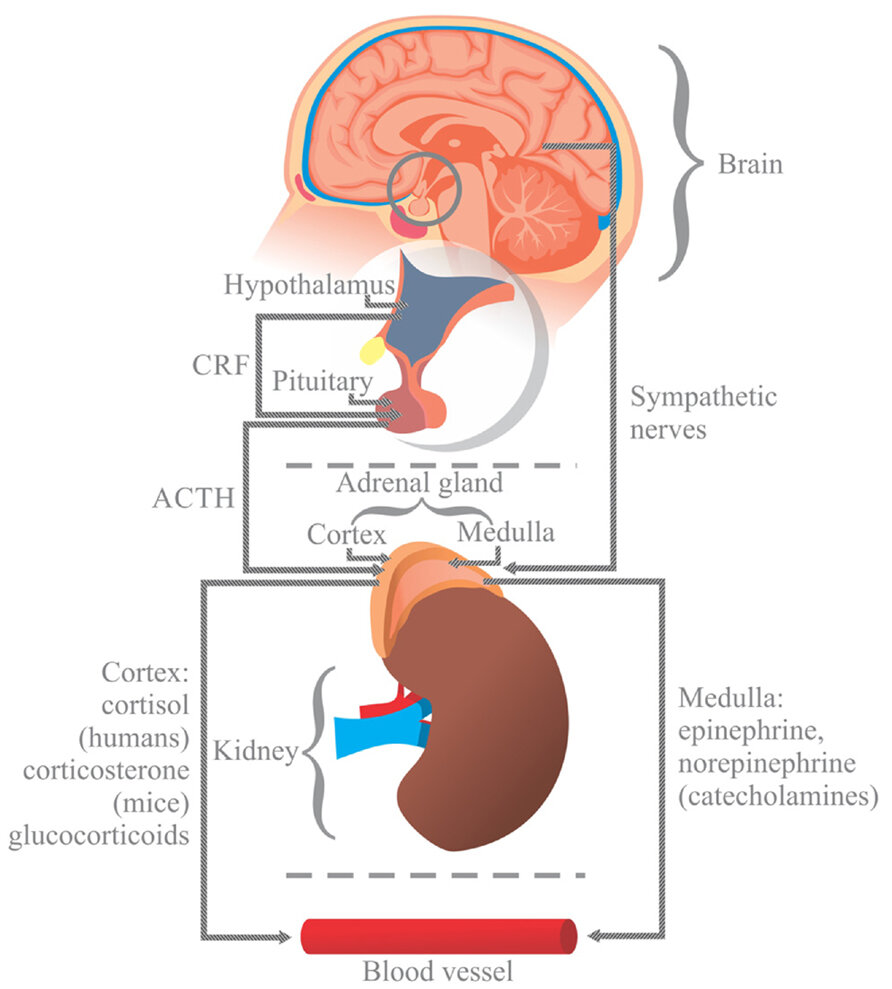
Adrenaline increases your heart rate, elevates your blood pressure, and boosts energy supplies. Cortisol, the primary stress hormone, increases sugars (glucose) in the bloodstream, enhances your brain's use of glucose, and increases the availability of substances that repair tissues. It also curbs functions that would be nonessential in a fight-or-flight situation. It alters immune system responses and suppresses the digestive system, the reproductive system, and growth processes.
This complex natural alarm system also communicates with the brain regions that control mood, motivation, and fear. It's a highly effective system for handling immediate, short-term threats.
Chronic, long-term stress keeps this alarm system constantly switched on. The overexposure to cortisol and other stress hormones can disrupt almost all your body's processes, putting you at increased risk for numerous health problems.
Stress and Your Mind
The effects of stress aren't just physical. Ongoing stress can take a heavy toll on your mental and emotional well-being. Because the mind and body are so closely linked, when your body is in a stressed state, your mind will be too.
Psychologically, you might experience difficulty concentrating, constant worrying, or a negative outlook. It can feel like your thoughts are racing, and you may find it hard to make decisions. Memory problems and a general feeling of being overwhelmed are also common.

Emotionally, stress can lead to moodiness, irritability, or a short temper. You might feel agitated, unable to relax, or have a sense of loneliness and isolation. For some, it can contribute to or worsen conditions like anxiety and depression.
These psychological effects can create a vicious cycle. Feeling anxious or depressed can make your physical stress symptoms worse, which in turn can feed back into your mental state.
Why Managing Stress Matters
Since it's impossible to eliminate stress completely, learning to manage it effectively is crucial for your overall health. Think of it like regular maintenance for your car. You might not notice small issues at first, but if you ignore them, they can lead to major breakdowns down the road.
Effective stress management helps you break the hold stress has on your life, so you can be happier, healthier, and more productive. The ultimate goal is a balanced life, with time for work, relationships, relaxation, and fun, plus the resilience to hold up under pressure and meet challenges head-on.
An emotion-centered approach focuses on managing your emotional response to stress.
By understanding your body's stress response, you can begin to recognize your own personal triggers and symptoms. This self-awareness is the first step toward developing healthier coping strategies. While we won't cover specific techniques here, recognizing the need for management is the foundational insight for building a more resilient self.
Let's check your understanding of these core concepts.
What is the primary function of the body's "fight-or-flight" reaction?
Which part of the brain initiates the body's alarm system in response to a threat?
Recognizing how stress affects you physically and mentally is the first step toward managing its impact on your life.