Mastering Daily Meditation for Stress Reduction
Understanding Stress
What Is Stress?
Stress is your body's natural response to a challenge or demand. Think of it as an internal alarm system. When you face a tough situation, like a looming deadline or a difficult conversation, this system kicks in. It’s a normal part of life, and it’s not always a bad thing. Sometimes, stress can give you a burst of energy to meet a challenge, like finishing a race or acing a presentation.
Stress
noun
A state of mental or emotional strain or tension resulting from adverse or demanding circumstances.
This response is designed to be temporary. The problem arises when the alarm system stays on for too long. Your body is built to handle short bursts of stress, but it struggles when that stress becomes a constant companion.
How Stress Affects the Body
When you perceive a threat, your brain's hypothalamus signals your adrenal glands to release a surge of hormones, primarily adrenaline and cortisol. This is often called the "fight-or-flight" response.
Adrenaline increases your heart rate, elevates your blood pressure, and boosts energy supplies. Cortisol, the body's main stress hormone, increases sugars in the bloodstream and enhances your brain's use of glucose. It also curbs functions that would be nonessential in a fight-or-flight situation, like your immune system, digestive system, and reproductive system.
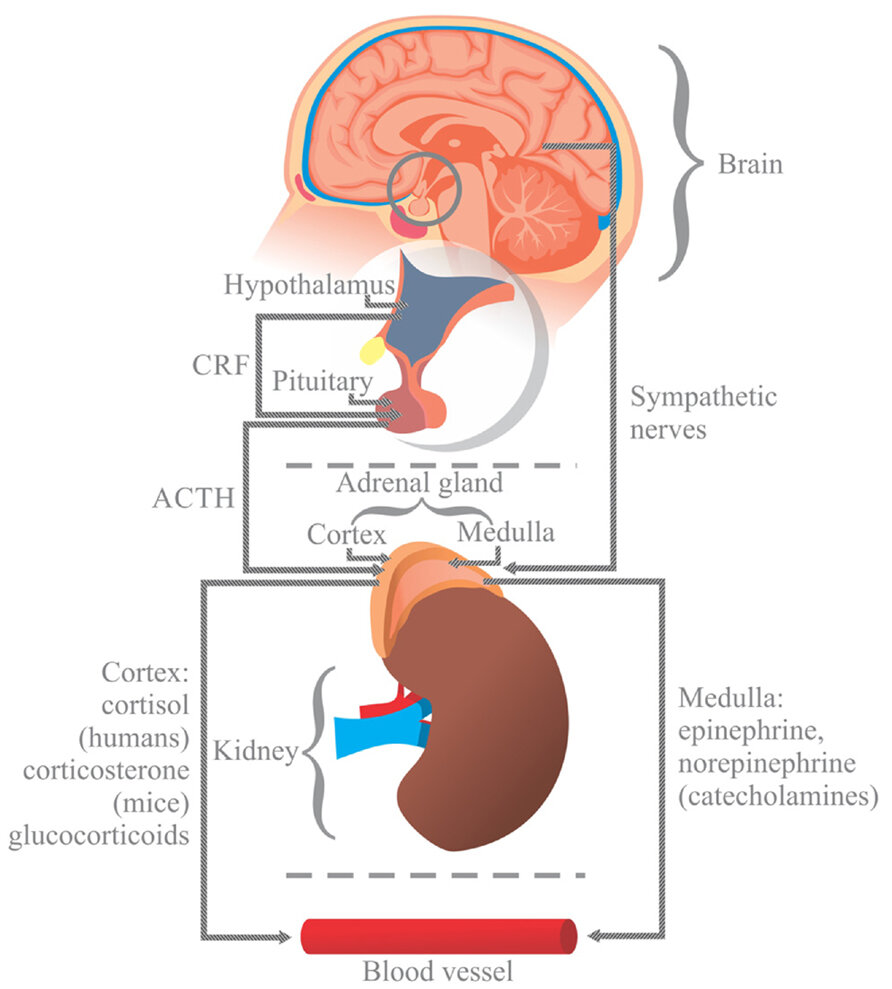
This complex system is incredibly effective for helping you navigate immediate danger. Once the perceived threat has passed, hormone levels are supposed to return to normal. Your heart rate slows, your blood pressure drops, and other systems resume their regular activities.
How Stress Affects the Mind
Stress doesn't just impact your body; it has a powerful effect on your mind as well. When you're stressed, you might find it hard to concentrate or make decisions. You may feel irritable, anxious, or sad for no clear reason. These feelings are a direct result of the chemical changes happening in your brain.
Memory can also take a hit. Chronic exposure to cortisol can damage brain cells in the hippocampus, the region of the brain involved in learning and memory. This can make it harder to form new memories or retrieve old ones.

Behaviorally, you might notice changes too. Some people withdraw from others, while some might lash out in anger. You could also experience changes in your sleeping or eating habits. These are all ways the mind tries to cope with being in a constant state of high alert.
When Stress Sticks Around
The real danger comes from chronic stress, which happens when the source of stress is constant and your body's alarm system never shuts off. This long-term activation of the stress-response system can disrupt almost all your body's processes, putting you at increased risk for numerous health problems.
Chronic stress can contribute to serious health issues, including heart disease, high blood pressure, diabetes, a weakened immune system, and mental health conditions like depression and anxiety disorders.
Imagine running a car's engine at full throttle for days on end. Eventually, parts will start to wear out and break down. The same principle applies to your body. Constant stress wears down your physical and mental resources, leaving you vulnerable.
Why Managing Stress Matters
Since we can't eliminate stress entirely, learning how to manage it is one of the most important things you can do for your health. It's not about avoiding challenges, but about building the resilience to face them without letting them overwhelm you.
Stress management was developed and premised on the idea that stress is not a direct response to a stressor but rather an individual's resources and abilities to cope and mediate the stress response which are amenable to change, thus allowing stress to be controllable.
By understanding how stress works and recognizing its effects on your body and mind, you've already taken the first step. The goal is to develop healthy coping strategies that help you reset your internal alarm system, allowing your body and mind to recover and stay balanced.
What is the primary function of the body's stress response?
The two primary hormones released during the 'fight-or-flight' response are ______ and ______.