Mastering Customer Journeys
Introduction to Customer Journeys
The Customer's Path
A customer journey is the complete story of a customer's relationship with a company. It includes every interaction, from the first time they hear about a brand to the moment they become a loyal advocate, and everything in between. Think of it like a road trip. The customer is the driver, and the company provides the map, the vehicle, and the roadside assistance. The journey isn't a single event, but a series of steps and experiences.
At its most basic, journey mapping is a compilation of user goals and actions into a timeline.
Why is this so important for a business? Because it forces the company to see the world from the customer's point of view. Instead of just focusing on a single sale or a support ticket, a business can understand the entire experience. This empathy is the key to improving service, building stronger relationships, and ultimately, creating more satisfied customers.
Customer-Centricity: It should revolve around the customer, addressing their needs, pain points, and buying behavior.
Key Components
Every journey is made up of two fundamental components: touchpoints and stages.
Touchpoint
noun
Any point of interaction a customer has with a brand.
Touchpoints are the individual stops on the customer's road trip. They can be digital, like visiting a website, seeing an ad on social media, or receiving an email. They can also be physical, like walking into a store, using a product, or talking to a salesperson. Each touchpoint is an opportunity for the brand to make an impression.
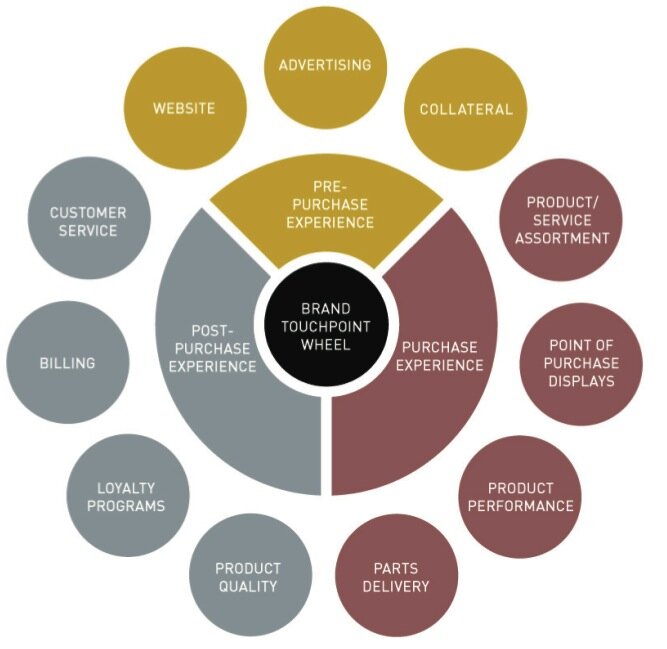
These touchpoints don't happen randomly. They are part of a larger progression, which we call stages.
The Five Stages
While every customer's path is unique, most journeys follow a similar pattern of stages. Understanding these helps a business meet the customer where they are and provide what they need at that moment.
| Stage | Customer's Mindset | Business's Goal |
|---|---|---|
| Awareness | "I have a need or a problem." | Be discoverable and helpful. |
| Consideration | "What are my options to solve this?" | Educate and demonstrate value. |
| Purchase | "I'm ready to make a choice." | Make the buying process seamless. |
| Retention | "Did I make the right decision?" | Provide excellent support and value. |
| Advocacy | "I want to share my great experience." | Encourage and reward loyalty. |
It's important to remember that this path isn't always a straight line. A customer might move from consideration back to awareness if their needs change, or they might skip a stage entirely. The journey model is a framework, not a rigid set of rules.
By understanding the journey, a business can identify friction points and opportunities. Where are customers getting stuck? Where can the experience be improved? This perspective shifts the focus from simple transactions to building long-term, meaningful relationships.
Which of the following best defines a customer journey?
What is the primary benefit for a business that understands the customer journey?