Mastering Critical Thinking
Introduction to Critical Thinking
What is Critical Thinking?
Critical thinking isn't about finding fault or being negative. It's the process of thinking clearly and rationally about what to do or what to believe. Think of it as being a detective for information. Instead of just accepting facts at face value, a critical thinker investigates, asks questions, and examines evidence before reaching a conclusion.
This skill is more important than ever. We're surrounded by a constant flow of information from news, social media, and friends. Critical thinking helps you navigate this sea of data, separating the credible from the questionable and forming your own well-reasoned judgments.
It's the ability to actively and skillfully analyze, synthesize, and evaluate information to reach an answer or conclusion.
The Core Skills
Critical thinking isn't a single skill but a collection of related abilities that work together. We can break it down into three key components: interpretation, inference, and problem-solving.
Interpretation
noun
The ability to understand and explain the meaning of information. It involves clarifying what is being said, identifying the main message, and recognizing the context.
Before you can think critically about something, you first have to understand it. Interpretation is that first step. If you read a news headline that says, "Study Finds Coffee Cures All Diseases," interpretation means asking: What is this article actually claiming? Who conducted the study? What does 'all diseases' really mean in this context?
Next comes inference.
Inference
noun
The process of drawing conclusions based on evidence and reasoning. It’s about connecting the dots and figuring out what the information implies.
Once you've interpreted the information, you can start to draw conclusions from it. If the coffee study was funded by a large coffee company and only involved ten participants, you might infer that the results are not very reliable. Inference is about reading between the lines and seeing the logical consequences of the evidence.
Finally, these skills come together in problem-solving. This involves using interpretation and inference to identify a problem, evaluate potential solutions, and decide on the best course of action. It's the active application of critical thought to achieve a goal.
Thinking in Action
These skills aren't just for academic essays or scientific labs. You use them every day, whether you realize it or not.
In your personal life, critical thinking helps you make better decisions. When you're choosing a new phone, you don't just grab the first one you see. You interpret reviews, infer which features matter most to you, and solve the problem of finding the best phone for your budget.
Here’s how a critical thinker might approach a viral social media post compared to a passive observer:
| Thought Process | Non-Critical Approach | Critical Thinking Approach |
|---|---|---|
| Interpretation | Accepts the headline as fact. | Reads the article, not just the headline. Asks: Who wrote this? What is their source? |
| Inference | Shares the post immediately. | Considers the author's potential bias. Looks for supporting evidence from other sources. |
| Action | Believes the information without question. | Forms a reasoned judgment based on the quality of evidence. May decide the information is unreliable. |
In professional settings, critical thinking is essential. A doctor diagnoses an illness by interpreting symptoms, inferring the underlying cause based on medical knowledge, and creating a treatment plan to solve the health problem.
A software developer debugs code by interpreting an error message, inferring where the problem might be in the code, and testing solutions until the bug is fixed. In any job that requires making decisions or solving complex issues, critical thinking is the key to success.
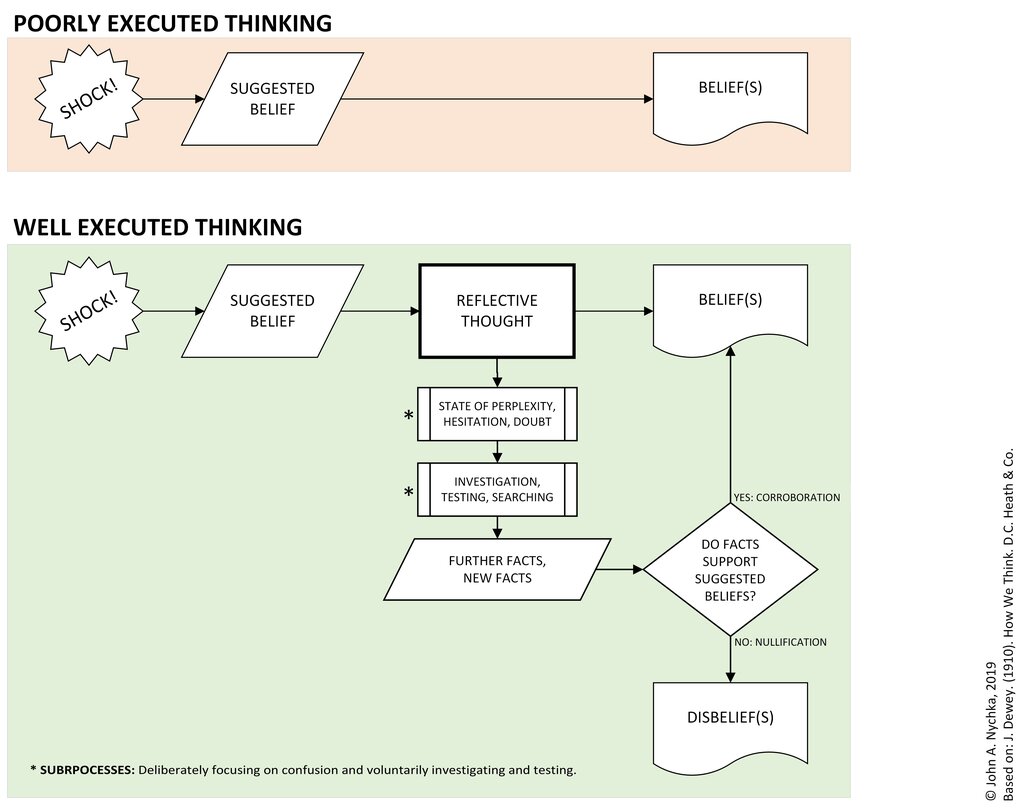
Now, let's check your understanding of these foundational concepts.
Which of the following best describes the primary goal of critical thinking?
A news headline reads: 'New Super-Pill Guarantees Weight Loss Overnight!' A critical thinker's first step, interpretation, would involve which of the following questions?
Mastering these core components is the first step. By consciously practicing interpretation, inference, and problem-solving, you can sharpen your mind and make more informed, effective decisions in all areas of your life.