Mastering Critical Thinking and Problem Solving
Complex Problem Deconstruction
Start by Framing the Problem
The first step in solving a complex problem isn't finding an answer—it's asking the right question. Problem framing is the act of defining the issue you're trying to solve. How you frame it dictates the entire path forward. A poorly framed problem sends you searching for solutions in all the wrong places.
Most real-world challenges are ill-defined. Unlike a well-defined problem, such as solving a math equation with a known formula, an ill-defined problem lacks a clear goal and a straightforward path. Think of a doctor diagnosing a patient with vague symptoms like fatigue and headaches. The problem isn't "solve for x"; it's figuring out what "x" even is. Your first job is to bring clarity to this ambiguity.
Framing a problem well means you're not just looking at the symptoms. You're trying to understand the underlying system that creates them.
Define the Playing Field
Once you have a preliminary frame, you need to set the problem's scope and boundaries. The scope defines what is inside the problem you're tackling, while the boundaries define what is outside of it. These are conscious choices, not fixed realities.
For example, if the problem is "low employee morale," the scope might include team communication practices, workload distribution, and management training. The boundaries might exclude broader economic factors or employees' personal lives, even though they have an influence. Deciding where to draw these lines is crucial for making the problem manageable.
A key part of this process is identifying who is affected and who has influence. A thorough stakeholder analysis reveals the different perspectives, motivations, and power dynamics at play. Stakeholders aren't just the people with the problem; they include anyone who can impact the solution or is impacted by it. Mapping these individuals and groups helps you understand the human landscape you're navigating.
Complicated vs. Complex
It's easy to use the words "complicated" and "complex" interchangeably, but in problem-solving, they mean very different things. Understanding the distinction is vital.
A complicated problem is like a Swiss watch. It has many intricate parts, but they work together in a predictable, linear fashion. If you have the blueprint, an expert can take it apart and put it back together. The solution might be difficult, but it's knowable.
A complex problem is like a traffic jam. It also has many parts (drivers, cars, traffic lights, weather), but their create unpredictable behavior. You can't solve a traffic jam by analyzing one car. The system adapts and changes as a whole. Each driver's decision affects others, creating a situation that is more than the sum of its parts.
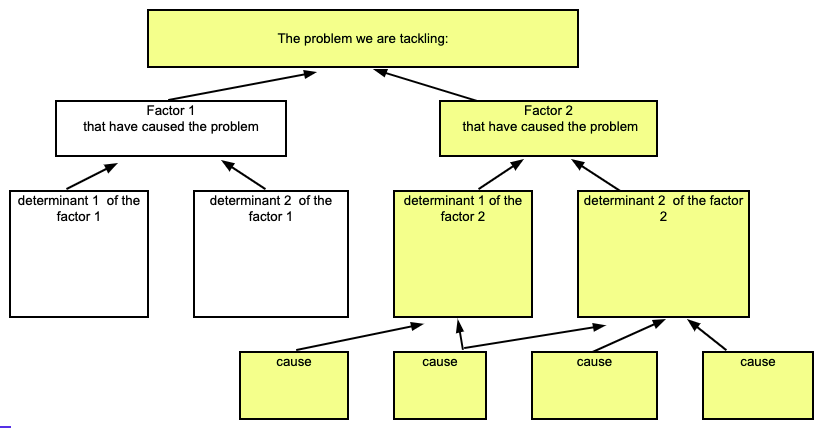
Deconstructing a complex problem means mapping these interdependencies. Which factors influence others? Are there feedback loops where a change in one element comes back to affect itself? Identifying these relationships is how you begin to see the underlying structure of the problem, rather than just its surface-level symptoms.
| Stakeholder | Interest in the Problem | Influence Level |
|---|---|---|
| City Commuters | Faster, less stressful travel times | Medium (collectively) |
| Public Transit Authority | Increased ridership, operational efficiency | High |
| Local Business Owners | Reliable access for customers and employees | Medium |
| City Traffic Engineers | System safety, traffic flow metrics | High |
| Environmental Groups | Reduced emissions, promoting green transit | Low to Medium |
Time to check your understanding of these core ideas.
What is the primary purpose of problem framing?
A problem with a known formula and a clear goal, like solving a math equation, is considered well-defined.
Breaking down a problem isn't about finding an immediate solution. It's about developing a deep understanding of the challenge itself. By carefully framing the problem, defining its scope, mapping its parts, and distinguishing complexity from complication, you build the foundation needed to create effective, lasting solutions.