Mastering Critical Thinking
Introduction to Critical Thinking
Thinking About Thinking
We make thousands of decisions every day. Most are small, like what to eat for breakfast. Others are huge, like choosing a career path. But how often do we stop to think about how we make those decisions? This is the core of critical thinking.
Critical thinking isn't about being negative or critical of others. It's the process of actively and skillfully analyzing, questioning, and evaluating information to form a well-reasoned judgment. It’s about being an active participant in your own mind, not just a passive consumer of information.
Critical thinking is clear, reasonable, reflective thinking focused on deciding what to believe or do.
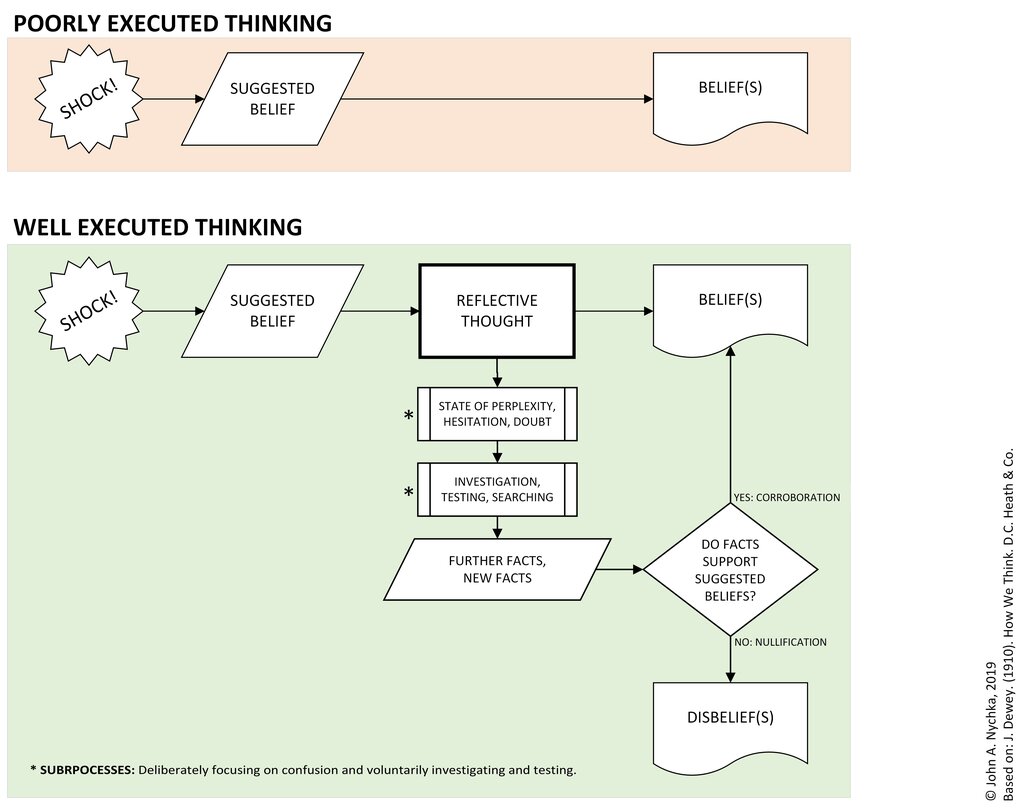
Think of it as having a mental toolkit. When you encounter a new idea, a news article, or a tough problem, you don't just accept it at face value. You open your toolkit. You examine the idea from different angles, check its components for strength, and see how it holds up under pressure. This skill is vital. It helps you solve problems more effectively, communicate your ideas clearly, and make choices that you feel confident about.
Roadblocks to Clear Thinking
If critical thinking is so useful, why don't we do it all the time? Our brains are wired for efficiency. They create mental shortcuts to help us navigate the world quickly. While these shortcuts are often helpful, they can also lead to errors in judgment. These errors are often called cognitive biases and logical fallacies.
Cognitive Bias
noun
A systematic pattern of deviation from norm or rationality in judgment, leading to perceptual distortion, inaccurate judgment, and illogical interpretation.
A common cognitive bias is confirmation bias. This is our tendency to search for, interpret, and recall information that confirms what we already believe. If you think a certain brand of car is unreliable, you'll probably notice every story about that car breaking down and ignore the thousands of them running perfectly fine.
Another barrier is a logical fallacy. This is a flaw in reasoning that makes an argument invalid. For example, the 'ad hominem' fallacy occurs when someone attacks the person making an argument instead of the argument itself. Saying "You can't trust his financial advice, he dresses terribly" is an ad hominem fallacy. The person's fashion sense has nothing to do with their financial expertise.
Recognizing biases in ourselves is the first step. It requires us to be honest about our own mental shortcuts and assumptions.
Building Better Habits
Overcoming these barriers isn't about becoming a perfect thinking machine. It's about developing habits that promote clarity and reason. Here are a few simple strategies to start.
| Strategy | Description |
|---|---|
| Ask Questions | Instead of accepting information, ask clarifying questions. Who said this? What is their evidence? What are they not saying? |
| Consider Alternatives | Before settling on one answer, brainstorm other possibilities. Could there be another explanation for what you're seeing? |
| Separate Emotion from Fact | Our feelings are important, but they can cloud our judgment. Try to identify the objective facts of a situation, separate from how you feel about them. |
| Seek Different Perspectives | Actively look for opinions that challenge your own. Talk to people who disagree with you or read sources from a viewpoint you don't normally consider. |
Applying these strategies takes practice. Start small. The next time you read a surprising headline, pause for a moment. Ask a few questions. Think about the source. This small act of reflection is the beginning of building a powerful, lifelong skill.
Ready to test your understanding? Let's see what you've learned.
What is the primary goal of critical thinking?
A person strongly believes that left-handed people are more creative. They actively seek out articles and stories about famous left-handed artists, while dismissing studies that show no link between handedness and creativity. This is a classic example of:
By consistently practicing these techniques, you'll be well on your way to thinking more clearly and making better-informed decisions in all areas of your life.