Mastering CRISPR Gene Editing
Natural Bacterial Immunity
A Bacterial Defence System
Bacteria are in a constant, ancient war. Their main enemies are viruses called bacteriophages, or phages for short. These viruses infect bacteria by injecting their own genetic material, hijacking the cell's machinery to create more viruses. This process usually ends with the bacterial cell bursting open, releasing a new army of phages to infect its neighbours.
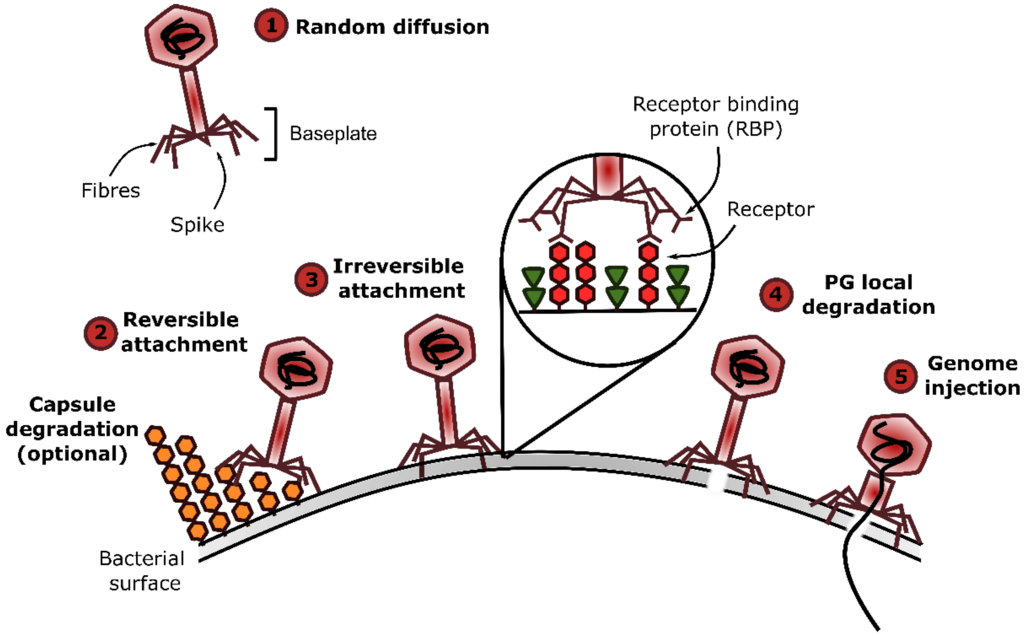
To survive this relentless assault, bacteria have evolved sophisticated defence systems. One of the most remarkable is an adaptive immune system, one that can learn, remember, and target specific viral invaders. This system is called CRISPR.
CRISPR stands for Clustered Regularly Interspaced Short Palindromic Repeats. It's a mouthful, but the name describes a specific region in the bacterium's DNA. It consists of repeating DNA sequences (the 'repeats') separated by unique segments of DNA called 'spacers'. These spacers are the system's memory bank. They are pieces of DNA captured from past viral invaders.
How Bacteria Remember Viruses
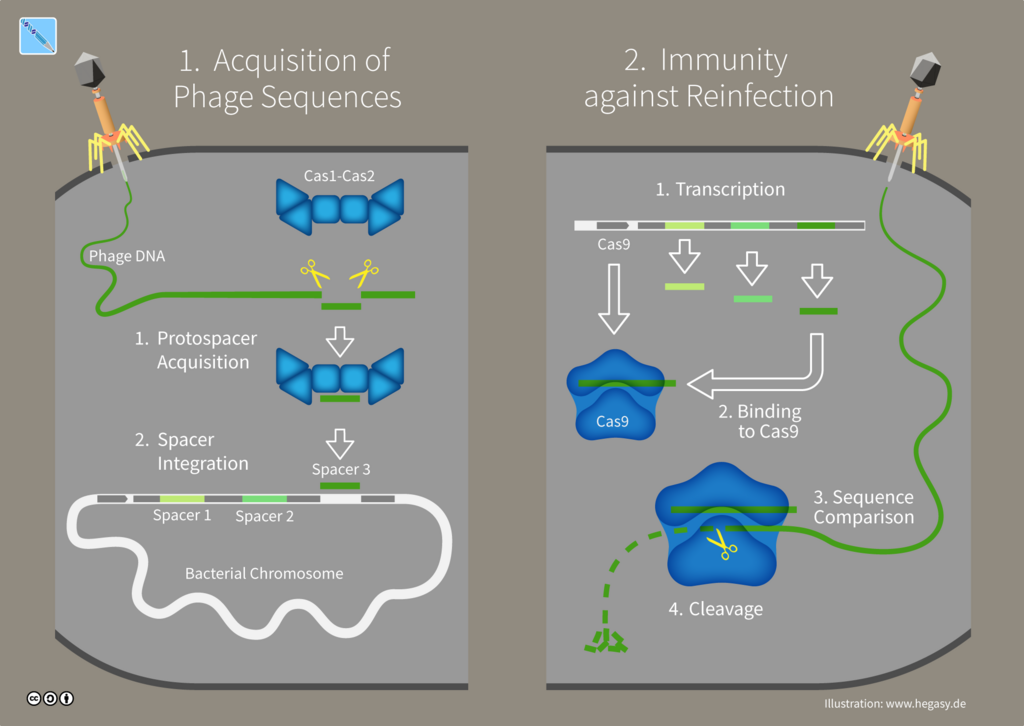
The CRISPR immune process works in three distinct stages: adaptation, expression, and interference. It's a simple but incredibly effective surveillance and destruction system.
First is Adaptation. When a new virus infects a bacterium and the cell manages to survive, it snips out a small piece of the virus's DNA. It then incorporates this snippet into its own CRISPR array as a new spacer. Think of it as the bacterium creating a 'most wanted' poster for the virus and filing it away for future reference.
Next comes Expression. The bacterium transcribes its CRISPR array, creating small RNA molecules that are copies of the viral spacers. Each of these molecules, known as CRISPR RNA (crRNA), acts as a guide. It's a scout carrying the signature of a known enemy.
Finally, there's Interference. The guide RNA joins forces with a DNA-cutting protein called a Cas (CRISPR-associated) protein. Together, they form a complex that patrols the inside of the cell. If the same type of virus invades again, the guide RNA will recognise and bind to the matching sequence in the viral DNA. This perfect match signals the Cas protein to cut the invader's DNA, neutralising the threat before it can take over the cell.
This powerful defence mechanism was famously studied and characterised in the bacterium Streptococcus pyogenes, a common species known for causing strep throat. The specific system found in this bacterium would later become the foundation for a revolutionary technology.
The Cas9 Protein
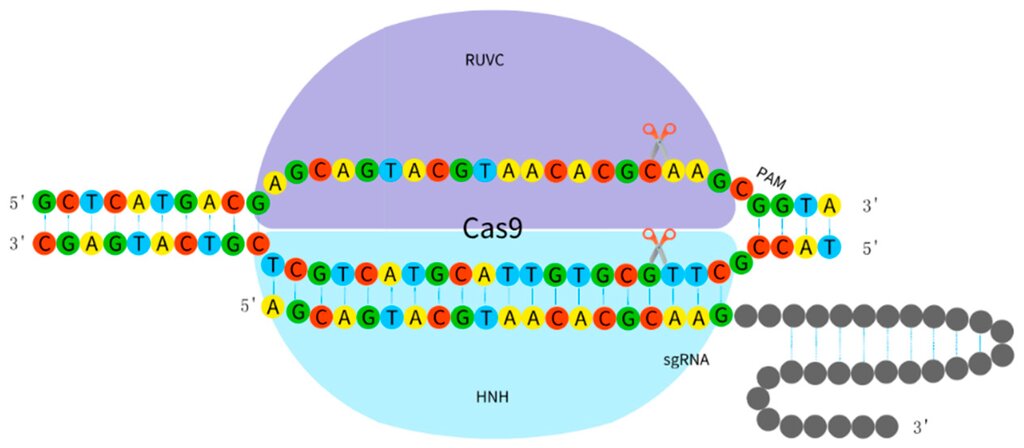
While the CRISPR array provides the memory, the Cas proteins do the heavy lifting. There are many different types of Cas proteins, but the most well-known is Cas9, the one found in Streptococcus pyogenes. You can think of Cas9 as a pair of molecular scissors. On its own, it's inactive. But when it's equipped with a guide RNA from the CRISPR array, it becomes a precision-guided weapon.
The guide RNA tells Cas9 exactly where to go. The complex scans the DNA inside the cell, and when the guide RNA finds its exact match, the Cas9 protein activates and snips the target DNA in two. This single, precise cut is enough to disable the virus completely.
This elegant and efficient natural system for identifying and destroying specific DNA sequences is the biological foundation that scientists later harnessed to edit genes. Understanding its origin as a bacterial defence mechanism is key to appreciating why it works so well.
What is the primary function of the CRISPR system in bacteria?
In the CRISPR immune process, what happens during the 'Adaptation' stage?
This natural bacterial immunity is a powerful example of evolution at the molecular level, a system perfected over millions of years.