Mastering Cricket Strategy and Technique
Advanced Pace Variations
Weaponizing the Air
Beyond pure speed, a fast bowler's greatest asset is the ability to manipulate the cricket ball's path through the air. This isn't magic; it's a calculated use of aerodynamics. When a ball moves, the air splits to pass around it. By controlling the orientation of the ball's seam, you can alter the air pressure on either side, causing it to deviate, or swing.
For a conventional outswinger to a right-handed batsman, the bowler angles the seam towards the slip cordon. The shiny side of the ball faces the batsman, while the rougher side with the seam creates turbulence. This creates a pressure difference that pushes the ball away from the batsman late in its flight.
The inswinger is the opposite. The seam is angled towards the leg side, with the shiny side facing away from the batsman. The wrist is snapped slightly differently upon release, encouraging the ball to curve back into the batsman.
The key to both swing types is a locked wrist and fingers driving down the back of the ball at release. This imparts backspin, keeping the seam stable like a gyroscope.
Calculated Chaos
While conventional swing is about predictable movement, some of the most dangerous deliveries are born from intentional instability. The master of this is with his signature wobble seam delivery. Instead of a perfectly upright or angled seam, the bowler deliberately releases the ball so the seam tumbles and oscillates in the air.
The grip is slightly different, with fingers often split wider across the seam. The release is less rigid than a classic swing delivery. This unstable seam presentation means the ball might nip in, straighten, or hold its line off the pitch. The batsman can't predict the movement, creating a constant state of doubt.
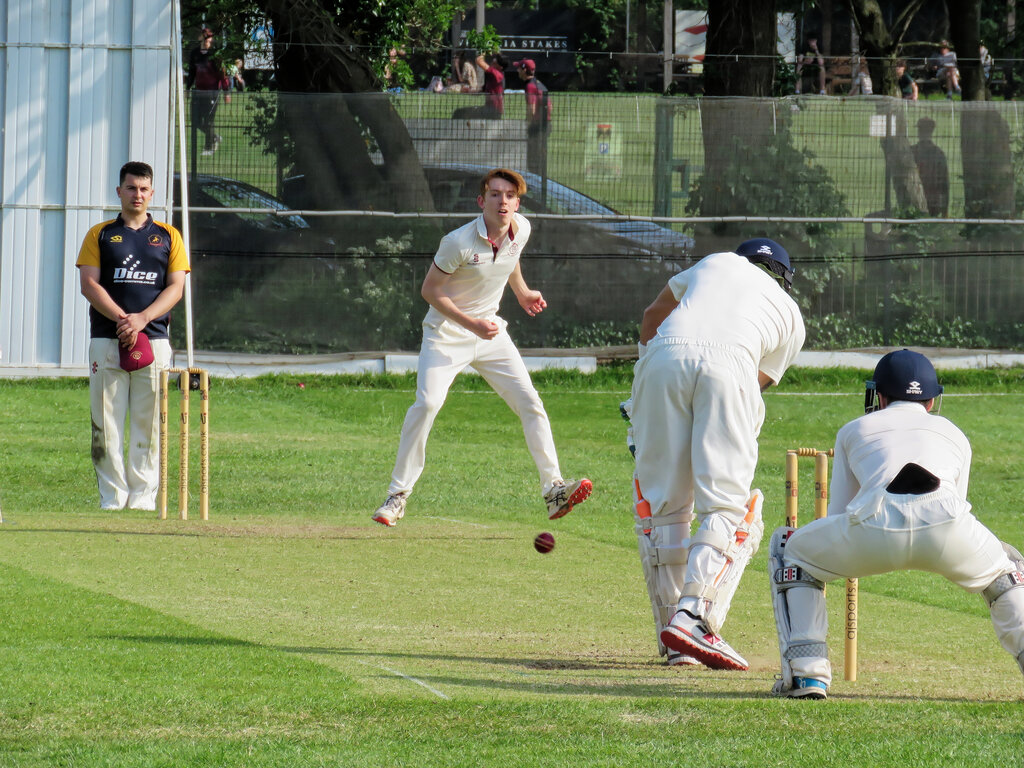
Another way to create deception is with cutters. These deliveries rely less on aerial swing and more on deviation off the pitch. An off-cutter is bowled with the fingers rolling down the right side of the ball (for a right-arm bowler). This imparts off-spin, causing the ball to grip the surface and dart away from a right-handed batsman.
A leg-cutter uses the opposite mechanic. The fingers roll down the left side of the ball, creating leg-spin that moves the ball into the right-handed batsman's body.
The Dark Art of Reverse
As the ball gets older and rougher, a different aerodynamic phenomenon becomes possible: The principle is the same—creating a pressure differential—but the mechanics are flipped. For reverse swing, the ball will swing towards its shiny side, not away from it.
This requires a very old ball (typically 40+ overs), dry conditions, and high speed (above 85 mph / 137 kph). The fielding side meticulously maintains the ball, keeping one side as smooth and polished as possible while letting the other become extremely rough. At high pace, the airflow detaches from the surface later on the rough side than it does on the smooth side. This counter-intuitive effect 'trips' the air, creating turbulence and pushing the ball toward the smooth, shiny side. Humidity can hinder reverse swing, as moisture in the air makes the ball heavier and softens the rough side, reducing the required aerodynamic contrast.
Unlike conventional swing, which is often a gentle curve, reverse swing is typically sharp and very late, making it incredibly difficult for a batsman to adjust.
Changing the Pace
The final piece of the puzzle is changing your pace without altering your action. The most deceptive slower ball is the back-of-the-hand delivery. The bowler maintains their normal, aggressive run-up and arm speed, but just before release, the wrist is pronated so the back of the hand faces the batsman. The ball is essentially pushed out from the fingers, not snapped over them.
This technique dramatically reduces the ball's speed while appearing identical to a stock delivery until the very last moment. A well-disguised slower ball can completely disrupt a batsman's timing, leading to a mistimed shot and an easy dismissal.
For a fast bowler to bowl a conventional outswinger to a right-handed batsman, how should the ball be oriented upon release?
Unlike conventional swing, reverse swing causes the ball to move in a counter-intuitive direction. Under the right conditions, which way will a ball experiencing reverse swing deviate?