Mastering Cricket Strategy and Dynamics
Bowling Mechanics and Physics
The Unseen Forces
At its core, bowling is a contest of physics. A bowler doesn't just hurl a leather ball; they manipulate air, friction, and rotation to deceive the batter. The true art lies in making the ball deviate from its expected path, either through the air or off the pitch. This deviation is crafted through two primary methods: swing and seam.
Bowling isn't just about speed—grip, control, and variation are just as important.
Think of these as two distinct weapons. Swing bowling is about aerodynamics, using the ball's seam and surface condition to make it curve sideways as it flies. Seam and spin bowling, on the other hand, are about using the ball's interaction with the pitch to create a sudden change of direction. Mastering these forces is what separates a good bowler from a great one.
Painting the Air
Conventional swing is a delicate art. To achieve it, a bowler keeps one side of the ball polished and shiny while the other side becomes naturally rougher through wear. The seam is angled towards the direction of the desired swing.
As the ball moves, air flows faster over the smooth, shiny side, creating a smooth layer known as . On the rougher side, the air becomes chaotic and turbulent. This difference in airflow speed creates a pressure differential, pushing the ball towards the low-pressure, faster-moving air on the shiny side. It's a subtle but powerful effect.
Then there's reverse swing, a more mysterious and potent weapon. This typically happens with an older, heavily scuffed ball (usually after 40-50 overs). When the ball is very old and bowled at high speed, the dynamics flip. The rougher side becomes so abrasive that it trips the air into turbulence sooner than the 'shiny' side, which is no longer perfectly smooth.
This makes the rough side behave like the low-pressure zone, and the ball swings towards it, opposite to a conventional swing. It’s a game-changer because it defies the batsman’s expectations.
Deception Off the Pitch
Swing happens in the air, but the pitch itself is another variable a bowler can exploit. This is the domain of seam and spin.
A seam bowler uses the raised stitches of the ball to create deviation when it lands. By holding the seam upright and imparting a consistent backspin, the bowler ensures the seam hits the pitch first. Any slight imperfection on the pitch surface can catch the seam, causing the ball to jag sharply left or right. A "wobble-seam" delivery, where the seam orientation is deliberately mixed, makes this deviation even more unpredictable.
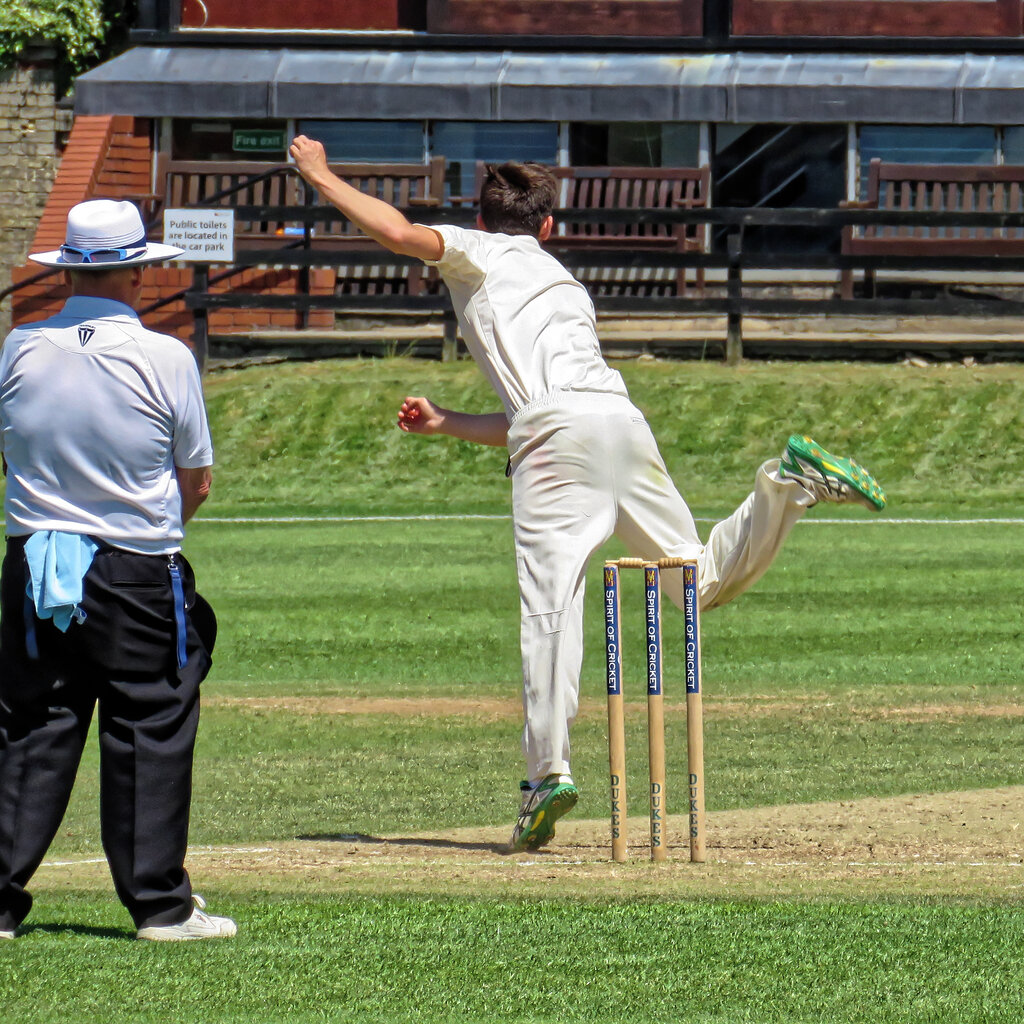
Spin bowling takes this idea of using the pitch a step further. Instead of relying on the seam hitting an imperfection, a spin bowler uses a high number of revolutions to make the ball grip and turn sharply. The physics are all about friction and .
Finger spin (like an off-spinner) primarily uses the fingers and wrist to impart spin, generating revolutions as the ball rolls off the fingertips. The axis of rotation is roughly parallel to the ground.
Wrist spin (like a leg-spinner) uses a powerful wrist snap to generate many more revolutions. The palm faces upwards on release, and the ball spins on an axis that is more vertical. This higher revolution rate allows for greater grip on the pitch, often producing more dramatic turn, especially on a worn pitch with patches that offer more friction.
| Bowling Type | Primary Force | Point of Deviation | Key Factor |
|---|---|---|---|
| Conventional Swing | Aerodynamics (Pressure) | In the air | Ball's shine/roughness |
| Reverse Swing | Aerodynamics (Pressure) | In the air | Ball's age and speed |
| Seam Bowling | Friction / Impact | Off the pitch | Seam orientation |
| Spin Bowling | High-Friction Grip | Off the pitch | Revolutions per minute |
Finally, a bowler can alter the ball's trajectory by changing their point of release, either by bowling from wider on the crease or by lowering or raising their arm. This changes the angle of attack, creating different challenges for the batsman and altering how the ball will behave off the pitch. Each delivery is a unique physics experiment.
What is the primary physical principle behind conventional swing bowling?
In reverse swing, the ball swings towards the rough side, which is the opposite of conventional swing.