Mastering CoreWeave Infrastructure
GPU Accelerated Infrastructure
The Rise of the AI Hyperscaler
General-purpose cloud providers are built for flexibility, offering a vast menu of services for everything from websites to databases. But the explosive growth of artificial intelligence has created a new kind of demand. Training and running large-scale AI models requires a specific, highly optimized environment that generalist clouds weren't designed for.
This has led to the emergence of the a cloud provider focused exclusively on providing the raw power and high-performance infrastructure needed for AI. Instead of offering a broad but shallow range of services, they provide deep, specialized infrastructure purpose-built for one thing: running AI workloads as fast and efficiently as possible.
A Foundation of Specialized Hardware
The foundation of an AI Hyperscaler is its hardware. The most demanding AI models rely on cutting-edge processors designed for the massive parallel computations involved in training. CoreWeave builds its infrastructure on the gold standard for AI supercomputing.
This includes clusters of H100 and H200 Tensor Core GPUs, and the next-generation Blackwell architecture, such as the GB200. These aren't just individual GPUs plugged into a server; they are integrated systems with high-speed interconnects that allow multiple GPUs to work together as a single, massive processor. This is essential for training models with trillions of parameters.
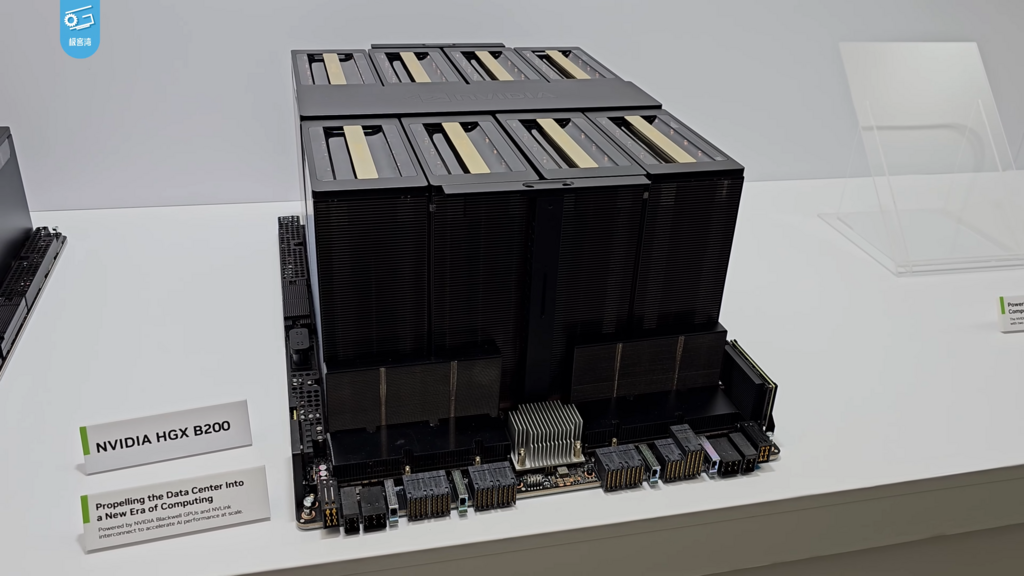
Having the best hardware is only half the battle. How you access it is just as important. Traditional cloud providers deliver resources through a hypervisor, a layer of software that creates and runs virtual machines (VMs). This approach is great for isolating tenants and managing general workloads, but it introduces a layer of abstraction between the application and the physical hardware.
Eliminating the Virtualization Tax
CoreWeave takes a bare-metal approach. Your AI workloads run directly on the physical hardware, without a hypervisor in the way. This eliminates what's known as the a performance penalty where the hypervisor consumes a portion of the CPU, memory, and even GPU cycles for its own operations.
In a general computing context, this tax is often an acceptable trade-off for the flexibility VMs provide. But for massive AI jobs where every ounce of performance matters, that overhead is a significant waste. By removing it, every cycle of the GPU is dedicated to your model, not to managing a layer of virtualization software.
Maximising Performance
The direct, bare-metal access to hardware has two profound effects on performance: higher utilization and lower latency.
Performance in large-scale AI is often measured by a metric called (MFU). MFU is the ratio of the actual computational throughput a model achieves during training versus the theoretical maximum floating-point operations per second (FLOPS) of the hardware. A higher MFU means you are using the expensive hardware more efficiently. By eliminating the virtualization tax, bare-metal infrastructure significantly increases MFU.
This architectural choice also slashes latency. With no hypervisor to traverse, communication between the application and the hardware is more direct and faster. For large, distributed training jobs that require constant communication across hundreds or thousands of GPUs, this reduction in latency accelerates the entire training process. For inference, it means faster response times for your users.
By running workloads directly on the metal, every cycle of the GPU is dedicated to the AI model, ensuring maximum performance and efficiency.
Finally, this approach allows for true hardware-level resource allocation. Teams can orchestrate their workloads with granular control over the GPUs, networking, and storage, just as they would on a dedicated, on-premises supercomputer. This level of control is critical for optimizing the most complex and demanding AI models.
Let's check your understanding of these core concepts.
What is the primary focus of a cloud provider known as an 'AI Hyperscaler'?
In the context of cloud computing, what is the 'virtualization tax'?
Now you see how a specialized, bare-metal architecture provides the foundation for extreme performance in AI.