Mastering Core Recipes for Home Cooking
Knife Skills
The Right Tool for the Job
You don't need a drawer full of specialized blades to be a great cook. In fact, most professional chefs rely on just a few core knives for the vast majority of their work. Understanding which knife to use, and when, makes your prep work faster, safer, and more enjoyable.
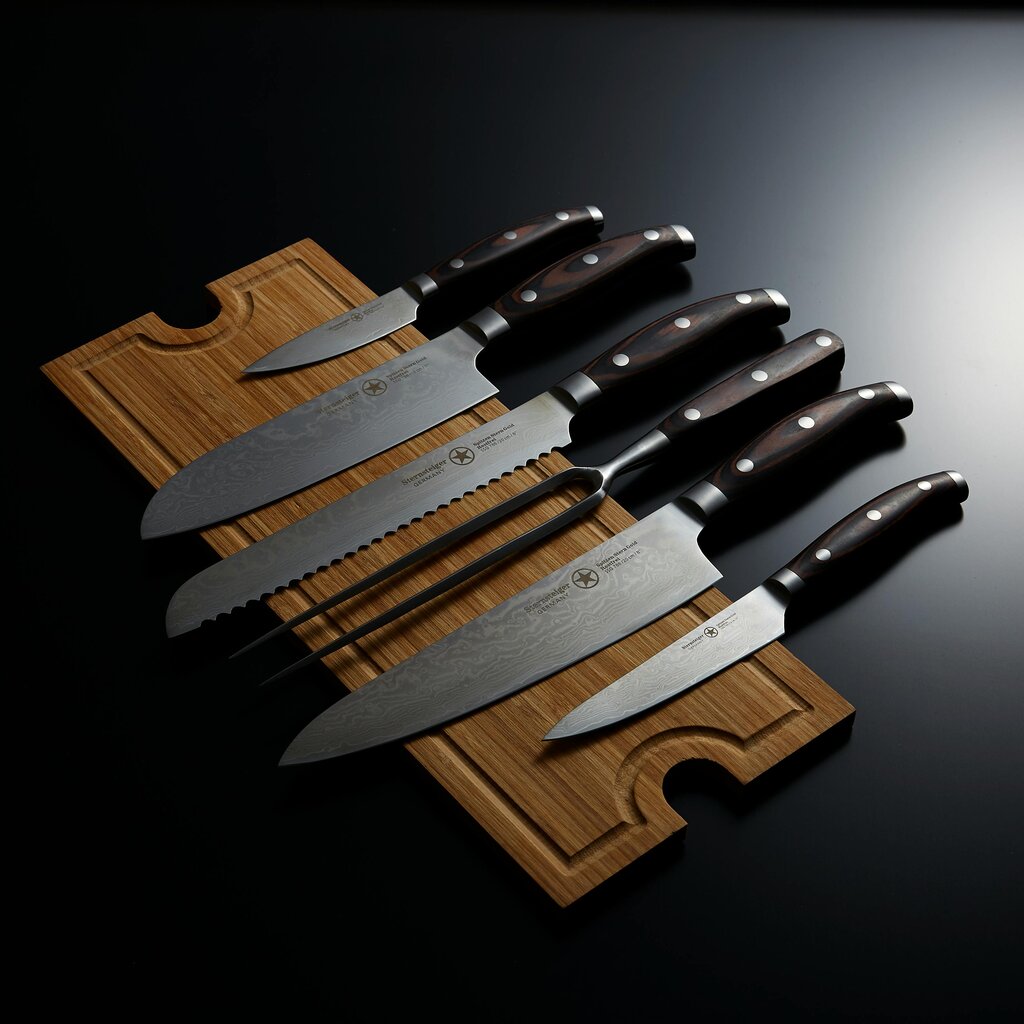
Let's focus on the three essentials you'll reach for again and again.
| Knife Type | Best For | Why It Works |
|---|---|---|
| Chef's Knife | Most tasks: chopping, slicing, dicing, mincing. | Its curved blade allows for a smooth rocking motion, and its weight makes chopping through dense vegetables easy. This is your go-to, all-purpose blade. |
| Paring Knife | Small, delicate tasks: peeling, coring, trimming. | Think of it as a mini chef's knife. Its small size gives you precise control for in-hand work, like hulling strawberries or deveining shrimp. |
| Serrated Knife | Slicing foods with tough exteriors and soft interiors. | The saw-like teeth grip and cut through crusty bread, delicate tomatoes, and citrus without squishing them. |
Holding Your Knife
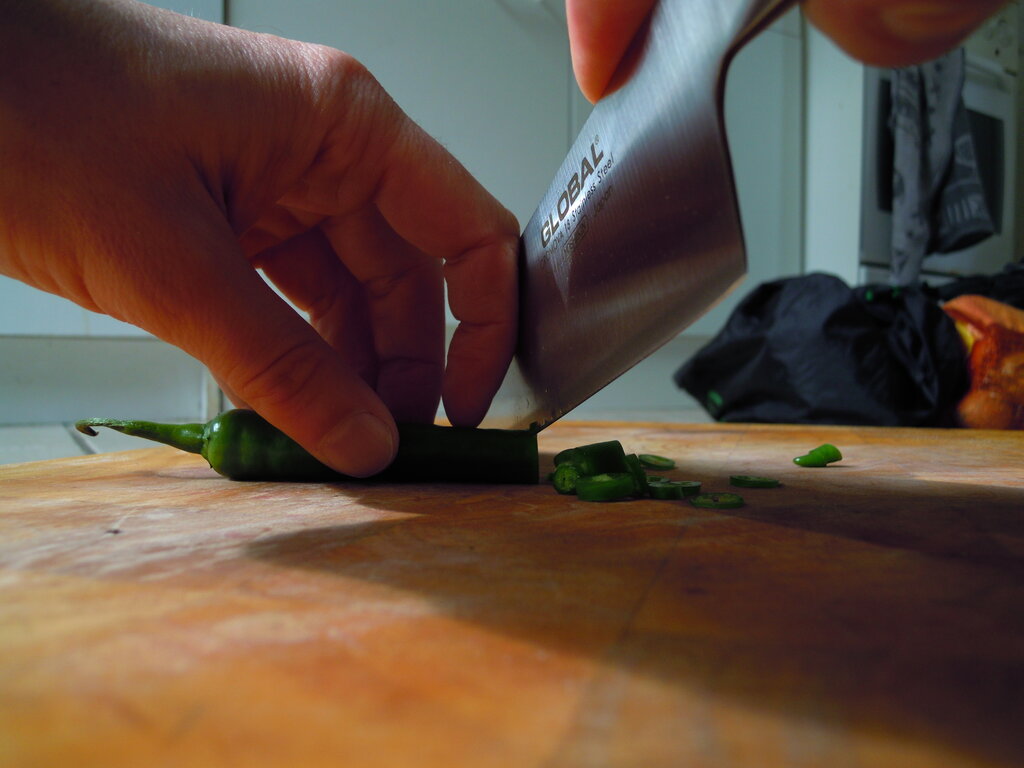
How you hold your knife is the foundation of good technique. A proper grip gives you control, improves your efficiency, and most importantly, keeps your fingers safe. The most common and effective method is the pinch grip.
Instead of holding the knife by the handle alone, you'll "choke up" on the blade. Grip the handle with your last three fingers. Then, pinch the base of the blade, right where it meets the handle, with your thumb and curled index finger. It might feel strange at first, but this grip gives you far more stability and control over the blade's tip.
Your other hand, the guiding hand, is just as important. Curl your fingertips under to form a "claw," keeping your thumb tucked behind them. The side of the knife should rest against your knuckles as you cut. This keeps your fingertips safely away from the blade and allows your knuckles to act as a guide for consistent slices.
Making the Cut
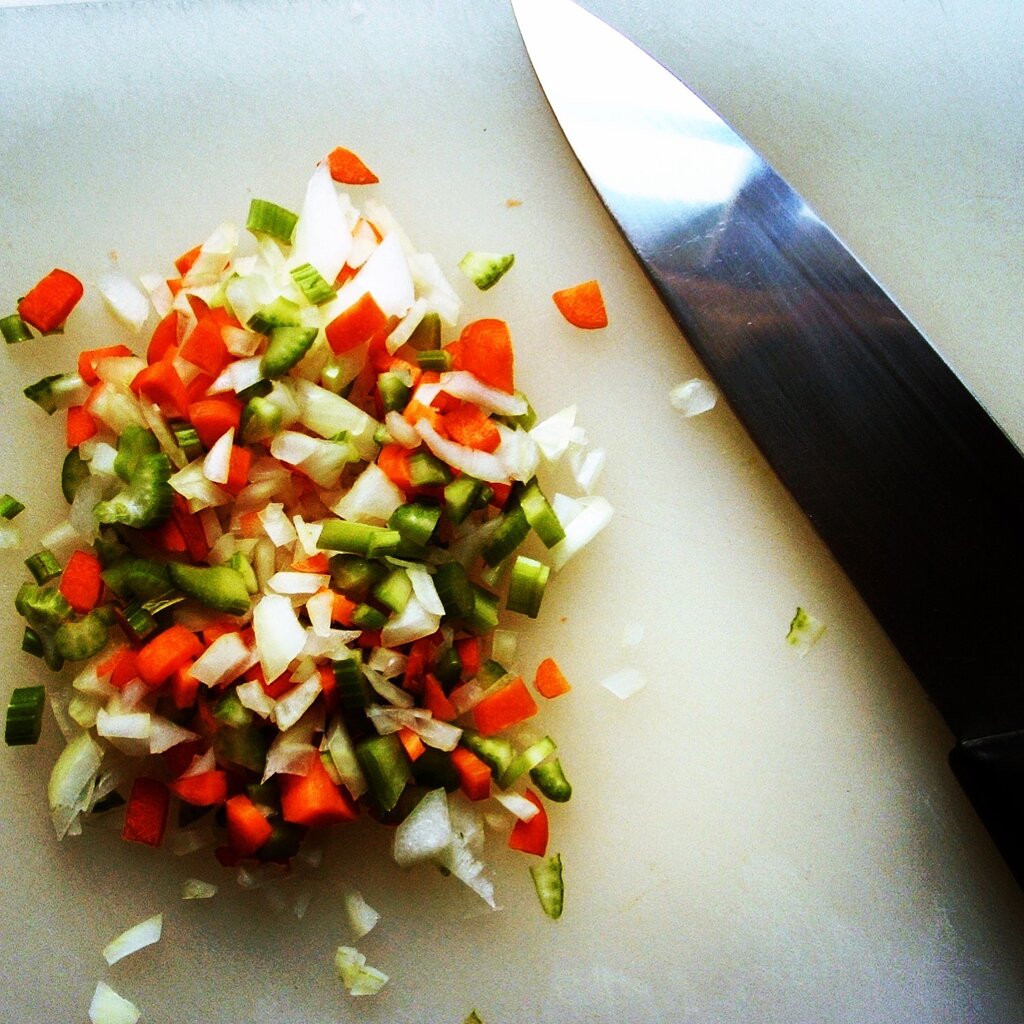
With your grip sorted, you can focus on the cuts themselves. Consistent cuts aren't just for looks; they ensure that your food cooks evenly. A tiny piece of carrot will cook much faster than a large chunk, so uniformity is key.
Here are the four basic cuts you'll use most often.
| Cut | Description |
|---|---|
| Chop | A rough cut where uniformity isn't the primary goal. Perfect for rustic soups or stocks where ingredients will be cooked down or blended. |
| Dice | Cutting food into uniform cubes. Dicing can be small (1/4 inch), medium (1/2 inch), or large (3/4 inch). |
| Mince | The finest cut, where you chop an ingredient (like garlic or herbs) into very small, irregular pieces. |
| Julienne | Cutting vegetables into long, thin matchsticks. This is common for salads, slaws, and garnishes. |
Keeping Your Edge
It might sound counterintuitive, but a sharp knife is a safe knife. A dull blade requires more pressure to cut, which means it's more likely to slip. A sharp knife, on the other hand, glides through food with minimal effort.
Maintaining your knife involves two key processes: honing and sharpening.
Honing
verb
The process of realigning the microscopic edge of a blade. It doesn't remove metal, but simply straightens the edge, which can get bent with regular use. You should hone your knife frequently, even after every use.
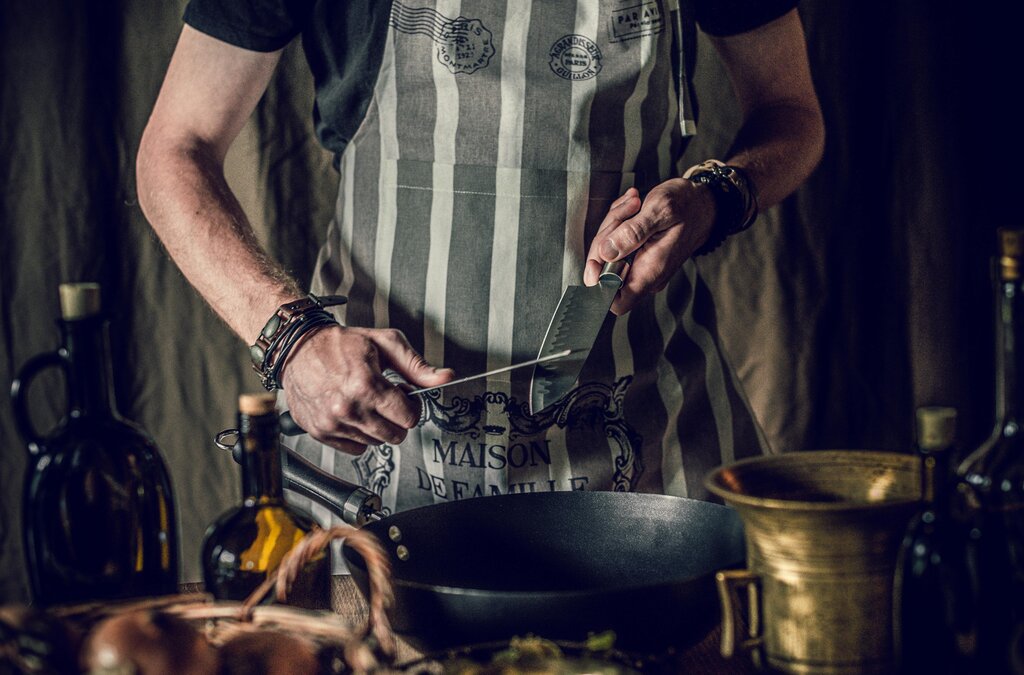
Sharpening is a different process. It actually grinds away a tiny amount of metal to create a brand new, sharp edge. You'll only need to do this a few times a year, depending on how often you cook. You can use a whetstone or an electric sharpener.
Finally, store your knives properly. Tossing them in a drawer can chip and dull the blades. A knife block, magnetic strip, or in-drawer sheath will protect their edges and keep them sharp.
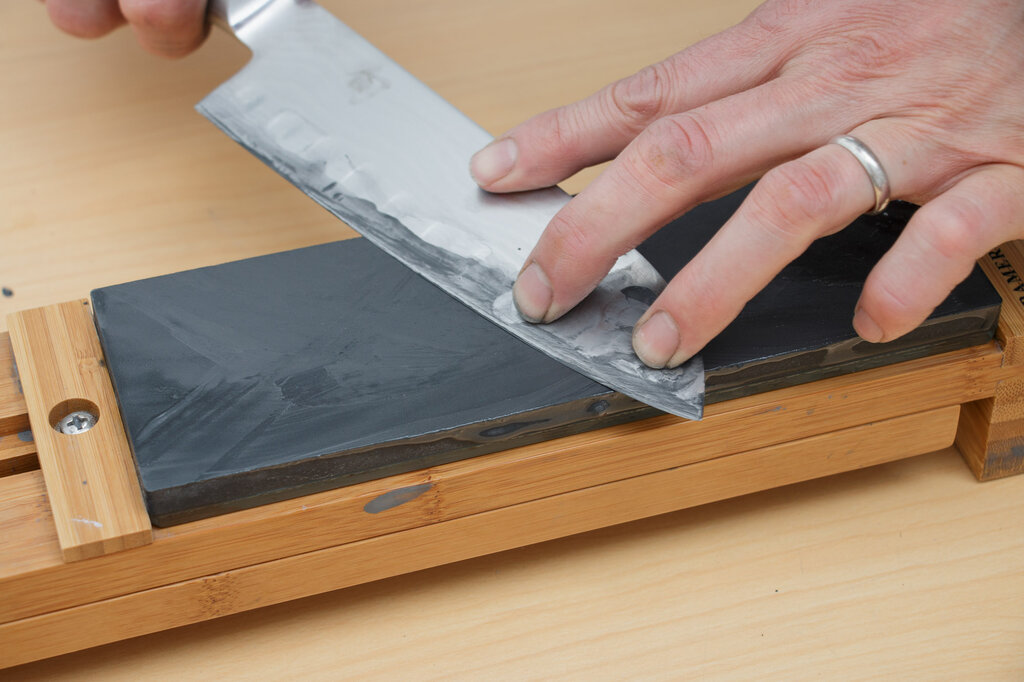
Most home cooks need to sharpen their knives only once or twice a year, but the importance of a sharp knife cannot be overstated—it will make you a better, safer cook.
Now, let's review these new concepts.
Ready to test your knowledge?
What is the correct way to perform the 'pinch grip' for maximum control and safety?
What is the primary culinary advantage of cutting ingredients into uniform sizes?
With the right tools and a little practice, you'll be prepping food with confidence and precision. These fundamental skills will serve you well in every single dish you make.