Mastering Coordination Exercises
Advanced Coordination Principles
Orchestrating Movement
Beyond the basics of balance and timing lies a complex symphony of neural and muscular collaboration. Advanced coordination isn't just about performing actions smoothly; it's about the central nervous system (CNS) acting as a masterful conductor, directing countless muscles to work in perfect harmony. This process allows for the fluid, efficient, and powerful movements seen in elite athletes and skilled performers.
At the heart of this symphony is intermuscular coordination, the precise interplay between different muscles or muscle groups. Think of it as teamwork. For any given movement, some muscles must contract, others must relax, and still others must stabilise the body. When this teamwork is flawless, the movement is graceful and effective. When it's not, the action becomes clumsy and inefficient.
Muscular Teamwork
To create a single, coordinated movement like throwing a ball, the body recruits a team of muscles, each with a specific role. The efficiency of the throw depends entirely on how well this team works together. The timing, force, and sequence of their contractions are all managed by the CNS.
| Role | Function | Example (Bicep Curl) |
|---|---|---|
| Agonist | The primary mover; the muscle that contracts to create the movement. | Biceps brachii |
| Antagonist | The muscle that opposes the agonist; it must relax and lengthen to allow the movement. | Triceps brachii |
| Synergist | Assists the agonist to create the movement and helps stabilise joints. | Brachialis, brachioradialis |
| Stabiliser | Contracts to hold a body part still, creating a stable base for the movement. | Rotator cuff muscles, core muscles |
Proper intermuscular coordination ensures that as the agonist contracts, the antagonist relaxes in a controlled manner. This reciprocal inhibition is crucial for smooth movement and preventing injury. Synergists and stabilisers provide the necessary support, ensuring that the force generated by the agonist is channelled correctly and efficiently.
The goal of coordination is to solve a motor problem by activating the right muscles at the right time with the right amount of force, all while using the least amount of energy.
The Brain's Master Plan
The central nervous system orchestrates these complex muscular interactions. The brain doesn't think in terms of individual muscles; it thinks in terms of movement patterns. When you decide to pick up a glass of water, your motor cortex develops a plan, and the cerebellum is critical in refining and coordinating the details of that plan.
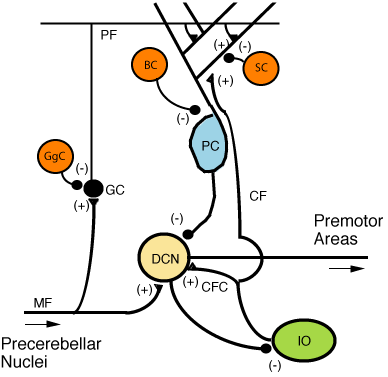
The CNS uses two primary strategies to control movement: feedforward and feedback control.
Feedforward
noun
A proactive control strategy where the brain anticipates the required movement and sends a pre-planned set of commands to the muscles. It relies on past experience and learning.
Feedback
noun
A reactive control strategy where the brain uses sensory information (from vision, touch, and proprioception) during the movement to make real-time adjustments.
Most skilled movements involve a seamless blend of both. Feedforward control initiates the movement based on a plan, while feedback control fine-tunes it on the fly, correcting errors and adapting to unexpected changes.
Training the System
Understanding these physiological principles is key to designing effective coordination training. The goal of such training isn't primarily to build bigger or stronger muscles, but to improve the efficiency and speed of the neural pathways that control them. It is nervous system training.
Repetition of complex movements strengthens the connection between brain and muscle. With practice, the CNS learns to recruit motor units more effectively, refine the timing of muscle contractions, and rely more on efficient feedforward control. This process, known as motor learning, makes movements smoother, faster, and more automatic.
One effective approach to enhance motor learning is by breaking down complex movements into smaller, manageable components.
Effective training programs challenge the CNS to adapt. They might involve:
- Varying the speed: Performing a known movement faster or slower forces the CNS to adjust its timing.
- Changing the environment: Practising on an unstable surface enhances feedback control and stabiliser muscle activation.
- Introducing complexity: Combining simple movements into more complex sequences builds new motor patterns.
This type of training enhances proprioception, the body's internal sense of its position and movement. A well-trained nervous system has a highly accurate internal map of the body, allowing for precise and adaptive motor control.
What is the primary role of the central nervous system (CNS) in executing a complex, coordinated movement?
For a smooth and efficient movement to occur, when the agonist muscle contracts, its opposing antagonist muscle must relax in a controlled way. This principle is known as:
By understanding the intricate dance between the nervous system and the muscular system, you can move beyond simple drills and design training that builds truly masterful coordination.