Mastering Conversational Japanese
Japanese Pronunciation
The Sounds of Japanese
Japanese pronunciation is refreshingly consistent. Unlike English, where letters can have many different sounds, Japanese sounds are almost always pronounced the same way. The language is built on a set of simple, crisp syllables. Once you learn the basic sounds, you can pronounce almost any word you see written in Rōmaji (the Roman alphabet version of Japanese).
Before diving into grammar and vocabulary, it’s essential to get comfortable with Japanese pronunciation.
The Five Vowels
Everything in Japanese is built around five core vowel sounds: A, I, U, E, O. These sounds are short, clear, and never change. Think of them as the building blocks for every word.
| Vowel (Rōmaji) | Sound | English Example |
|---|---|---|
| a | "ah" | father, calm |
| i | "ee" | see, free |
| u | "oo" | flute, blue |
| e | "eh" | bed, get |
| o | "oh" | boat, code |
Practice saying them out loud: ah, ee, oo, eh, oh. Keep the sounds short and sharp. This consistency is your best friend when learning to speak Japanese.
Consonants and Syllables
Most Japanese syllables are formed by combining a consonant with one of the five vowels. For example, the consonant 'k' joins with the vowels to create 'ka, ki, ku, ke, ko'. This pattern holds true for most consonants.
A few sounds are a little different from their English counterparts.
S: Usually like the 's' in "snake," but 'shi' is pronounced like "shee." T: Usually like the 't' in "tea," but 'chi' is like "chee" and 'tsu' sounds like the end of "cats" plus an 'u' sound. H: 'fu' is pronounced by blowing air through your lips, without your teeth touching your bottom lip. It's softer than the English 'f'. R: This sound is a mix between 'r', 'l', and 'd'. Lightly tap the tip of your tongue against the roof of your mouth, right behind your front teeth. It’s the same motion as the 'tt' in the American pronunciation of "butter." N: The only consonant that can stand alone, without a vowel.
Let's practice some common words. Try to say them out loud, focusing on keeping the vowel sounds short and distinct.
| Word (Rōmaji) | Pronunciation Guide | Meaning |
|---|---|---|
| sakura | sa-koo-ra | cherry blossom |
| sushi | soo-shee | sushi |
| karate | ka-ra-teh | karate |
| arigatō | a-ree-ga-toh | thank you |
| sensei | sen-seh | teacher |
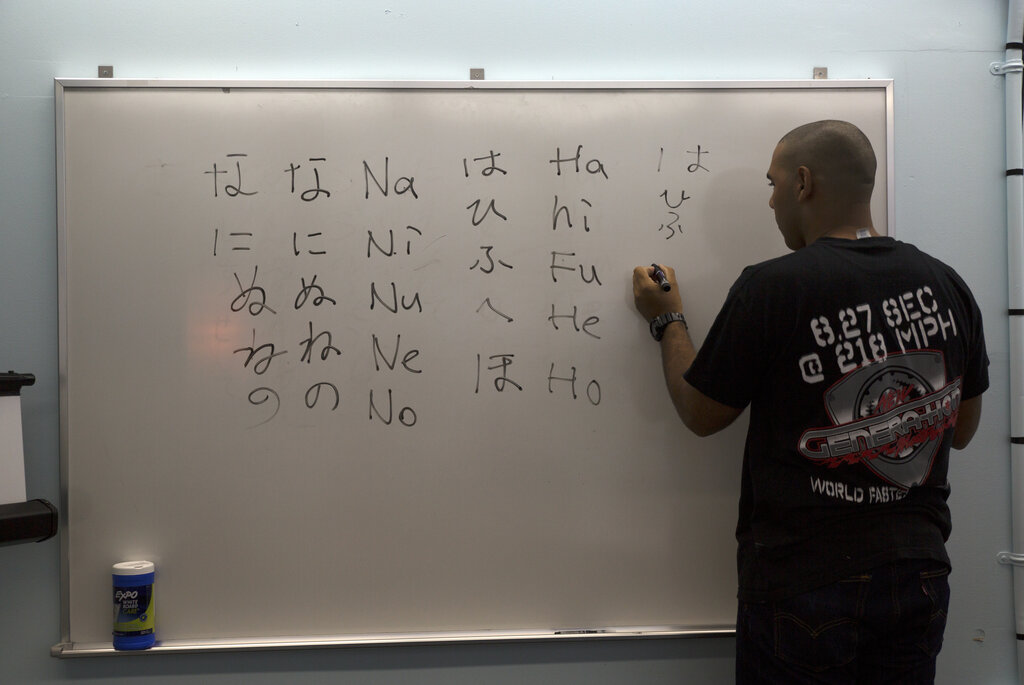
Getting these basic sounds right will make your journey into Japanese much smoother. Consistent practice is the key to making them feel natural.
What is a key characteristic of Japanese pronunciation, especially when compared to English?
How are the majority of Japanese syllables constructed?