Mastering Continuous Controls Monitoring
Introduction to Continuous Controls Monitoring
Beyond the Annual Checkup
Think about the dashboard in your car. It doesn't just give you a single report when you get an oil change. Instead, it constantly monitors your speed, fuel level, and engine temperature. If something goes wrong, like low tire pressure, a light flashes immediately. You don't find out three months later from your mechanic.
Continuous Controls Monitoring (CCM) does the same thing for an organization's security and compliance. It’s an automated process that constantly checks if the rules and safeguards—the controls—are working as they should. Traditional audits are like that annual mechanic visit: a snapshot in time. CCM is like the car's dashboard: a live, continuous feed.
CCM shifts risk management from being reactive to proactive. Instead of cleaning up messes, the goal is to prevent them from happening in the first place.
The Payoff of Constant Watch
In a world of ever-changing cyber threats and complex regulations, a once-a-year check isn't enough. A security control that was effective on Monday might fail by Tuesday. CCM is crucial because it provides real-time awareness.
This constant watch has several major benefits:
-
Real-Time Alerts: You discover control failures or compliance breaches the moment they happen, not weeks or months later during a formal audit. This drastically reduces the window of opportunity for attackers and minimizes potential damage.
-
Stress-Free Audits: When auditors arrive, you're not scrambling to gather evidence. CCM provides a continuous, documented history of your control performance, making it much easier to demonstrate compliance with standards like SOX, HIPAA, or GDPR.
-
Improved Efficiency: Automating control monitoring frees up your team from tedious, manual testing. They can spend less time on checklists and more time on strategic initiatives and addressing the root causes of problems.
A comprehensive risk assessment plan covers the breadth of these elements, implementing continuous monitoring tools that can detect, report, and analyze risks in real time.
The CCM Framework
Implementing CCM isn't just about flipping a switch; it's a systematic process. This framework is a continuous loop, much like the Plan-Do-Check-Act cycle used in quality management. Each step feeds into the next, creating a cycle of constant improvement.
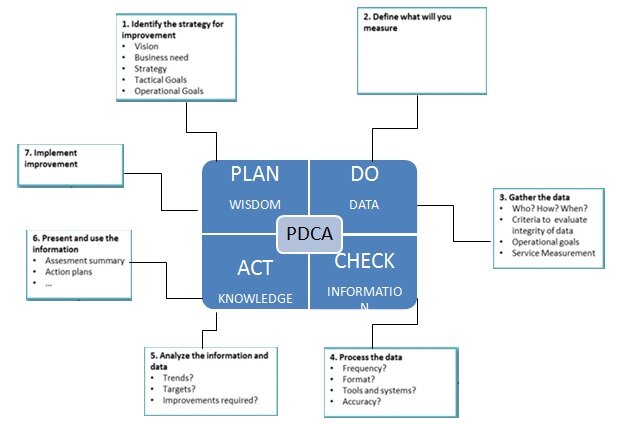
The key components of this cycle are:
-
Define Control Objectives: First, you must know what you're trying to achieve. What are the rules? An objective might be, "Ensure only authorized personnel have access to customer financial data."
-
Map and Instrument Controls: Next, you identify the specific technical controls that support this objective. For our example, this could be access control lists on a database or multi-factor authentication requirements. "Instrumenting" means setting up the technology to automatically gather data on how these controls are performing.
-
Monitor and Detect: This is where the automation kicks in. The system continuously collects data from your controls and analyzes it against the established rules. If an unauthorized user account attempts to access the financial database, the system detects it instantly.
-
Report and Visualize: Raw data isn't very useful. A good CCM system translates the data into easy-to-understand reports and dashboards. This allows stakeholders, from IT managers to executives, to quickly see the health of their security and compliance posture.
-
Remediate and Optimize: When an issue is detected, the framework ensures it gets fixed. An alert is sent to the right team to investigate and resolve the problem. Over time, the data collected helps you optimize your controls, making them stronger and more efficient.
Let's test your understanding of Continuous Controls Monitoring.
The provided text compares a traditional audit to a periodic mechanic visit. What is Continuous Controls Monitoring (CCM) compared to in this analogy?
Which of the following is NOT a primary benefit of implementing Continuous Controls Monitoring (CCM)?
By adopting this continuous loop, organizations can move from a state of periodic compliance to one of constant readiness.