Mastering Content Organization for Teaching
Introduction to Instructional Design
What is Instructional Design?
Imagine trying to bake a complex cake for the first time without a recipe. You might have all the right ingredients—flour, sugar, eggs, chocolate—but without instructions, you're just guessing. You might end up with a sweet scramble instead of a dessert. A recipe provides a proven process to turn raw ingredients into a delicious, finished product.
Instructional design is the recipe for learning. It's the systematic and thoughtful process of creating educational experiences that work. Instead of just presenting information and hoping for the best, instructional design provides a structured approach to make sure learners actually understand, remember, and can use what they're taught.
Instructional design is the process of planning, structuring, and creating learning experiences so people actually learn and take action, not just consume information.
The core of instructional design is its focus on the learner. It starts by asking important questions: Who are the learners? What do they already know? What do they need to be able to do after the lesson? The answers guide the creation of content that is relevant, engaging, and effective.
Without this deliberate process, education can feel disorganized and confusing. Instructional design brings clarity and purpose, transforming a simple transfer of information into a genuine learning experience.
Blueprints for Learning
To create these experiences, instructional designers often use established frameworks called models. These models are like blueprints for a house; they provide a structure and a sequence of steps to follow, ensuring nothing important is missed.
An instructional design model provides structure and meaning to an instructional design problem.
There are many different models, but one of the most well-known is ADDIE. It’s a straightforward, five-phase framework that is flexible enough for almost any learning project. The name itself is an acronym for its five stages.
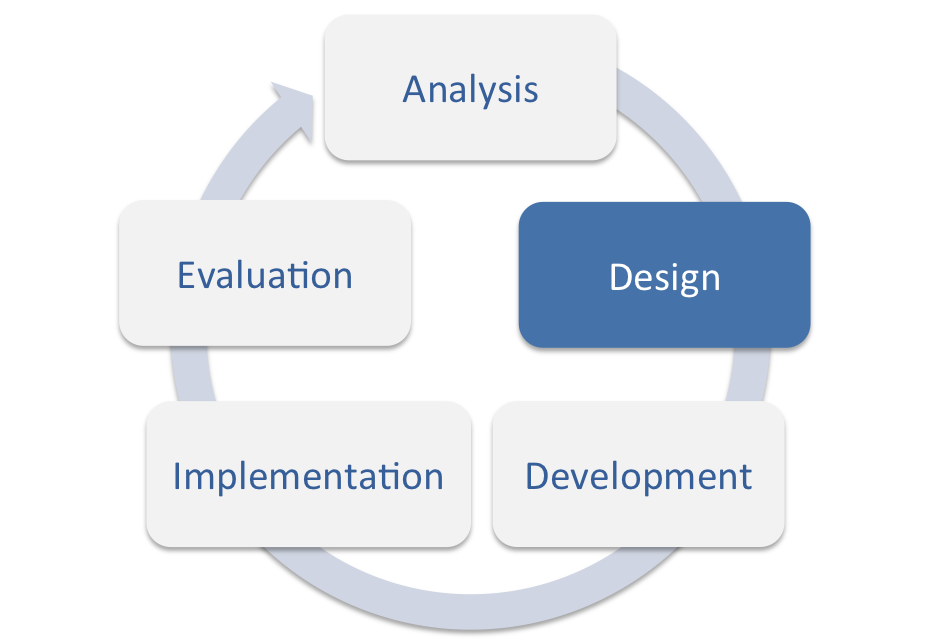
Here's a quick look at each phase:
- Analysis: This is the starting point. The designer identifies the learning goals, the audience's existing knowledge, and any constraints. It’s all about understanding the problem before trying to solve it.
- Design: In this phase, the blueprint is created. The designer outlines the learning objectives, chooses instructional methods, and decides how to structure the content and assess learning.
- Development: This is where the learning materials are actually created. Based on the design plan, the team writes content, produces videos, builds quizzes, and assembles all the necessary resources.
- Implementation: The course is launched and delivered to the learners. This could be in a classroom, online, or through a blended format.
- Evaluation: The final phase involves measuring the effectiveness of the training. Did the learners achieve the objectives? Did the course solve the initial problem? Feedback from this stage often informs the design of future courses, making the process a continuous cycle of improvement.
The Role in Education
Instructional design is the bridge between a subject matter expert and a learner. An expert knows their topic inside and out, but that doesn't automatically mean they know how to teach it effectively. An instructional designer specializes in the how of learning.
They apply principles from cognitive psychology and education to break down complex topics, create engaging activities, and build clear paths for learners to follow. Their goal is to make learning not just possible, but also efficient and enjoyable. By focusing on the learner's journey, instructional design ensures that education is more than just a presentation of facts; it's a carefully crafted experience that leads to real understanding and skill.
Now that you have a foundational understanding of instructional design, let's test your knowledge.