Mastering Computer Storage Units
Bits and Bytes
The Smallest Switch
At the most fundamental level, computers don't understand words, images, or sounds. They only understand on and off, like a simple light switch. This on-or-off state is the smallest possible piece of information a computer can handle.
bit
noun
The smallest unit of data in computing. A bit is short for 'binary digit' and can have a value of either 0 (off) or 1 (on).
Think of a single bit as one light switch. By itself, it can only tell you two things: it's either on or it's off. We represent 'off' with the number 0 and 'on' with the number 1. This two-number system is called binary, and it's the language of all digital computers.
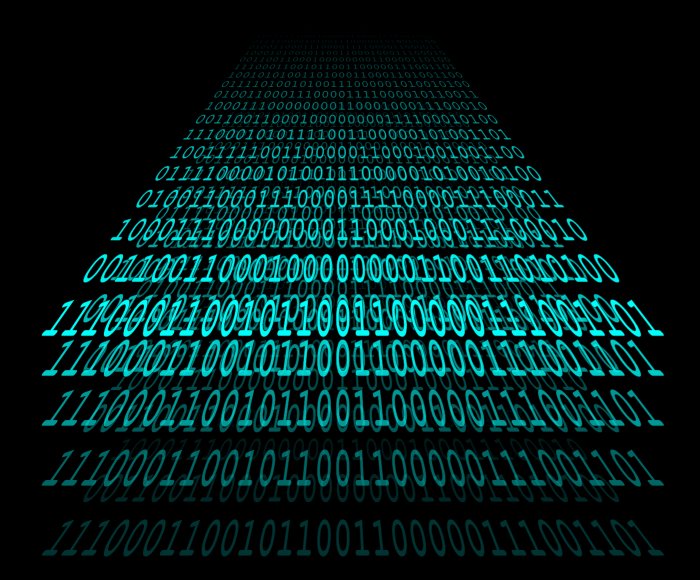
One switch isn't very useful. You can't write a novel or send an email with a single on/off message. To do anything meaningful, computers need to group these bits together.
From Bits to Bytes
The most common grouping of bits is a set of eight, which is called a byte. If a bit is a single light switch, a byte is a row of eight switches.
8 bits = 1 byte
With eight switches, you can create many more combinations of on and off patterns. In fact, a single byte can represent 256 different values. This is enough to assign a unique pattern to every letter of the alphabet (both uppercase and lowercase), every number from 0 to 9, and all the common punctuation marks.
For example, when you type the letter 'A' on your keyboard, the computer stores it as the byte 01000001. The letter 'B' is 01000010, and so on. Every piece of digital data you interact with is, at its core, just a massive collection of these bytes.
Understanding this simple foundation is the first step to seeing how complex software, websites, and apps are built from the ground up.
At the most fundamental level, what language do computers use to process information?
A byte is a group of eight bits.