Mastering Composable Software Architecture
Introduction to Modularity and Decoupling
Building with Blocks
Imagine building a complex model with LEGO bricks. You don't start with one giant, custom-molded piece. Instead, you use a collection of smaller, standard blocks. Some are simple squares, others are specialized shapes. Each block has a clear purpose, and they all fit together in predictable ways. You can build a car, a castle, or a spaceship using the same fundamental pieces.
Software development can follow the same logic. This approach is called modularity.
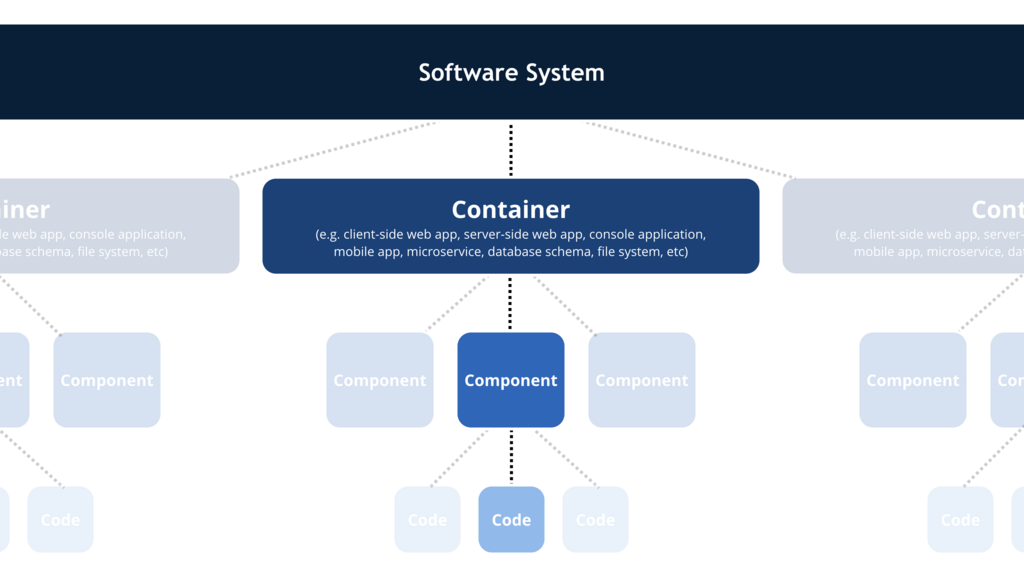
Modularity is the practice of breaking down a software system into smaller, self-contained modules or components.
Each module handles one specific job, like managing user accounts or processing payments. By designing a system as a collection of these independent modules, you gain immense flexibility. If you need to fix a bug in the payment system, you can work on just that one module without touching the rest of the application. If you want to upgrade the user account features, you can replace the old module with a new one, just like swapping out a LEGO brick.
Cutting the Cords
Modularity works best when the modules aren't tangled together. This brings us to a related, crucial idea: decoupling.
Think about a home stereo system from the 90s. You had a receiver, a CD player, a tape deck, and speakers. Each was a separate component, or module. They were connected by standard cables. Because they were decoupled, you could swap out your Sony speakers for a Bose set without having to replace the entire system. The components didn't need to know the inner workings of each other; they just needed to speak the same language through the connecting cables.
In software, decoupling means reducing the dependencies between modules. Instead of modules calling each other's internal functions directly, they communicate through well-defined interfaces, like an Application Programming Interface (API). This interface acts as a contract, specifying how modules should interact without revealing how they work inside.
A change in one module shouldn't force a change in another. That's the goal of decoupling.
When you combine modularity and decoupling, you create a system that is far more resilient and adaptable. This style of building is often called a composable architecture.
Why It Matters
Building software this way has clear advantages over creating a single, monolithic application where everything is tightly interwoven. Tightly coupled systems are brittle; a small change in one part can cause unexpected failures elsewhere. Loosely coupled, modular systems are robust and easier to manage.
| Feature | Monolithic System (Tightly Coupled) | Modular System (Loosely Coupled) |
|---|---|---|
| Maintenance | Hard. A change requires understanding the whole system. | Easy. Update or fix one module at a time. |
| Scalability | Difficult. You must scale the entire application at once. | Efficient. Scale only the specific modules that need it. |
| Development | Slow. Teams often block each other. | Fast. Teams can work on different modules in parallel. |
| Flexibility | Low. Locked into a single technology stack. | High. Each module can use the best tech for its job. |
Consider an e-commerce website. A monolithic version would have all its code for user profiles, product catalogs, the shopping cart, and payment processing in one large codebase. If the payment logic needs an update, the entire site might have to be taken down and redeployed.
In a modular, decoupled architecture, each of these functions would be a separate service. The Shopping Cart service wouldn't know or care how the Payment service works; it would just send a request to its API saying, "Process this payment for $50." The Payment service could then be updated, or even completely replaced, without affecting the shopping cart at all.
This separation allows different teams to own different services, innovating faster and with less risk. It's a more organized, scalable, and future-proof way to build software.
Time to check what you've learned.
Which of the following analogies best describes a modular software architecture?
What is the primary goal of decoupling in software design?
These core principles are the bedrock of modern, composable systems. By understanding how to build with independent, well-behaved blocks, you can create software that is easier to manage, scale, and adapt to future needs.