Mastering Competitive Analysis
Competitive Analysis Basics
What is Competitive Analysis?
Competitive analysis is the process of identifying who your competitors are and evaluating their strategies to determine their strengths and weaknesses in relation to your own business. It’s a fundamental part of strategic planning.
The main goal isn't to copy what others are doing. Instead, it's about understanding the market landscape. By studying your rivals, you can spot gaps in the market, anticipate shifts in demand, and find opportunities to make your own offerings stand out. This knowledge helps you position your business more effectively.
A competitive landscape analysis is the ongoing process of identifying, researching, and evaluating competitors, in order to glean insight to inform your business strategy.
Know Your Rivals
Competitors come in different forms. To get a full picture of the market, it's helpful to separate them into two main categories: direct and indirect.
Direct Competitor
noun
A business that offers a very similar product or service to the same target audience.
These are the rivals that first come to mind. They are playing the same game, for the same customers. Think of Toyota and Honda, or Apple's iPhone and Samsung's Galaxy.
Indirect Competitor
noun
A business that offers a different solution to the same customer problem or need.
Indirect competitors solve the same core problem for customers, just in a different way. For a local pizza place, an indirect competitor could be a taco truck, a grocery store selling frozen pizzas, or even a meal-kit delivery service. They all solve the "what's for dinner?" problem.
| Competitor Type | Description | Example (for a coffee shop) |
|---|---|---|
| Direct | Sells a similar product to the same target audience. | The coffee shop across the street. |
| Indirect | Solves the same customer problem with a different solution. | A nearby convenience store selling energy drinks. |
Sizing Up the Competition
Once you've identified your competitors, the next step is to assess their strengths and weaknesses. This analysis goes beyond just comparing products. You should look at their entire business, including their pricing, marketing strategies, brand reputation, and customer service.
A common way to organize this information is through a SWOT analysis, which looks at Strengths, Weaknesses, Opportunities, and Threats. Strengths and weaknesses are internal factors related to the company itself, while opportunities and threats are external factors related to the market.
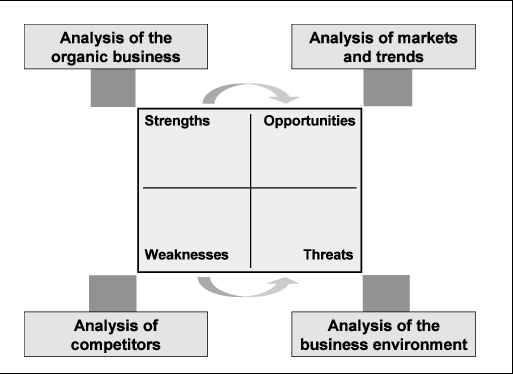
By understanding what your competitors do well, you can identify areas where you need to improve to keep up. More importantly, by spotting their weaknesses, you can find opportunities.
Your competitor's weakness might be your biggest opportunity. If they are known for poor customer service, you can differentiate your business by offering an exceptional experience.
Understanding market dynamics is the final piece of the puzzle. The market is always changing. New technologies emerge, customer preferences shift, and new competitors can appear overnight. A good competitive analysis isn't a one-time report; it's an ongoing process of observing these trends. Staying aware of the broader market context helps you adapt your strategy and stay ahead of the curve.