Mastering Competitive Analysis
Understanding Competitive Analysis
Understanding the Playing Field
No business operates in a vacuum. You have competitors, and they're all trying to win over the same customers. Competitive analysis is simply the process of learning about these other players to understand their strategies, strengths, and weaknesses. It's not about spying or copying what others do. Instead, it’s about gathering intelligence to make smarter decisions for your own business.
Competitive analysis, the process of evaluating your rivals to uncover strengths, weaknesses, and opportunities, lays the foundation for strategic positioning.
Think of it like a sports team studying game footage of their opponents. They don't just watch to imitate the other team's plays. They watch to find patterns, identify weaknesses, and figure out how to use their own strengths to win the game. That’s exactly what you're doing with competitive analysis.
The Goals of the Game
So, what are you trying to achieve? The ultimate goal is to find your unique place in the market. This usually breaks down into two key objectives.
First, you want to identify market gaps. A market gap is an opportunity that no one is taking advantage of yet. It's a customer need that isn't being met. By analyzing your competitors, you might discover that they all cater to large businesses, leaving a gap for a service tailored to small startups. Or maybe everyone offers a complex, feature-heavy product, creating an opening for a simpler, more user-friendly version.
By researching companies active in your market or niche, you can identify market gaps, avoid common pitfalls, and refine your unique value proposition so that your idea has a chance to stand out.
Second, you aim to gain a competitive advantage. This is the unique edge that makes customers choose you over others. It could be better quality, lower prices, superior customer service, or a feature nobody else has. Understanding what your competitors offer is the first step to figuring out how you can offer something better, different, or more valuable.
Key Areas of Focus
A good analysis looks at three main areas:
-
Competitor Assessment: This is a deep dive into your rivals. What products or services do they sell? What are their prices? How do they market themselves? What are customers saying about them in reviews? You're looking for their strengths (what they do well) and their weaknesses (where they fall short).
-
Market Trends: Markets are constantly changing. New technologies emerge, consumer tastes shift, and economic conditions fluctuate. Understanding these trends helps you anticipate changes and adapt your strategy before you're left behind.
-
Customer Needs: Ultimately, it all comes down to the customer. What do they want? What are their pain points? By looking at who your competitors are serving, and how, you can get a clearer picture of the customer you want to attract and what they truly value.
Frameworks to Guide You
You don't have to start from scratch. There are established frameworks that can help structure your analysis. These tools provide a clear way to organize your thoughts and findings.
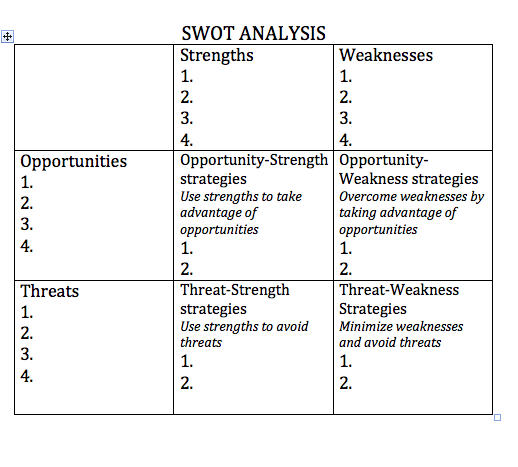
One of the most common is the SWOT analysis. SWOT stands for Strengths, Weaknesses, Opportunities, and Threats. Strengths and weaknesses are internal factors, things you can control within your own company. Opportunities and threats are external, referring to things happening in the market. This framework gives you a quick, high-level snapshot of your position.
The strengths, weaknesses, opportunities and threats (SWOT) analysis is a decision-making tool that helps companies define what they do well, what they do poorly and areas for improvement.
Another powerful tool is Porter's Five Forces. This framework helps you understand the competitive intensity, and therefore the attractiveness, of an industry. It looks at five key forces:
Analyzing these forces gives you a deeper understanding of the power dynamics in your industry. It helps you see where the pressure comes from and where the opportunities lie. Both SWOT and Porter's Five Forces are starting points for a deeper strategic conversation.
What is the primary purpose of competitive analysis?
In a SWOT analysis, 'Strengths' and 'Weaknesses' refer to what kind of factors?