Mastering Competitive Analysis
Competitive Analysis Basics
What Is Competitive Analysis?
Competitive analysis is the process of identifying your rivals and evaluating their strategies to determine their strengths and weaknesses in relation to your own business. The goal isn't to copy what others are doing. Instead, it's about understanding the business landscape so you can find your own unique advantage.
Think of it like being a coach for a sports team. Before a big game, you wouldn't just focus on your own players' skills. You'd also study the opposing team. You’d watch their past games, analyze their plays, and identify their star players. This knowledge helps you create a game plan that plays to your team's strengths and exploits the other team's weaknesses. Competitive analysis does the same thing for a business.
Competitive analysis, the process of evaluating your rivals to uncover strengths, weaknesses, and opportunities, lays the foundation for strategic positioning.
By understanding who your competitors are and what they offer, you can spot gaps in the market, anticipate shifts in customer demand, and make smarter decisions about your products, pricing, and marketing.
Identifying Your Competitors
The first step is figuring out who you're up against. Competitors usually fall into a few different categories. It's important to know the difference, because each type poses a different kind of challenge.
| Competitor Type | Description | Example |
|---|---|---|
| Direct | Businesses that offer a similar product or service to the same target audience. | A local coffee shop and the Starbucks down the street. |
| Indirect | Businesses that offer a different product or service, but one that satisfies the same customer need. | A movie theater and a bowling alley both compete for a customer's 'entertainment' budget. |
| Replacement | Businesses that offer a different solution to the same problem your product solves. | A tax preparation software and a certified public accountant. |
Direct competitors are the most obvious, but ignoring the others can be a mistake. A customer who buys a different solution is still a customer you didn't win. A comprehensive analysis looks at the full picture to understand all the choices a potential customer might have.
Analyzing Their Position
Once you know who your competitors are, the next step is to analyze their position in the market. How do customers perceive them? What are they known for? A common and effective tool for this is a SWOT analysis.
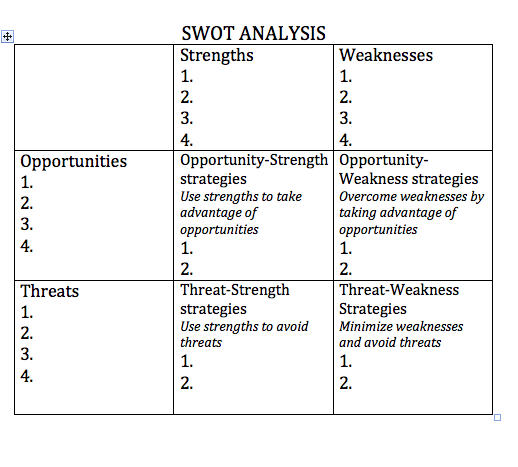
SWOT stands for Strengths, Weaknesses, Opportunities, and Threats.
- Strengths: What do your competitors do well? Do they have a strong brand reputation, loyal customers, or a unique technology?
- Weaknesses: Where do they fall short? Perhaps they have poor customer service, high prices, or a limited product selection.
- Opportunities: What external factors could benefit them? This might be a new market trend, a change in regulations, or a competitor's misstep.
- Threats: What external factors could harm them? This could include new competitors entering the market, changing customer tastes, or negative press.
By performing a SWOT analysis for each key competitor, you can start to see where you have an edge and where you might be vulnerable. For example, if your main competitor's weakness is poor customer service, you can position your business as the one that offers exceptional support. If a new market trend presents an opportunity, you can try to capitalize on it before they do.
Performing a SWOT analysis on your competitors is about finding the gaps. Their weaknesses can become your strengths, and the threats they face could be opportunities for you.
This analysis forms the backbone of your strategic positioning. It's how you decide where your business fits in the market. Are you the budget-friendly option? The luxury choice? The most innovative? Your competitive analysis provides the data you need to answer that question confidently.
Time to check your understanding of competitive analysis.
What is the primary goal of competitive analysis?
In a SWOT analysis of a competitor, which of the following would be considered a 'Weakness'?
Understanding these fundamentals allows you to build a strategy that's not just based on a good idea, but on a clear view of the entire competitive field.