Mastering Competitive Analysis
Introduction to Competitive Analysis
Understanding the Competition
Imagine a chess grandmaster. They don't just focus on their own moves; they constantly analyze their opponent's strategy, strengths, and potential weaknesses. Business is similar. Competitive analysis is the process of identifying your rivals and evaluating their strategies to determine their strengths and weaknesses in relation to your own.
Competitive analysis, the process of evaluating your rivals to uncover strengths, weaknesses, and opportunities, lays the foundation for strategic positioning.
The goal isn't to copy what others are doing. It's to find gaps in the market, anticipate your competitors' moves, and discover opportunities to stand out. By understanding the competitive landscape, you can make smarter decisions about everything from product development to marketing.
A Framework for Analysis
One of the most common tools for this process is the SWOT analysis. It's a simple but powerful framework for organizing your thoughts and seeing the bigger picture. SWOT stands for Strengths, Weaknesses, Opportunities, and Threats.
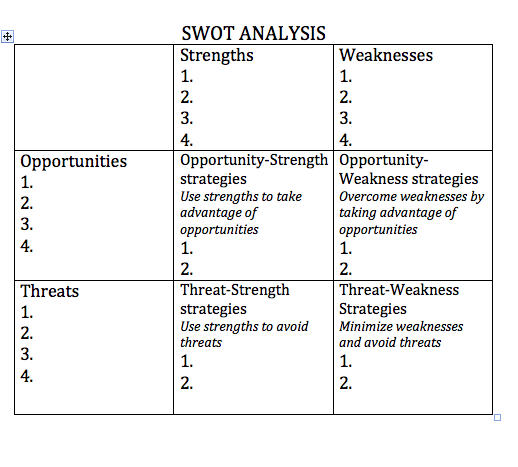
Strengths and Weaknesses are internal factors. These are things you have some control over. Strengths are what your business does well, like a strong brand reputation or a unique product. Weaknesses are areas where you're at a disadvantage, such as a high cost structure or a lack of market presence.
Opportunities and Threats are external factors. These are things happening outside your business that you can't control but must respond to. An opportunity could be a new market trend or a competitor's misstep. A threat might be a new government regulation or a change in consumer tastes.
Think of it this way: Strengths and Weaknesses are about your company today. Opportunities and Threats are about what might happen tomorrow.
Let’s look at a simple example for a fictional local coffee shop called "The Daily Grind."
| Category | Description |
|---|---|
| Strengths | Prime downtown location, loyal customer base, expert baristas. |
| Weaknesses | Small seating area, limited food menu, no mobile ordering app. |
| Opportunities | New office complex opening nearby, growing demand for vegan pastries. |
| Threats | A large coffee chain is opening two blocks away, rising cost of coffee beans. |
With this grid, the owners of The Daily Grind can start forming a strategy. For example, they can use their strength (expert baristas) to capitalize on an opportunity (demand for vegan pastries) by creating unique, high-quality vegan options that the big chain won't offer. They can also work to mitigate a threat (the new chain) by addressing a weakness (no mobile app) to improve convenience for their loyal customers.
A SWOT analysis is a framework used to evaluate a company’s competitive position and then to develop a strategic plan to address these areas.
Analyzing the competition isn't a one-and-done task. Markets change, new competitors emerge, and customer preferences evolve. Regular analysis helps you stay agile and keep your business on the right track.
Now, let's test your understanding of these core concepts.
What is the primary goal of competitive analysis?
In a SWOT analysis, which two elements are considered external factors outside of a business's direct control?
By consistently evaluating the competitive landscape, you can better position your business for success.